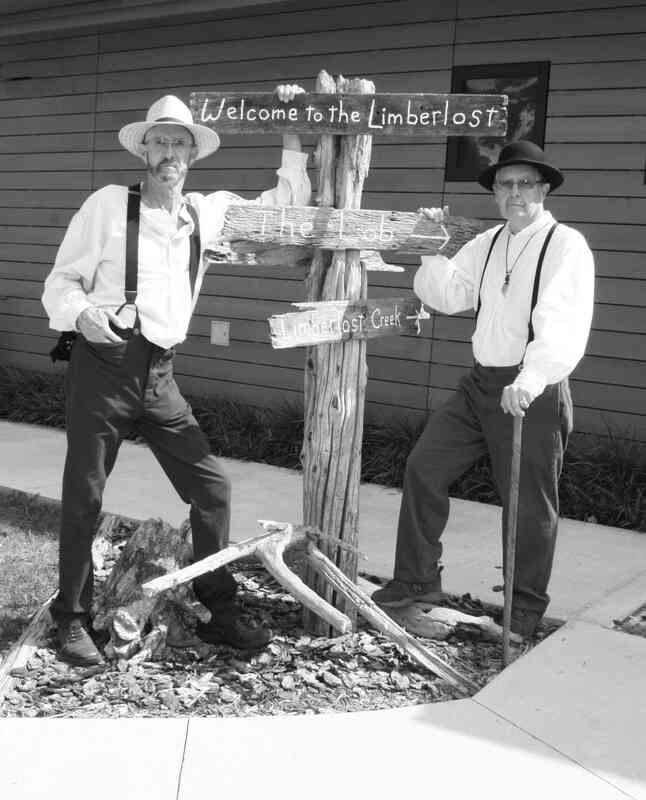
Wherein we learn how the theme of a famous baseball movie relates to the restoration of the Limberlost

By Curt Burnette

In the 1989 movie, Field of Dreams, farmer Ray Kinsella hears a voice whisper to him as he walks through his cornfield in Iowa. The voice tells him, “If you build it, he will come.” In this fantasy movie, Ray builds a baseball diamond in his cornfield and long dead baseball players such as Shoeless Joe Jackson magically appear to play. Ray’s long estranged father also shows up as the young catcher behind home plate, and he and Ray make some amends. At one point, Ray s told that people will come to his field, they will be drawn there. And, at the end of the movie, hundreds of people are seen driving down the road to the “field of dreams: to watch the “big show”, as major league baseball is called.

I don’t think Ken Brunswick heard any voices when he began his quest of restoring portions of the Limberlost. (Did you Ken?) nevertheless, the theme of the movie is relevant to what is happening with the restoration of the Limberlost. Instead of saying “If you build it, he will come”, it could be said of the Limberlost, “If you restore it, they will come.”

“They” in this instance would be birds of all sorts and types. The marshes, forests, and prairie-like areas of the Limberlost provide wonderful habitat for all kinds of migrating and nesting birds. Species of birds whose numbers had dwindled in this area are reappearing. Even one species never seen here before, the black-necked stilt, has recently been sighted. Migratory waterfowl such as tundra swans and pintail duck stop over on their journeys and sometimes spend the winter, if it is mild enough. Winter visitors from the north such as northern harrier hawks and short-eared owls find refuge here. Both of these species are listed as endangered in Indiana. And many, many birds such as eastern kingbirds, indigo buntings, spotted sandpipers, and dickcissel nest in the Limberlost.

Birds are like the baseball players in the movie who came to take advantage of the ball field after Ray created it. But baseball fans also came to the field to watch the players. Our comparison of the Limberlost to the field of dreams still holds true there. As more and more birds come to the Limberlost to the Limberlost to “play”, more and more bird “fans” will come to watch. Birdwatchers, known nowadays as “birders”, will travel far and wide to areas where birds are plentiful. Much like baseball fans who buy hot dogs and peanuts while watching the game, birders buy gasoline and lunch and souvenirs when they come to a birding site. Dollars spent by outsiders is good for our communities. Like building a ballpark in a cornfield, Ken Brunswick’s field of dreams has returned over 1600 acres [currently about 1800 acres] of opportunity to the Land of the Limberlost. Hundreds of people are already driving down the roads to watch the “show.”

Source: First published in the Limberlost Notebook column in the Berne Witness in June 2013.
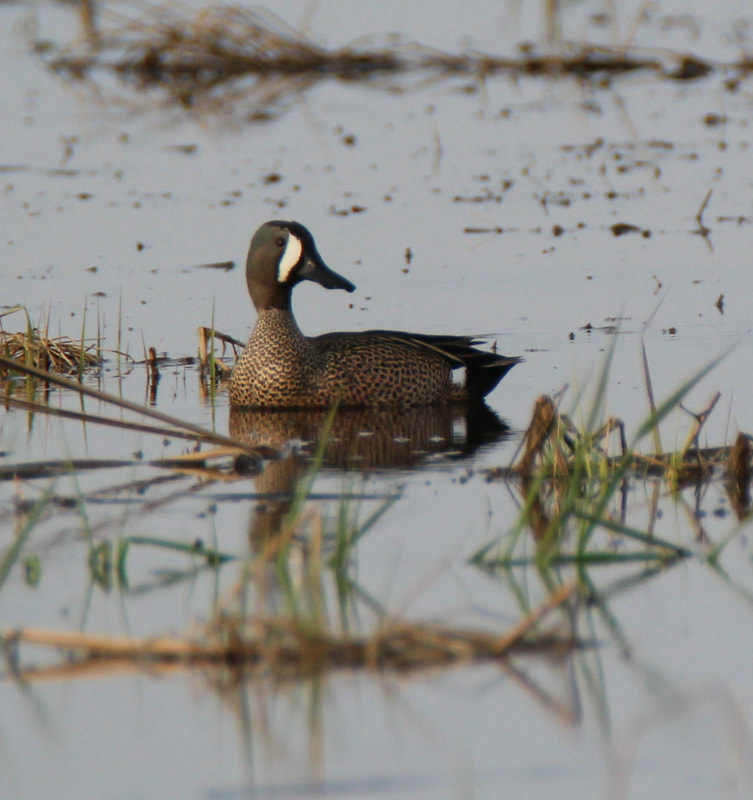
Blue-winged teal by Bill Hubbard

Dickcissel by Kimberley Roll
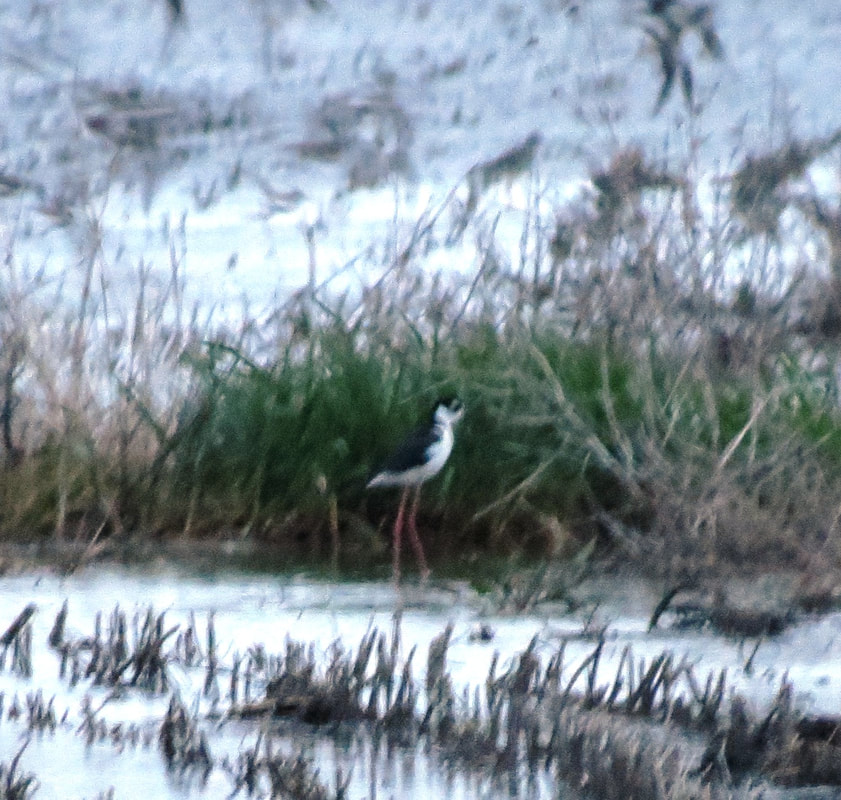
Black-necked stilt
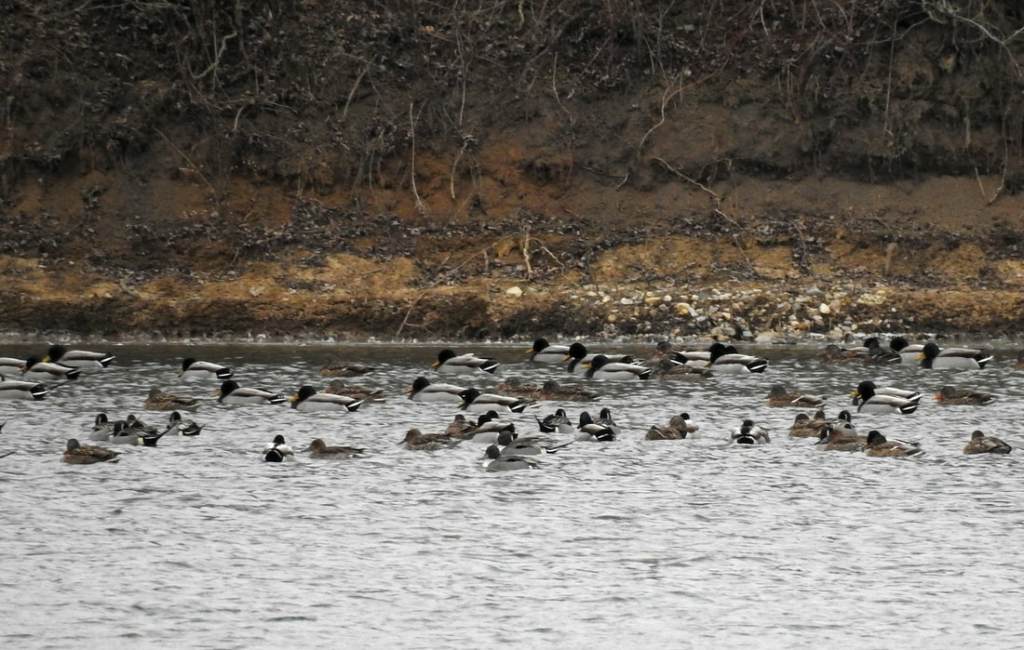
Pintails along with some mallards
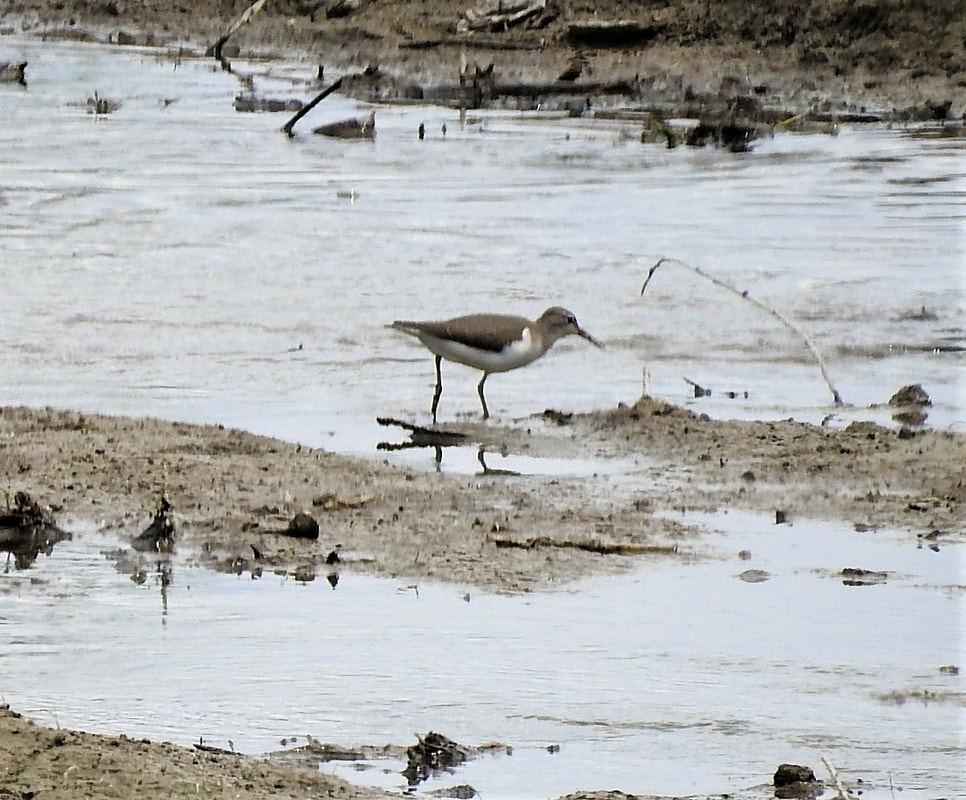
Sandpiper

Wherein our columnist mulls over the symbolism of a nation rescuing its national symbol

By Curt Burnette

The bald eagle became the unofficial symbol of the U.S. as part of the Great Seal of the United States when it was adopted on June 20, 1782. The official designation as our national bird and symbol did not occur for another seven years, in 1789. During those seven years, there were those who felt the bald eagle was not the best symbol for our new country. most Famously, Benjamin Franklin thought bald eagles were “of bad moral character” and so he suggested the wild turkey would be more suitable. Obviously, Ben’s argument did not succeed.

As amazing and brilliant as Benjamin Franklin was, most Americans would have to say it is a good thing he didn’t have his way on that particular issue. it is hard now, these many years later, to think of our nation and not think also of our majestic national symbol. but what would our founding fathers have thought if they could have looked ahead and seen a future where the symbol of their new nation was vanishing? Would they have wondered about the greatness of their new United States, a nation that selected a national symbol that had become threatened by the growth of this young country? Was this the nation they envisioned ? Probably not, but if they were to look a bit farther into the future, into our modern time, they would indeed see a wonderful example of a people who saw their national symbol in trouble—and did something about it. This was surely the kind of nation they thought they were creating.

Bald eagles were common in this country before it was settled, but wetland destruction and human persecution resulted in their disappearance from much of the country, even by Gene Stratton-Porter’s time. It is unlikely she ever saw them as she wondered Limberlost. the last recorded nest in Indiana was 1895. Then, in the middle of the 1900s, the widespread use of the Insecticide DDT caused the eggshells of the few remaining breeding eagles to think and crack, so an already damaged population was weakened further. Bald eagles still were plentiful in Alaska, but in the rest of the states our national symbol was in serious trouble.

Our nation then did what great nations do—study the problem, understand what steps need to be taken, and do what is necessary. DDT was banned. Many wetlands were restored. Protective laws were passed. Eagles were reintroduced back into many areas they had vanished from, including Indiana. Between 1985 and 1989, 73 young eagles were released in Indiana., and by 1991 the first chicks were hatched. by the mid-1990s, there were a dozen nesting sties in our state. In 2013, the DNR quit counting nests because there were too many to keep track of—over 300!

We take great pride in our national flag and have rules on the proper ways to display it and dispose of worn ones. Why should we show less care and concern for our national symbol? The United States of America is not a country that would allow ts national symbol to vanish without a fight. The battle was won. Bald eagles are back and doing better than ever. We have yet another reason for our citizens to proclaim they are “proud to be an American.”

Note: This article was first published in the Berne Witness Limberlost Notebook column in June 2015.

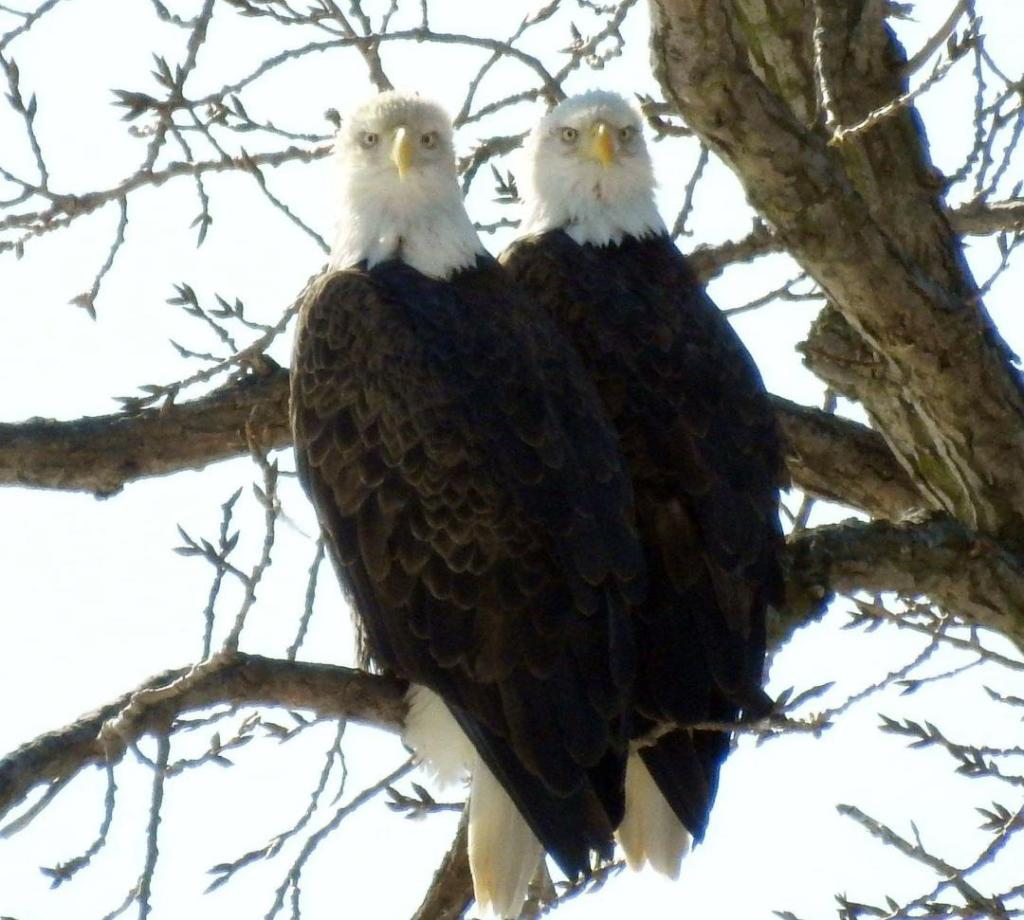
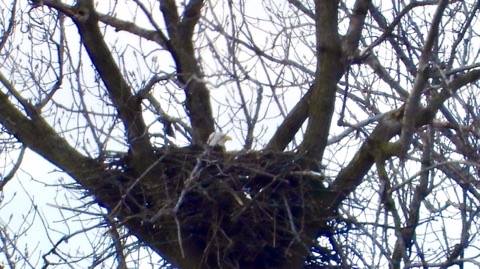
The pair of nesting eagles at the Loblolly Marsh. Photo by Kimberley Roll taken in February 2019.

Nesting eagle in Geneva on the Limberlost Swamp Wetland Preserve. Photo by Jeff White in March 2019.

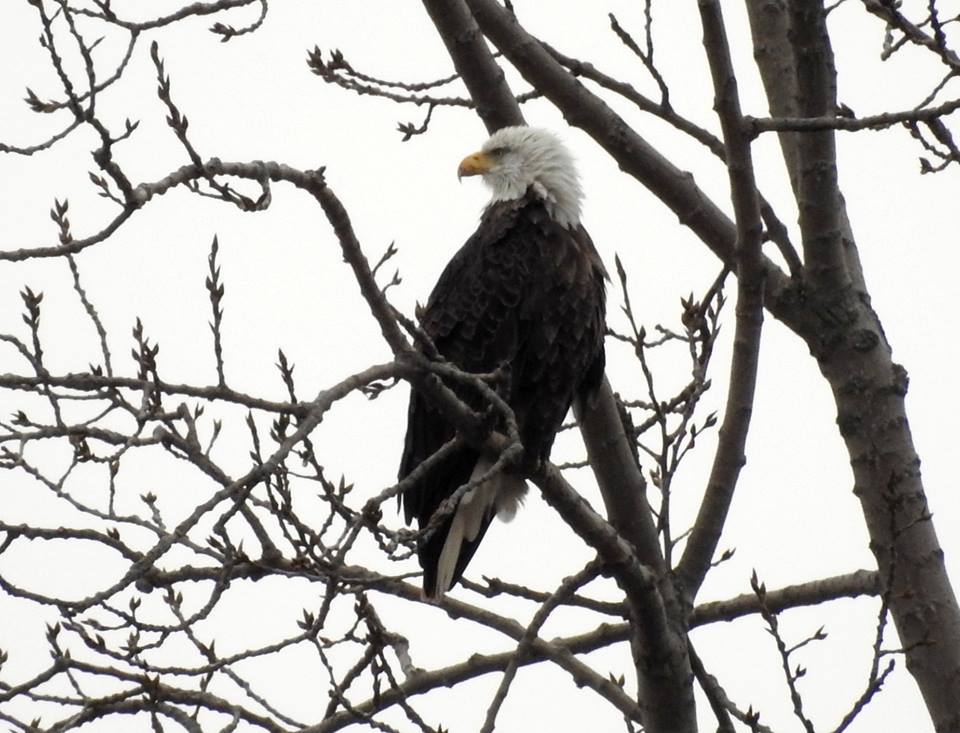
Bald eagle by Kimberley Roll.

Wherein the Miller Family Became Lifelong Friends of Gene Stratton-Porter

By Terri Gorney

The Miller and Aspy families were early settlers of Geneva and well known in the community. Gene Stratton-Porter would become friends with three generations of this extended family. She would photograph the old cabin on the Aspy farm and place it in Friends in Feathers.

Andrew Jackson Miller married Sarah Aspy. They would raise a family of six children; three who would have a close connection to Gene. They were: Lorene, Ray, and Sarah.

Sarah Miller was the same age as Gene’s daughter Jeannette. They were girlhood friends. Gene would photograph Sarah and Jeannette playing together at the Limberlost Cabin.

Raymond Miller according to Gene in Homing with the Birds, was “first assistant in field work in the region of the Limberlost. For him, no day was too hot, no tree too high, no swamp too treacherous. In years of field work, he never refused any hazard I suggested we undertake.” Gene photographed Raymond in this same book.

Lorene Miller would become her secretary in 1908. It was a position she would hold for seven years. Lorene wrote about a special Valentine’s Day when she worked for Gene. It was February 14 1911, the day that Gene began writing The Harvester while sitting at the desk next to the east window in the library after breakfast. Lorene shared several fond memories of Gene in later interviews.

Lorene made the decision to continue in Gene’s employ when she left Geneva and moved north to build Wildflower Woods. It was a decision that would change her life. In 1913, she met Frank Wallace whom Gene hired to help her with the plantings on her new land. Two years later, Lorene and Frank quietly married on a June day in the gardens of Wildflower Woods. Gene hosted the bridal celebration.

Frank would go on to become the state entomologist, thanks in part to Gene who wrote to Governor Rolston to ask that he be hired. It was a position that he would hold for 43 years.

Gene would remain lifelong friends with Frank and Lorene. The Wallaces usually spent time with Gene in the summer months. Lorene and her young son, John, visited Gene in California the summer before she died. Frank wrote Gene a birthday card that same August in which he stated how much her friendship meant to him. The last letter she wrote was to Frank. He received it a few days after she died in December 1924.

In 1946, when both Wildflower Woods and the Limberlost were being considered as historic sites, Frank knew many influential people and was a well liked and respected employee of the state. Frank was definitely one of Gene Stratton-Porter’s biggest fans, and we know that Lorene had many fond memories of the time she spent living in the Limberlost Cabin in Geneva working for Mrs. Porter.

Note: This article was in the Limberlost Notebook column in the Berne Witness in November 2018.

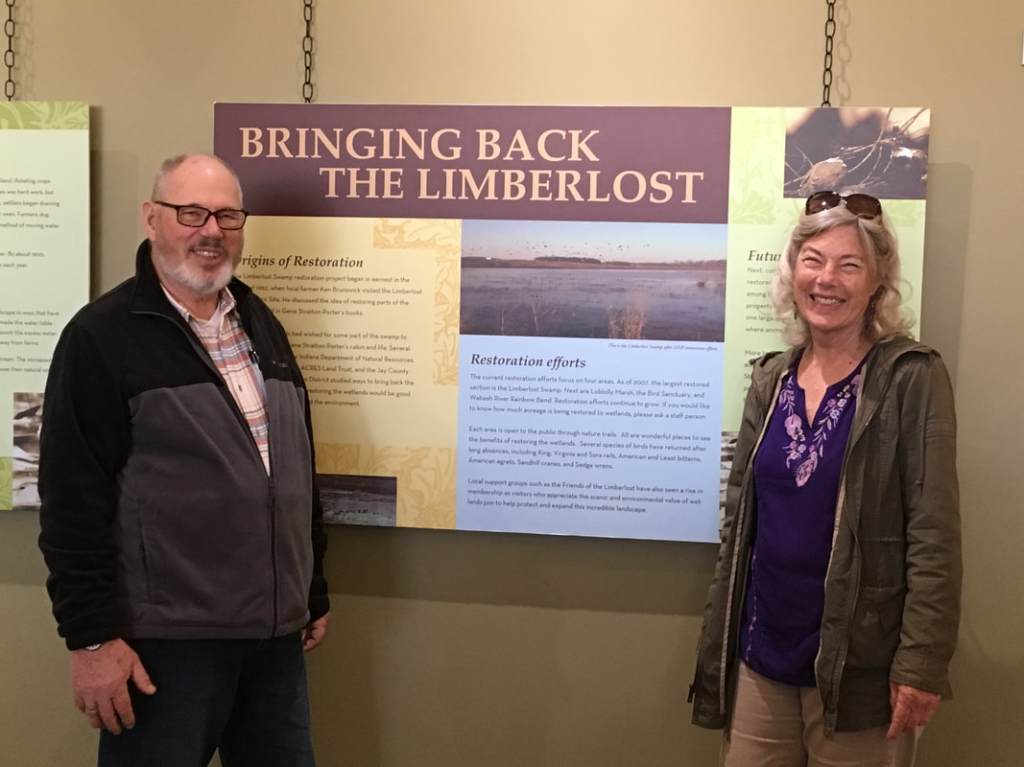
Mike Miller and Liz Miller, great nephew and niece of Lorene and Raymond Miller.

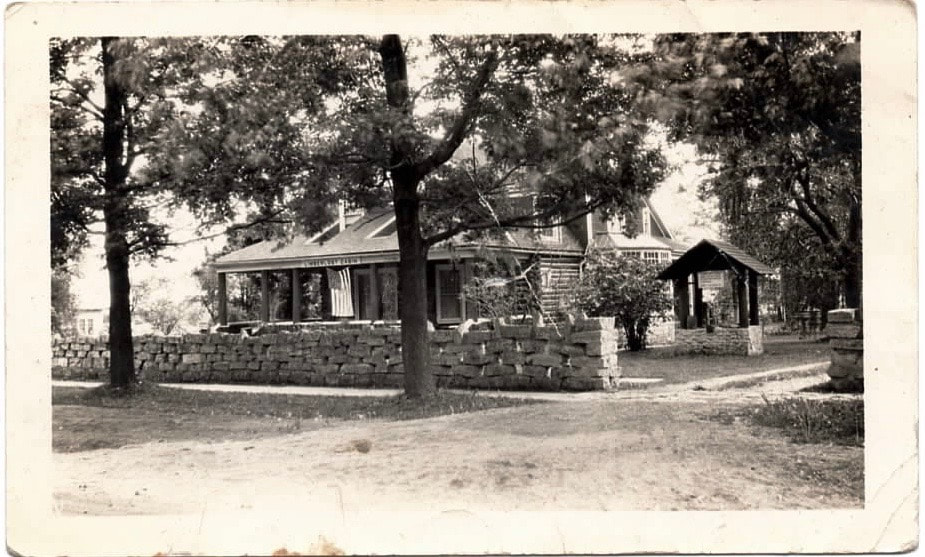
Photo of the Limberlost Cabin in the 1940s in Geneva. Photo compliments of Becca James.

Marsh Madness

By Kimberley Roll

March is a great time to view the beginnings of spring migration with the waterfowl at the Limberlost Swamp Wetland Preserve and the Loblolly Marsh. March is a month of overlapping between the new arrivals and winter residents that have not left yet.

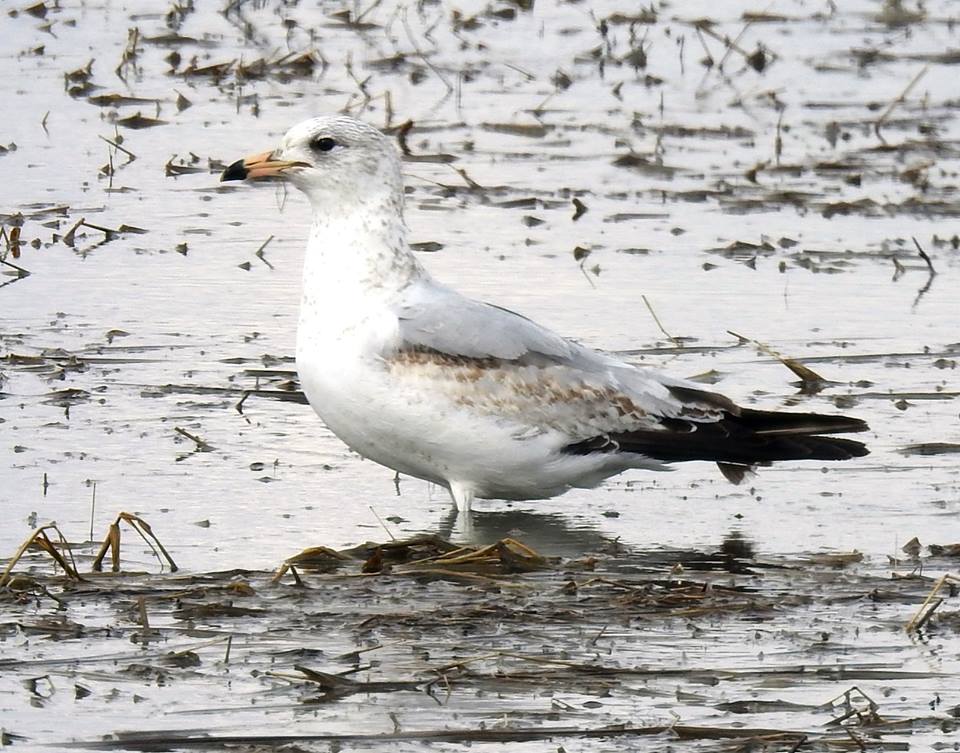
Ring-billed gulls arrived in March.

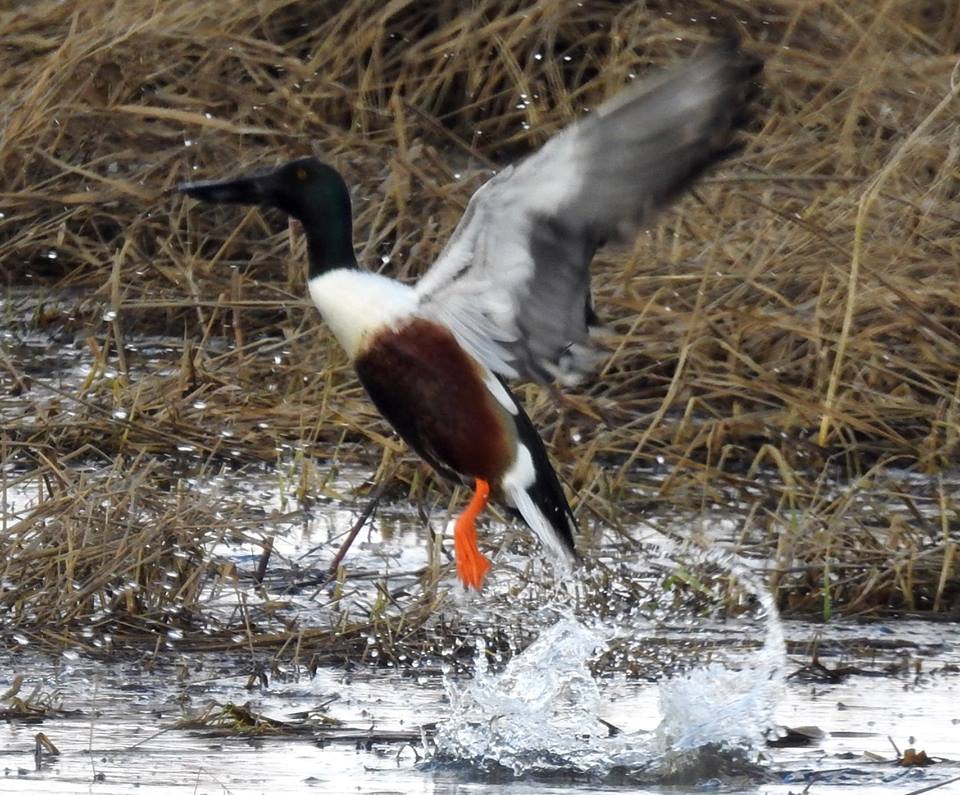
Northern shoveler taking off from the wetlands.

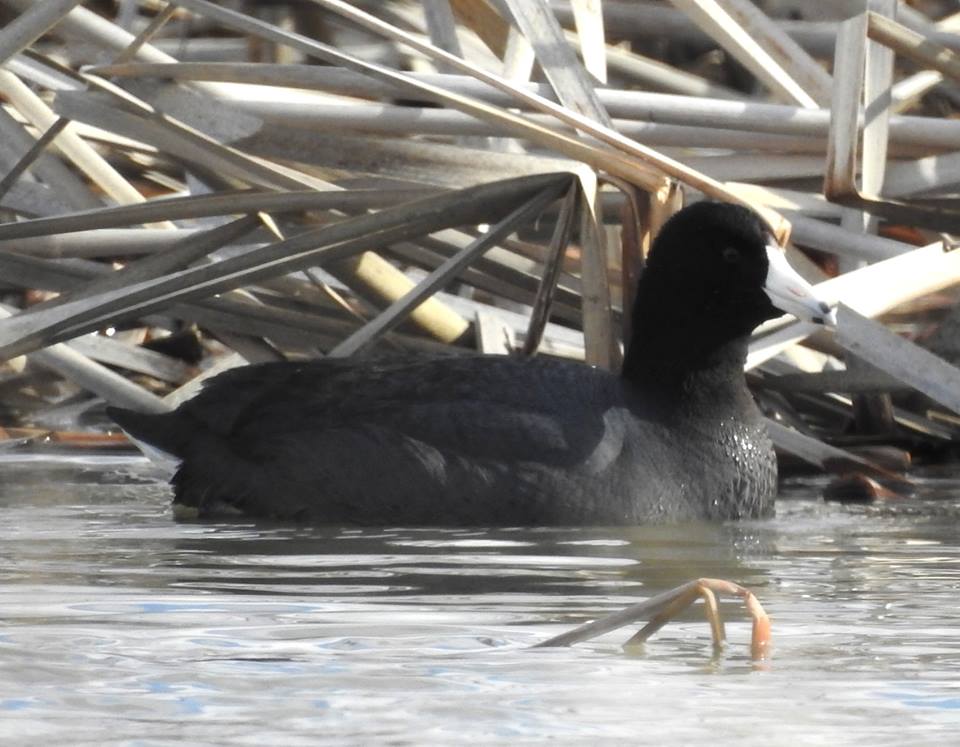
Coot

Turkey vulture

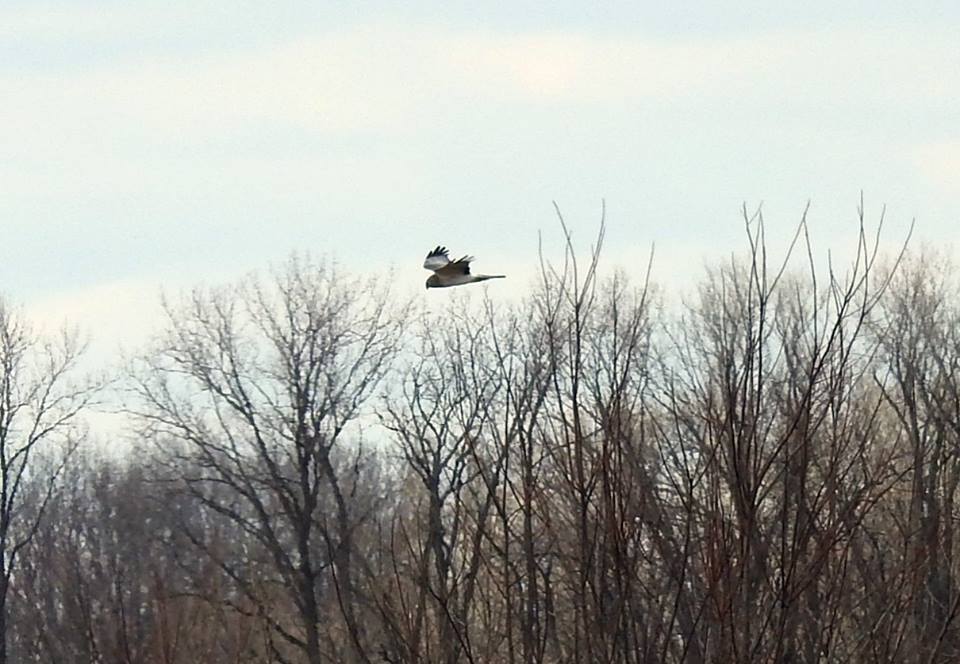
Male harrier flying over the wetlands. They are winter residents here and will shortly be leaving for nesting grounds further north of here.

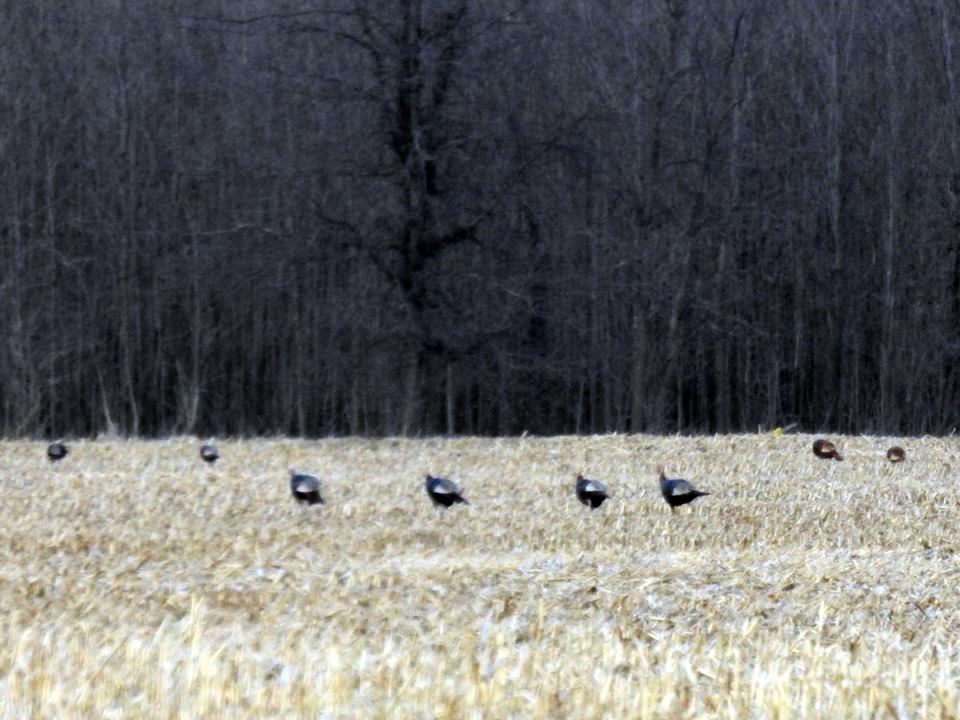
Turkeys are some of our year round residents.

Thank you to Kimberley Roll for the view of some of the birds of March at the marsh.

Wherein Mrs. Porter’s great fondness for snake fences is discussed

By Curt Burnette

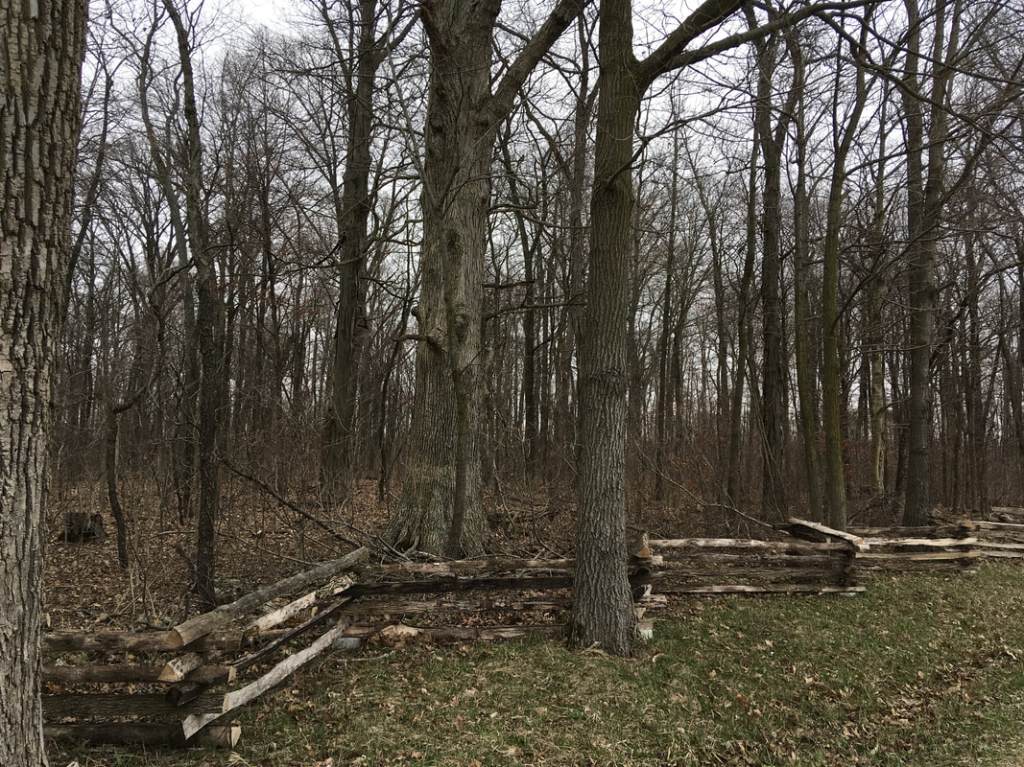
Gene Stratton-Porter loved snake fences. These were not fences designed to keep snakes away (Although, as discussed in a past column, Gene had a fear of snakes). No these were the old-fashioned split-rail fence that was not laid out in a straight line, but in a zig-zag pattern that resembled the body of a snake as it travels along the ground. Other names for this type of fence were zig-zag or worm fence. The zig-zag pattern gave the fence strength where each section met, eliminating the need for fence posts thus reducing the amount of labor.

Snake fences were very common around the Limberlost area while Gene lived in Geneva. They are mentioned often in the nature books she wrote while she lived here. In “Music of the Wild,” within the middle section entitled Songs of the Fields, she writes of an oat field “enclosed by a straggling old snake-fence overgrown with carrion vine and moonseed.” Later in the same section she describes old abandoned orchards found on almost every farm. “Almost without exception the old snake-fences surround them, weighted with loads of growing shrubs and vines, and on and under them home [live] field mice, moles, rabbits, chipmunks, lizards, birds of low habit, night moths, and bugs and insects of innumerable species.”

Gene was scornful of “progressive” farmers who used straight wire fences to enclose their grazing lands. This type of fence provided little habitat for plants to grow and for wildlife to “home.” While the obvious benefits of more modern wire fences are undeniable, there is no question she was correct in observing the old snake fences were marvelous places for abundant and diverse vegetation and animals. even the fence rows of wire fence provided some habitat for wildlife, but modern fence-less fields, of course, do not.

In her book “What I Have Done With Birds,” she describes her friend Bob Burdette Black leaping “the old snake fence, crossing the orchard to bring the camera” so she could get photographs of a catbird nest. A shrike nest she studied is in a solitary apple tree at the intersection of four snake fences. “There was no other tree close. Four lines of old snake-fences, bearing their usual load of treasures, crept to a meeting under its friendly boughs.”

In “Homing With the Birds,” Gene describes watching a hawk attempt to catch a chicken trying to hide from it in the shelter of a snake fence. The chicken would dart through the fence and the hawk would try to land on it. Then the chicken darted back through the fence and the “hawk arose and dropped on the other side of the fence.” She was watching this drama from a railway car and did not see the ultimate outcome. “When the train carried us from the sight this performance was still going on.”

Snake fences are rarely seen today. But in it at least one spot around Geneva there is still a section seen. If you happen to be driving north from town on Winchester Road, after crossing over County Road 950S, about .2 miles on down the road look to the left to see a zig-zagging section of snake fence along a yard and, for a brief moment, take a trip back in time.

Originally published in the Berne Witness, January 2018.

Snake fence east of the town of Geneva. Photo by Terri Gorney.

Getting to Know You

By Adrienne Provenzano

What do you see through your windows on February 27th? Any feathered friends? Snap a photo and share it with the Friends of the Limberlost!

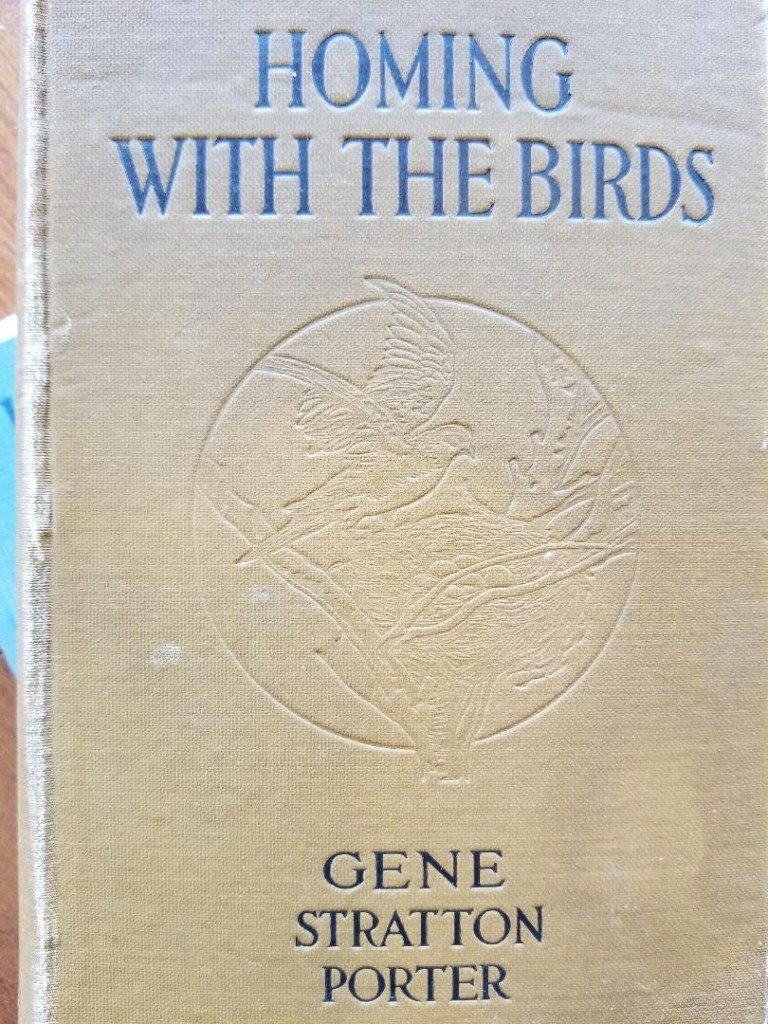
It’s clear that Gene Stratton-Porter, nicknamed the Bird Woman, loved birds. In 1919, her book “Homing With The Birds” was published. In it she shares various insights about her feathered friends. In chapter 16,”How The Birds Know,” she discusses migration. Gene notes as follows: “Birds of many species have such unerring knowledge of the workings of nature that they migrate when it is necessary and remain where they are when it is not. For example: during the bitter winter of 1917-1918 when extreme cold began in November and lasted in such prolonged form that we experienced killing frosts in June, there was not a robin in the swamps and gullies or deep woods surrounding Limberlost Cabin, north. In the unusually mild winter of 1918-1919 these birds never left us. In flocks of half a dozen, at any time during the winter, they could be found in the spice thicket back of the garage or in the sheltered ravines, and their appearance indicates that hey are living fatly upon dried berries, frozen fruits and vegetables, and food which they pick up in chicken-parks and around the farmers’ back doors.”

Limberlost cabin, north, is how Gene referred to what is now the Gene Stratton-Porter State Historic Site in Rome City, Indiana, on Sylvan Lake. That home is also called Wildflower Woods.

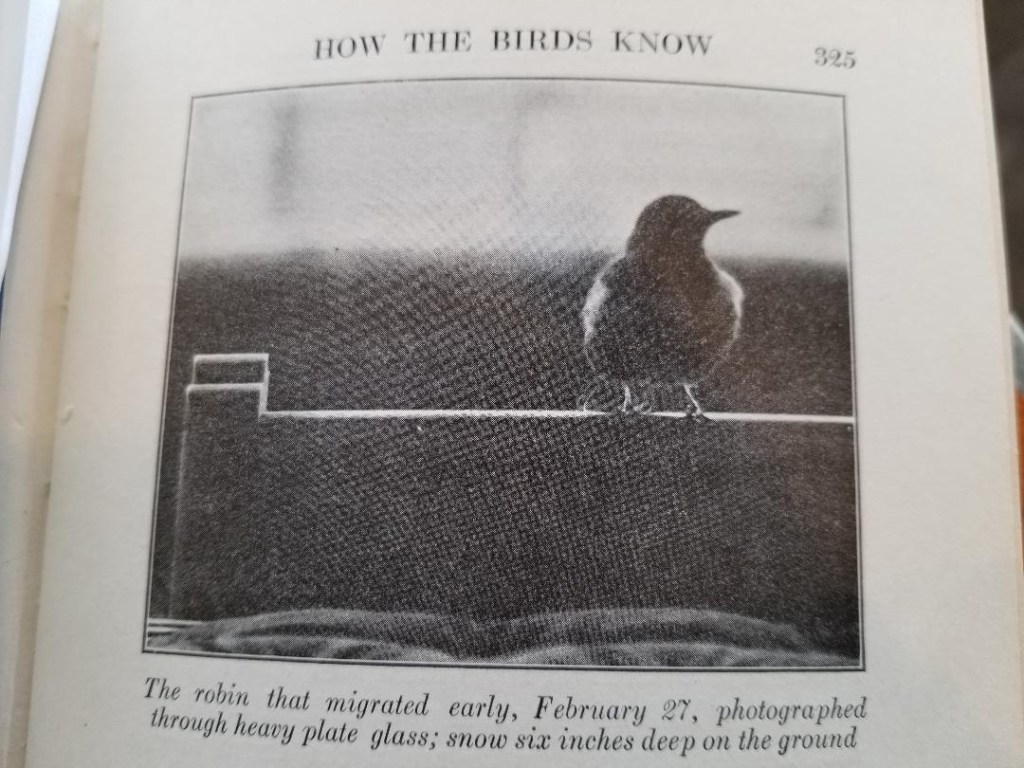
Gene enjoyed getting to know birds that made repeated annual trips to her Indiana homes, whether in Geneva or Rome City. One male robin visited Limberlost Cabin in Geneva several years in a row, and one year, on February 27th, she photographed him sitting on the back of an oaken bench on the porch just outside the large window in the library room where Gene had her desk. She included this photograph in “Homing With The Birds,” and explained her photography session with the bird in her earlier books “What I Have Done With Birds,” and “Friends in Feathers” as follows: “There sat that blessed bird, now of four long years’ acquaintance…our guest three weeks before any of his kind had come; and the fence in front and the logs of the veranda railing were covered with three inches of snow, the ground with six. Surely that was a picture to materialize as well as to live in the heart. I polished the glass to the last degree inside and out, set a camera on the library table and focused on the bench back. The shutter was set at the bulb exposure, the long hose attached and the bulb laid on my desk, and time after time I made exposures of him. I had to work against strong light, for there was snow outside, and his face and breast were in the shadow, but I did my best. I had thought he remained motionless much longer than he did, when it actually came to counting off time in seconds. I couldn’t get just as long an exposure as I wanted, —-he would turn his head, ruffle his feathers a bit or draw a foot out of the cold. But I got several good pictures that were precious to all of us, for there was the window-seat cushion for a foreground, the oak bench outside the glass for a perch and three inches of snow in the distance on railing a fence.”

I hope readers of this blog will have the opportunity to visit Limberlost State Historic Site in Geneva and look through that same window when they tour Gene’s house, and also enjoy seeing the bathroom and kitchen restorations where such photographs were developed, dried, and displayed! 

Winter at Limberlost

There is incredible beauty in winter at Limberlost. We hope you will enjoy the following photos taken in January and February 2019 by Kimberley Roll, Randy Lehman and Terri Gorney.

Red-tailed hawk in flight. It is a year round resident at Limberlost. Photo by Kimberley Roll.

The Loblolly Marsh has a quiet beauty in winter. Photo by Kimberley Roll.

Wabash River at Rainbow Bottom. Photo by Terri Gorney.

The pair of bald eagles at the Loblolly Marsh. Photo by Kimberley Roll.

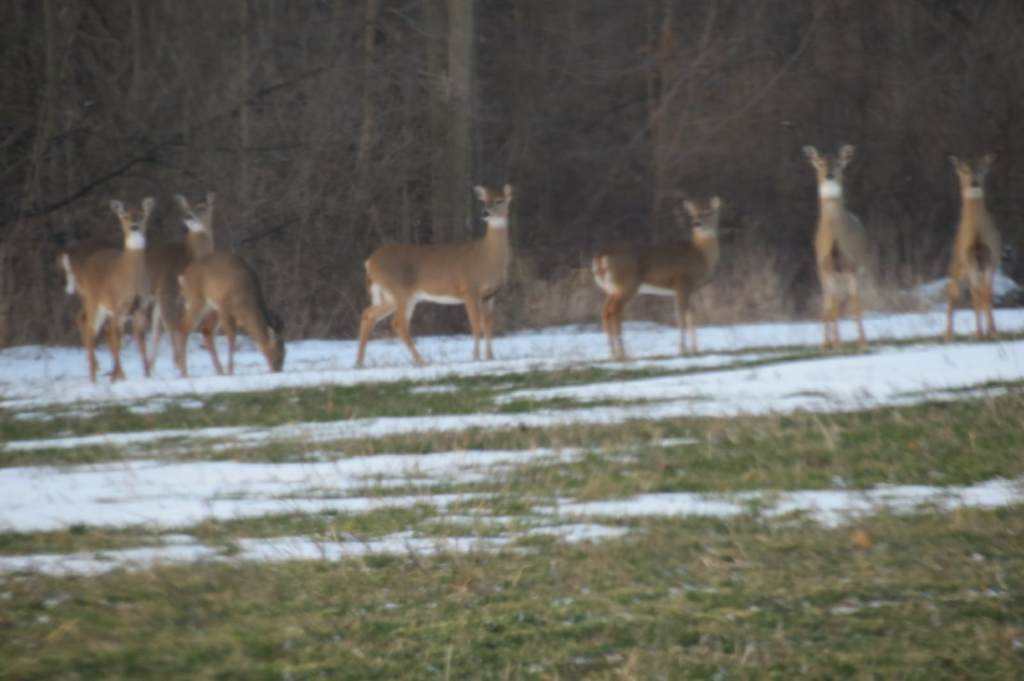
White-tailed deer make their home at Limberlost. Photo by Randy Lehman.

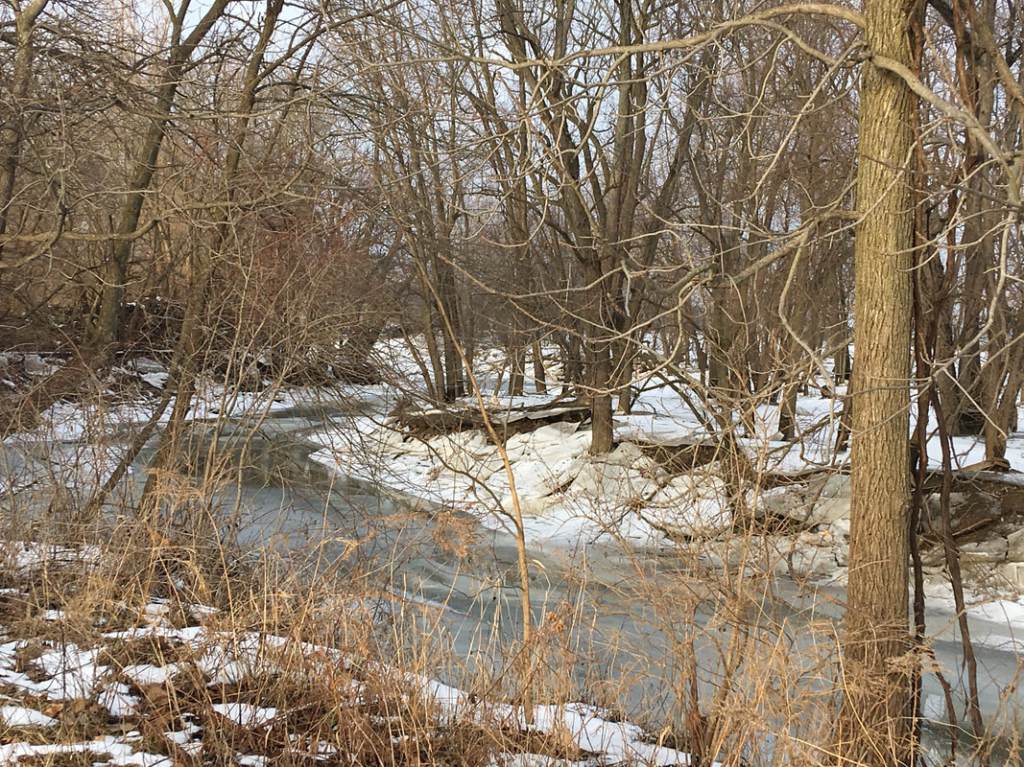
Shelf ice at the Loblolly Marsh.

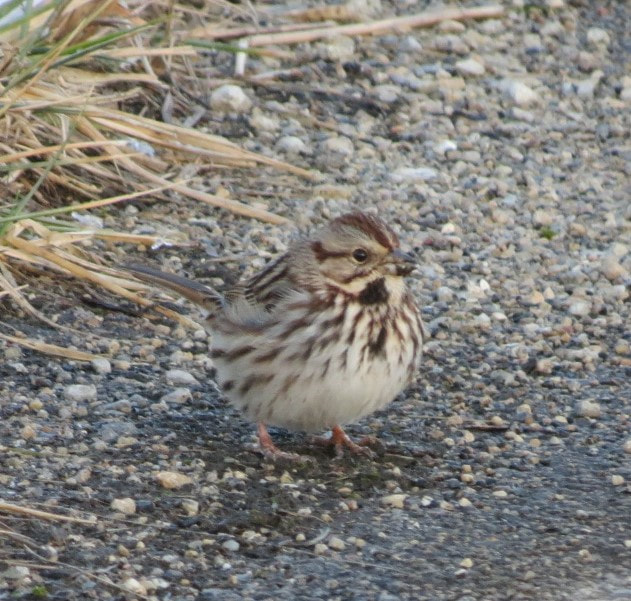
We have several native sparrows that make their home at Limberlost. This song sparrow photo was taken at the Loblolly Marsh by Randy Lehman.

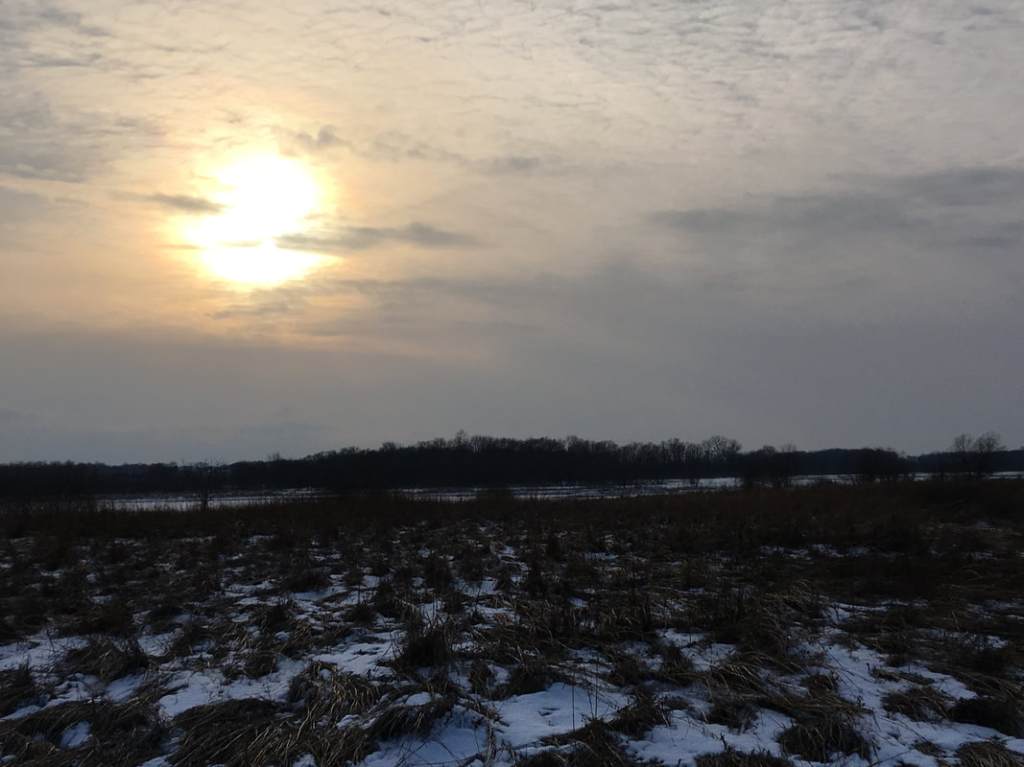
Late afternoon sun at the Loblolly Marsh. Photo by Terri Gorney.

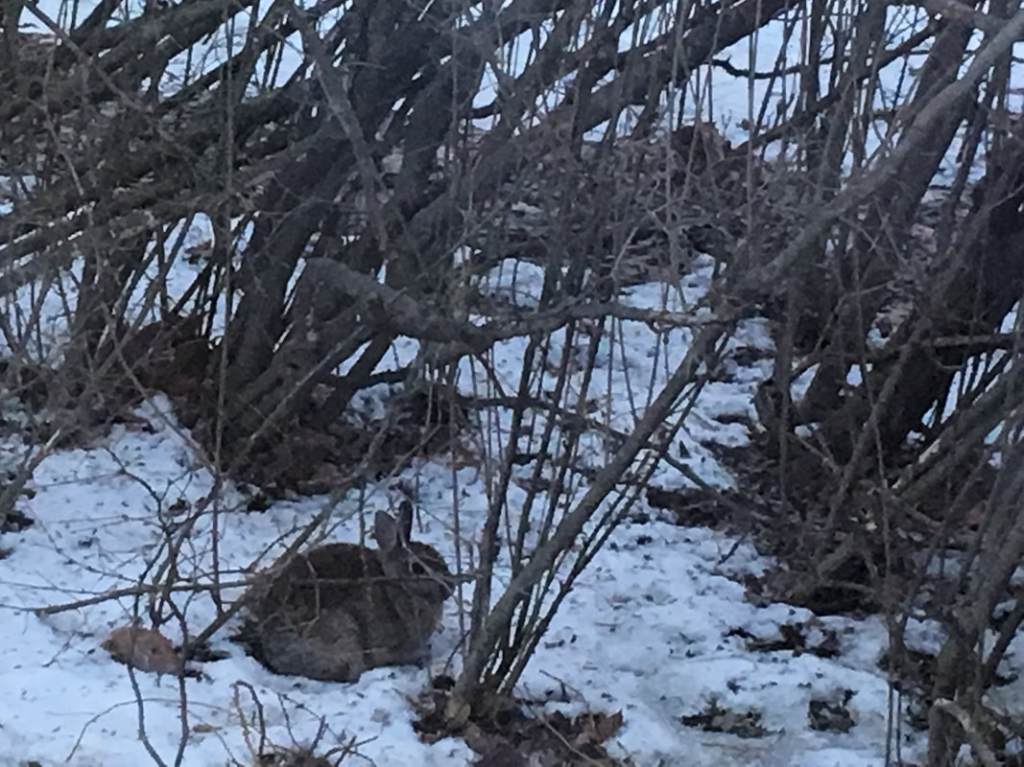
Rabbit. Photo by Terri Gorney.

Photo of the Wabash River on the east side of Geneva. Gene Stratton-Porter called this place Paradise on the Wabash. Photo by Terri Gorney.

We hope you have enjoyed your winter hike around Limberlost. It is beautiful in all seasons.

Wherein we reflect on the “butcherbird”, studied by Mrs. Porter, but a Limberlost resident no more

By Curt Burnette

One of the birds that Gene Stratton-Porter studied, photographed, and wrote about was the loggerhead shrike. For her nature book “What I Have Done With Birds”, she photographed a nest and the young birds in it at an oil lease east of Geneva, just east of the Wabash River. She was enamored with the five baby shrikes, calling them “darlings.” They are striking birds in appearance, about the size of a robin with light grey bodies and some black and white on their wings and tails. Most noticeable is the black mask running through their eyes, and a hooked, hawk-like-beak. Although they are members of the perching bird group, like robins, jays, sparrows, etc, they are much like hawks in their feeding habits.

Two species of shrikes in the U.S. are the loggerhead and the northern. Both types of shrike are known as “butcherbirds.” Shrikes have a notch in their beak that allows them to grab prey by the nape of the neck and sever the spine. Often, they impale dead prey on large thorns or barbed wire, much like a butcher will hang the carcasses of cattle and hogs in a cooler, waiting to be processed later into cuts of meat to be eaten. Butcherbirds’ impaled prey can also be eaten later. Although they eat a lot of insects, especially grasshoppers, they will also kill mice, voles, shrews, snakes, frogs, and even other birds as large as cardinals.

Although the loggerhead shrike was nesting in the Limberlost area when Mrs. Porter lived here, we no longer have them around. The Limberlost would have been near the northern edge of the loggerhead’s breeding territory, as they are more of a southern bird. The population of these birds is now in a steep decline, for unknown reasons.

The northern shrike is a winter visitor to the Limberlost area. They breed much farther north in the summer. They are rarely seen around here, and are the cause of a bit of excitement when one shows up. In the Decembers of 2012 and 2013, I discovered impaled voles (meadow mice) in a small locust tree in the portion of the Limberlost Swamp Wetland Preserve (LSWP) just west of Geneva’s ball fields. One year the dead vole was intact, but the next year the impaled vole was headless. A gruesome find, but it told me a northern shrike was living in the area. Unfortunately, I was never able to see it. Then last Marsh, as I looked out a window of my yard, it was a northern shrike! This bird was very obliging in that it hung around my house for a number of days, allowing many excited birders to get good looks and photos. And just this past December, for a few weeks, a northern shrike was seen at the Loblolly Marsh Nature Preserve. So, even though the loggerhead shrike is no longer found in the Limberlost, at least we are able to enjoy the occasional sighting of a northern shrike and thrill to the attractive but deadly butcherbird.

Note: This article was written by Curt Burnette for his Limberlost Notebook column in the Berne Witness in February 2018. In late 2018 and early 2019 Jesse Post and Kimberley Roll have seen northern shrikes at the Loblolly Marsh Nature Preserve and the Limberlost Swamp Wetland Preserve.

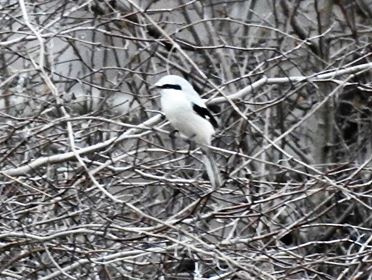
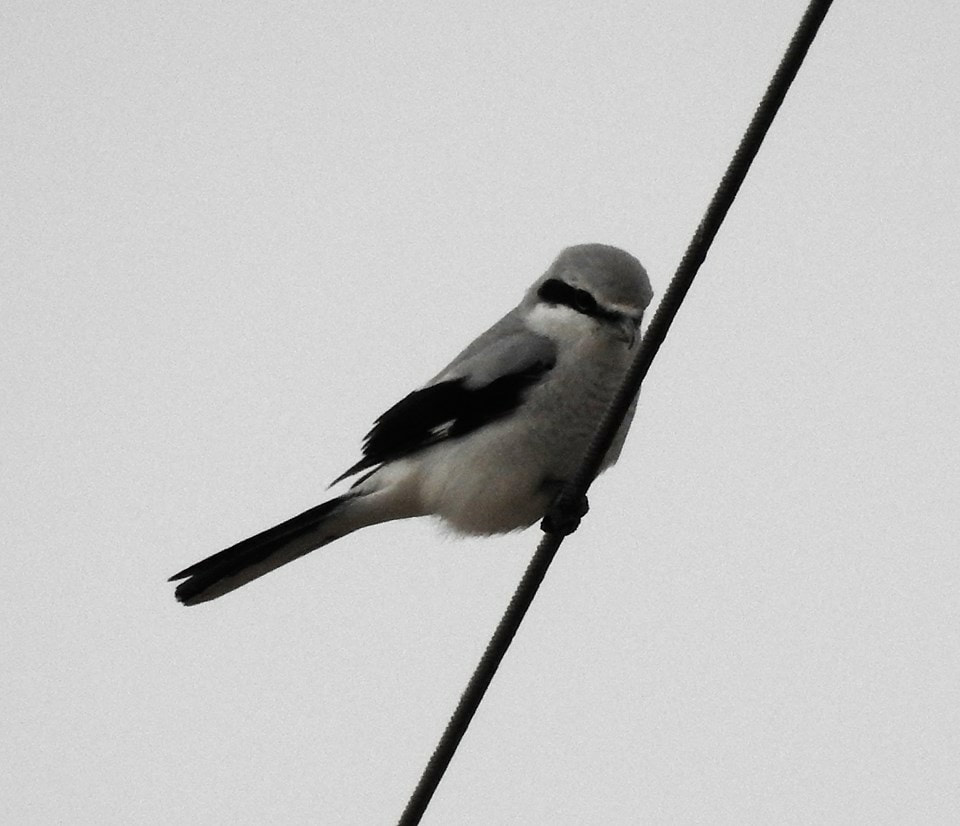
These two pictures of the northern shrike were taken by Kimberley Roll in March 2017. This is the bird that caused so much excitement and was regularly seen in and around Curt Burnette’s home.

Wherein is discussed how the Limberlost Swamp, Grand Kankakee Marsh, and Great Black Swamp share a past history and future prospects

By Curt Burnette

The Limberlost Swamp was a large wetland. It was roughly two miles wide and ten miles long, stretching from northeast of Geneva (Rainbow Bottom) to several miles southwest of town (Loblolly Marsh), and spanning 13,000 acres (20 square miles) before its destruction. The Limberlost contained swamp and marsh interspersed with higher, drier forest and seasonally flooded bottomland hardwood forest. But compared to two other wetlands that existed at the same time in Indiana and Ohio—it was tiny.

In northwest Indiana, not far south of Lake Michigan, was one of the largest freshwater marshes in the United States–the Grand Kankakee Marsh. It covered almost 500,000 acres. The Kankakee River was the heart of this great wetland. The Kankakee was 240 miles long before it was channelized, with around 2000 twists and turns along its length contributing to the wet, marshy nature of the area. Because of its vast size and outstanding quality of habitat, it was sometimes referred to as the “Everglades of the north.” Sportsmen from all over the United States, and even the world, came to hunt the bountiful waterfowl that lived there, and resorts sprang up within it to cater to the citizens of the great city of Chicago, not far to the northwest.

The Great Black Swamp was located mostly in northwest Ohio, but extended into Indiana. It was enormous. The Black Swamp was almost 120 miles long and up to 40 miles wide at spots, covering about 1500 square miles or 980,000 acres. It stretched from just east of Fort Wayne to southwestern shore of Lake Erie. It was much like the Limberlost in that it was a network of swamp, marsh, forest, and grasslands. The Great Black Swamp was more infamous than it was famous. At certain times of the year–local residents declared–only adult men could withstand the rigors of traveling through it, and water levels would be up to the bellies of horses on the few roads that traversed it.

These three mighty wetlands were a result of the retreat of the last glacier that covered parts of Indiana and the upper Midwest. Another commonality was their destruction at the hands and machines of humanity. The felling of trees for lumber and land clearing, the ditching and rivers combined to lead to the demise of these titans of nature. They also have a common future. Grass-roots organizations–such as Limberlost Swamp Remembered, The Nature Conservancy (Kankakee Sands Restoration), and the Black Swamp Conservancy–are helping to restore and preserve relatively small, but valuable, remnants of each. These former natural wonders can never return to their glory days of the time before the Midwest was settled and tamed, but they can continue to be an important part of the Hoosier and Buckeye landscapes for a long time to come.

Curt Burnette and Limberlost

Curt Burnette came to Limberlost in January 2012. In November of that year, he wrote his first column for the Limberlost Notebook in the “Berne Tri-Weekly” (now the “Berne Witness”). We thought it would be fun to take a look back at Curt’s first column.

The Limberlost Notebook

Wherein a Swamp Man Heeds the Call of the Limberlost

By Curt Burnette

“Eh labas! Comment ca va?” (“Hey there! How’s it going?”) This is how I was greeted by my Cajun co-workers years ago when I worked at a swamp tour outside of New Orleans. To which I would reply, “Ca va bien or comme si, comme ca or ca va ma! (“It’s going well or so-so or it’s going badly”) – depending on how I felt.

My Cajun co-workers were the captains of the boats that took tourists down the bayous and into the swamps southwest of New Orleans. My job was to do educational programs under the tent where the tourists waited before they loaded onto those boats. I had interacted with Cajuns many times when I was the curator of the Louisiana Swamp Exhibit at the Audubon Zoo in New Orleans, but had never worked so closely with them on a daily basis before. I was embraced by them an accepted into their world, so in a way I became an honorary Cajun – Cajun Curt, the Hoosier on the bayou. I even own a Cajun dictionary and a Cajun canoe known as a pirogue.

I spent many years exploring and learning about the swamps and marshes of southern Louisiana. They are fascinating, legendary, famous places: the Atchafalaya, Honey Island Swamp, Manchac. I missed them when I returned to Indiana after Hurricane Katrina. When I got back to Indianapolis I re-entered the zoo world by working at the Indianapolis Zoo for several years. During that time, the closest I came to fulfilling my love of swamps and wetlands was using baby alligators while doing education programs. After I quit the zoo, I thought my swamp days were completely over.

But then, as I searched for new work, I discovered a job possibility that actually involved a swamp – a swamp made famous over 100 years ago by an Indiana writer. The Limberlost State Historic Site was looking for someone to fill their naturalist and program developer position opening. I was intrigued. A fascinating, legendary, and famous swamp seemed to be calling me. I applied for the job, was interviewed and offered the position. I took it and so I came to the Land of the Limberlost.

By the time it had become famous, the Limberlost was mostly gone. During the time Gene Stratton-Porter was writing about it, it was disappearing. But the Land of the Limberlost survives and the local citizens of that land still care about it. When I arrived I saw the on-going effort to bring back a version of the legend that fit the current world and I was impressed. After 10 months on the job I am still impressed. Next month I will tell you more about whey I like what I see and why I like where it is going Au mois prochain, mes amis (see you next month, my friends).

Curt Burnette as Paxson and Bill Hubbard as Limber Jim