Wherein we examine the history of beaver in the Limberlost—from the Ice Age giants to the disappearance and return of our modern dam-builders

by Curt Burnette

Beaver are the largest rodents in Indiana, the largest rodents in the United States, and the second largest rodent in the world (South American capybara are the largest). But as large as they are now, they were even bigger in the past–or at least their relatives were. Around the end of the Ice Age, about 10,000 years ago, what is now Indiana and Illinois was home to the greatest concentration of giant beaver in North America. These cousins of the modern beaver were as big as black bears, up to 8 feet long and over 200 pounds! Unlike current beaver, their teeth were not chisel-shaped, so they would not have cut down trees and probably didn’t make dams or lodges. They would have lived in the water, though, and eaten various types of aquatic vegetation much like muskrats do today.

The two species of modern beaver, our local North American beaver and the Eurasian beaver, are not descended from their giant cousin. Modern beaver were already around when the giants were alive, sometimes living in the same area, according to fossil evidence. But as the glaciers of the Ice Age retreated and the climate warmed up, the giant beaver went extinct and their smaller tree-chewing cousins flourished.

Beaver were common throughout Indiana and much of the United States and Canada when the two countries were being settled. Many historians believe beaver were more responsible for the exploration and development of our country than any other animal, because of the great value of an desire for beaver fur. The first white men to explore many portions of North America were trappers searching for beaver. The demand was so great that the population of beaver in many areas was greatly reduced, or even wiped out. Such was the case in Indiana. Beaver were completely trapped out of our state by the late 1880s or early 1890s. when all of a certain type of animal is gone from a defined area (like a state), it is said to have been extirpated. It is likely Gene Stratton-Porter never saw any beaver in the Limberlost during the time she lived in Geneva, from 1888-1913.

Beaver were re-introduced into Indiana in 1935 and have been successfully re-established throughout much of the state. They have returned to the Limberlost area. Beaver don’t always build dams and lodges. They also commonly dig burrows into the banks or rivers and streams.

These “bank beavers” are not nearly as noticeable as the dam building ones. Often people don’t realize they are around. If you hike along the Wabash River at the Rainbow Bend Park or Limberlost County Park you probably won’t see a beaver, but if you look along the river’s edge you might find beaver-gnawed branches. Or better yet, you might hear the slap of a beaver’s tail as it dives underwater when it realizes you are nearby–a sound Mrs. Porter may never have experienced in her wanderings though the Limberlost.

Originally published in the Berne Witness November 2013
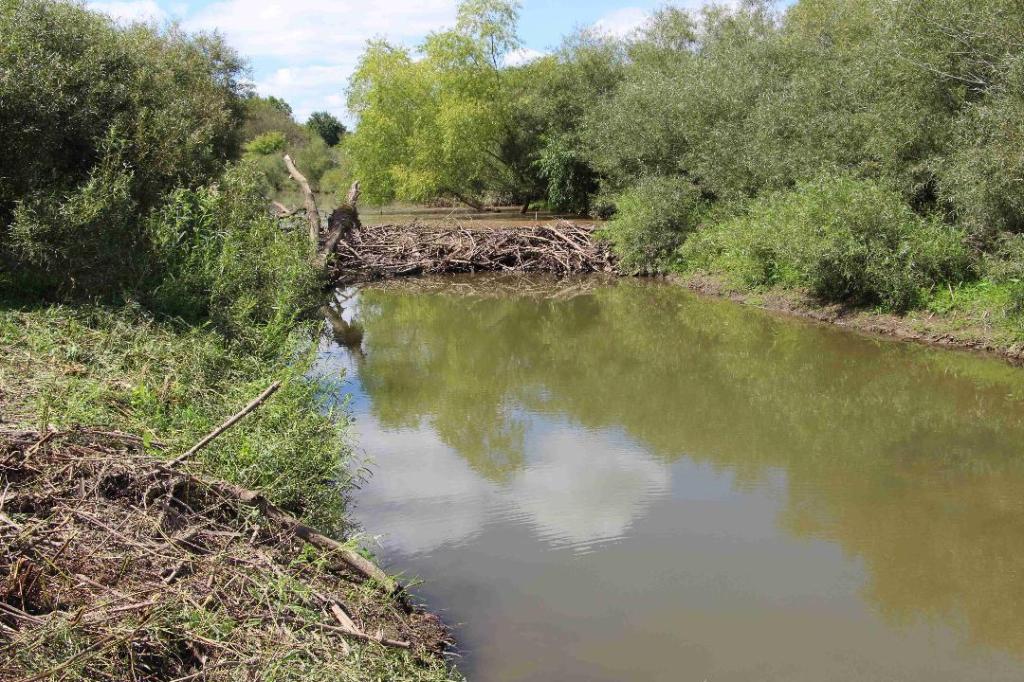
Beaver dam in the Loblolly Creek. Photo by Curt Burnette.

Beaver stick cache. Photo by Curt Burnette.
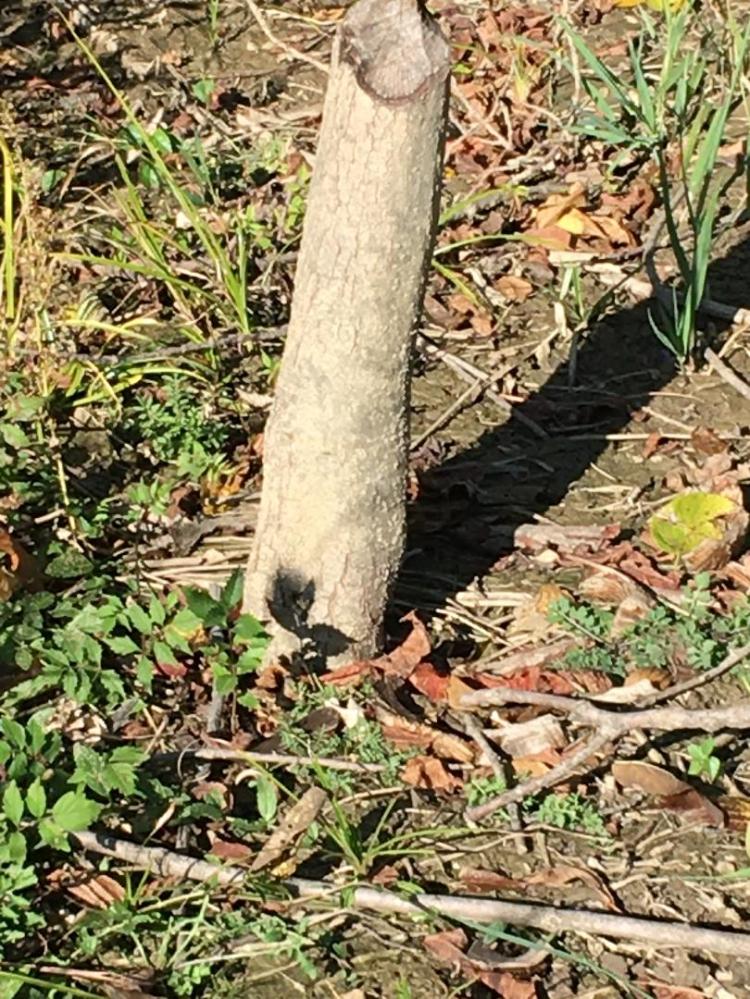
Beaver chewed tree.
October Birds of Limberlost

By Kimberley Roll

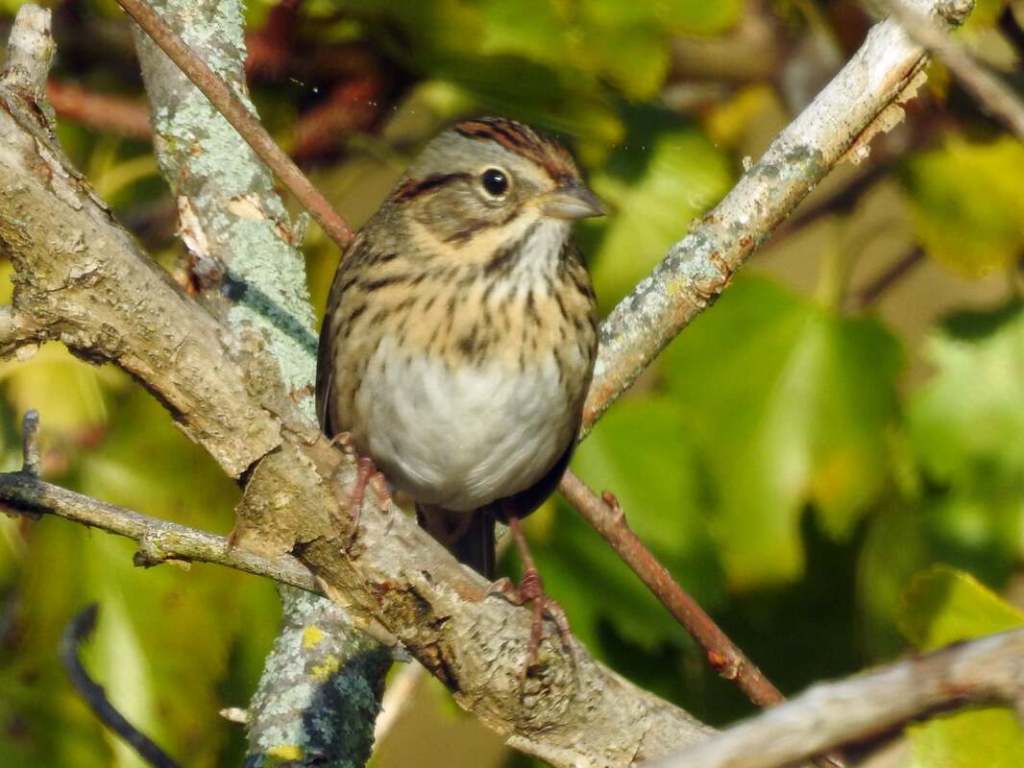
Kimberley Roll took this great photo of a Lincoln’s Sparrow at the Loblolly Marsh Nature Preserve. It is a private bird and hard to photograph.
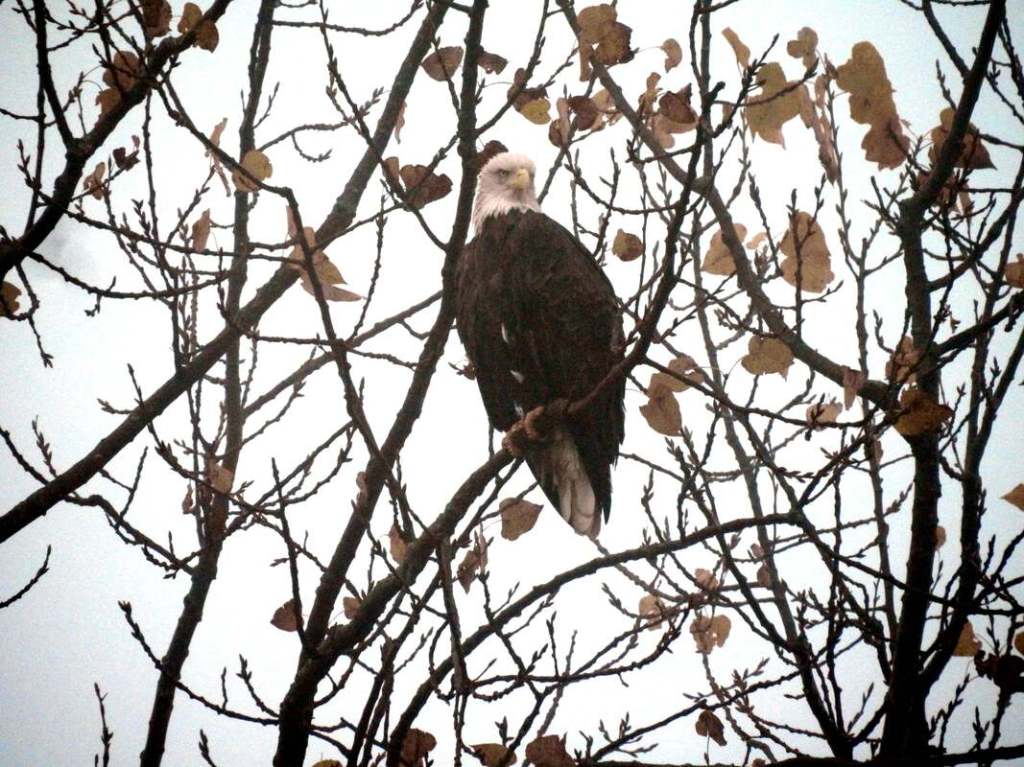
One of Limberlost and Loblolly’s resident bald eagles. The Limberlost Conservation Area is known for its number of bald eagles. A bird that had been extirpated from Geneva in Gene Stratton-Porter’s time.

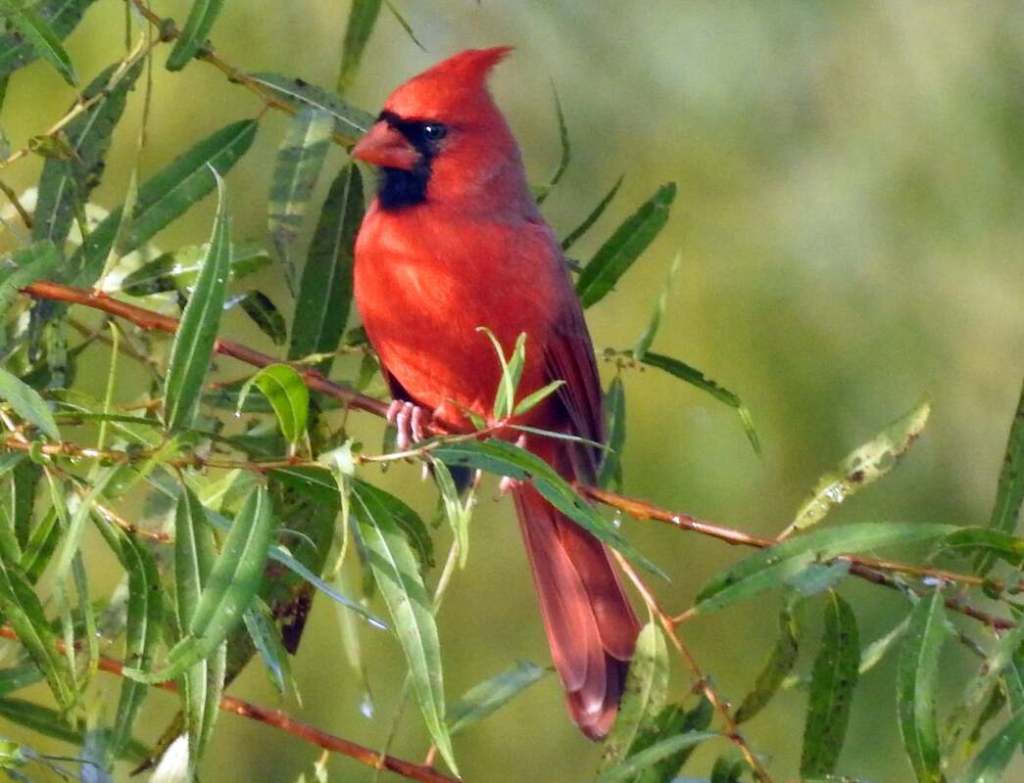
Striking photo of a male cardinal. The cardinals were not that common in this area in Gene Stratton-Porter’s time. Gene’s first book was “Song of the Cardinal.” It was a bird she loved seeing and was happy to know that they nested in Geneva.

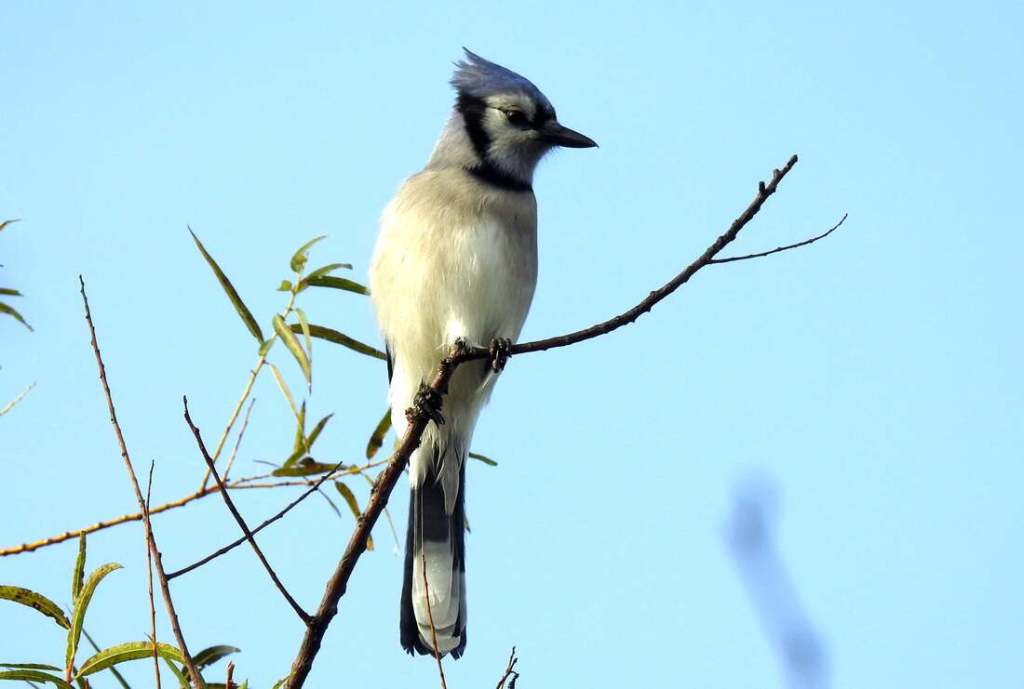
The blue jay has been seen in good numbers this year around Limberlost.

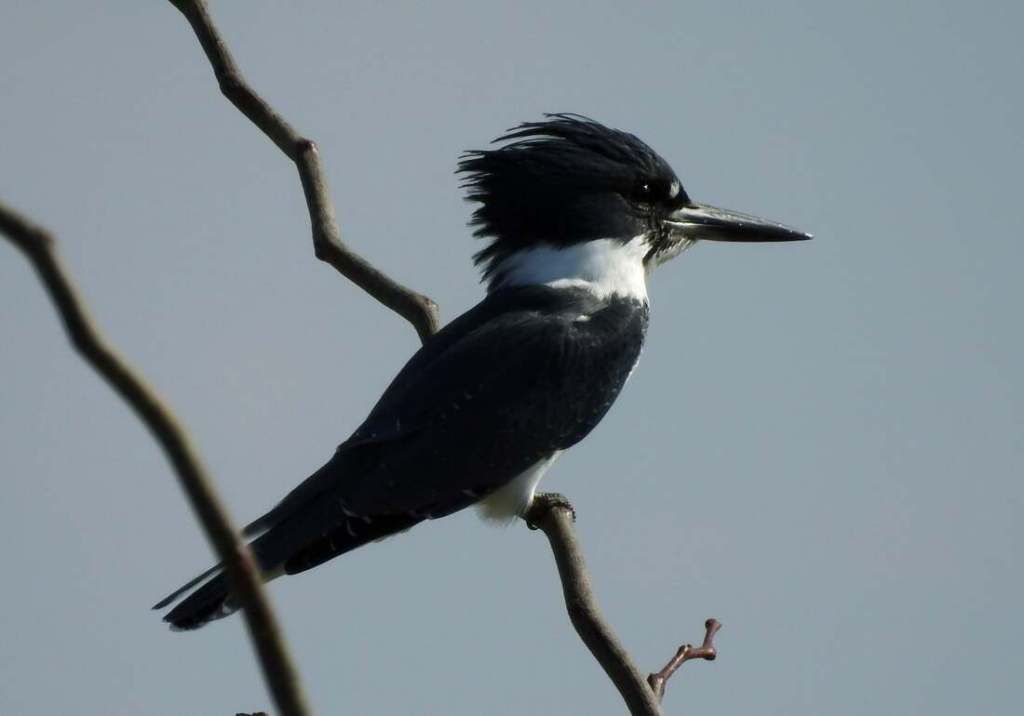
The kingfisher. This is a bird that Gene was excited to photograph and its nest by the old gravel pit on the east side of Geneva. Gene would be pleased that the kingfishers are still seen in that same area.

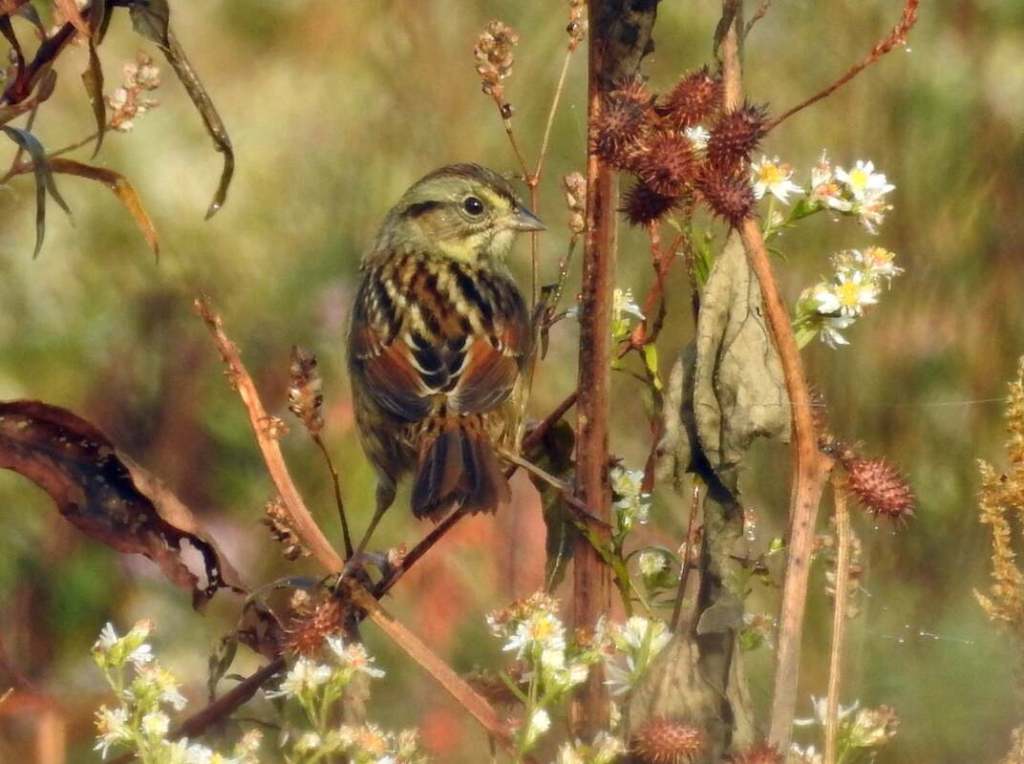
A swamp sparrow. A bird well named as this is a bird seen around the Limberlost wetlands or “swamp.”

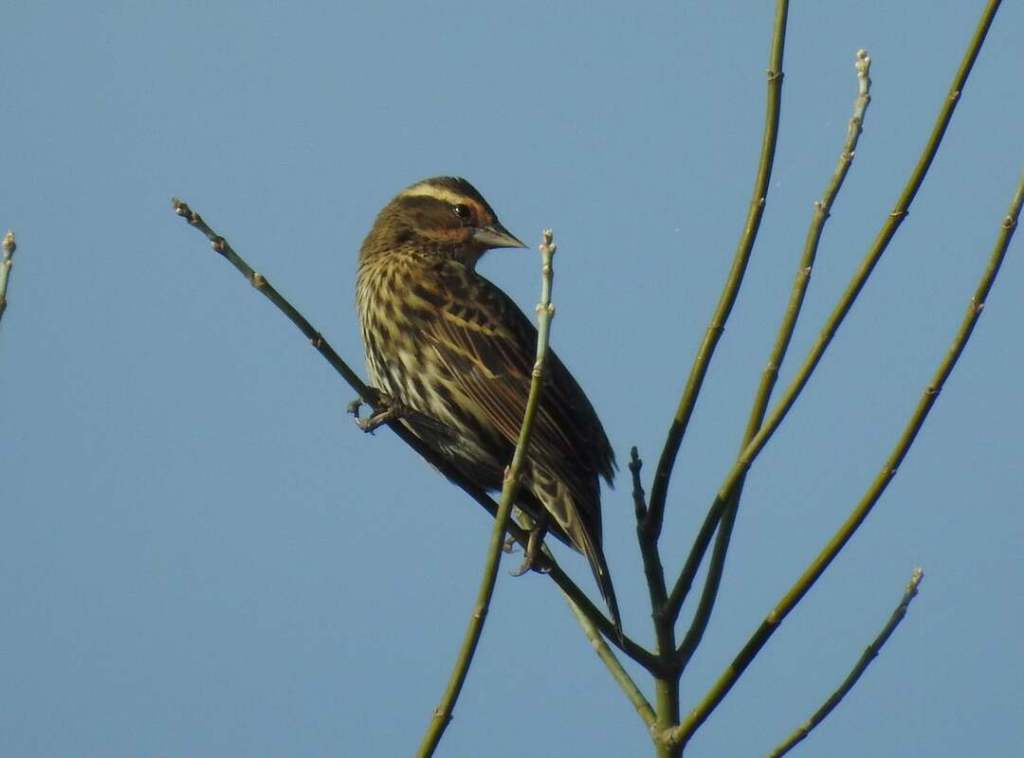
We have had flocks of red-winged blackbirds migrating south. The female red-winged blackbird is commonly mistaken for a sparrow.

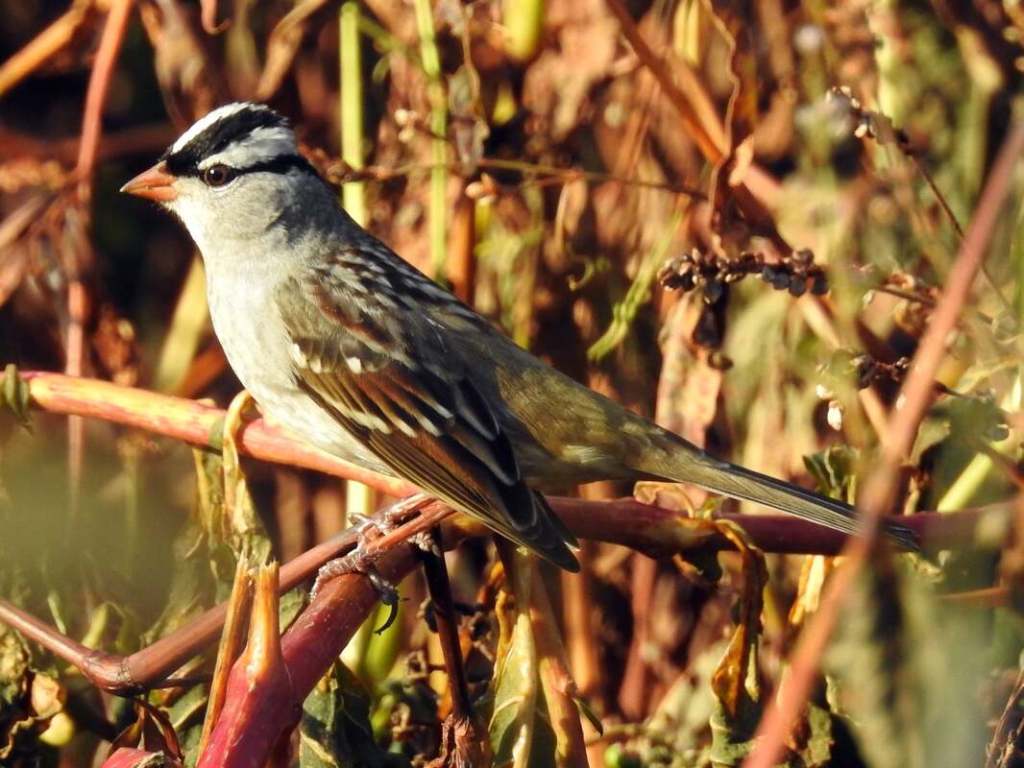
White-crowned sparrow is one of our winter residents. One of our native sparrows.

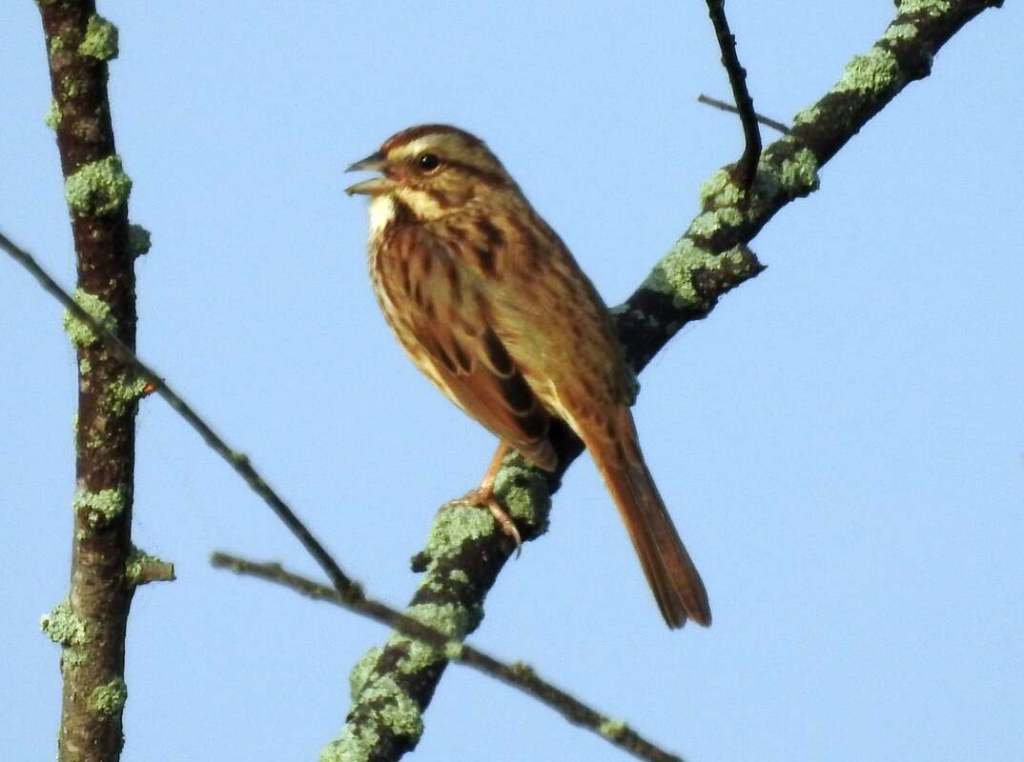
Song sparrow is one of our year round birds at Limberlost.

Thank you to Kimberley for sharing her birding adventures at Limberlost.

OSIRIS-REX Update!

By Adrienne Provenzano, Friend of the Limberlost and NASA Solar System Ambassador

The Limberlost is much beloved by birdwatchers for the variety of species that visit this area. Some stay year-round and others migrate. It takes curiosity, time, effort, and patience to engage in this pastime.

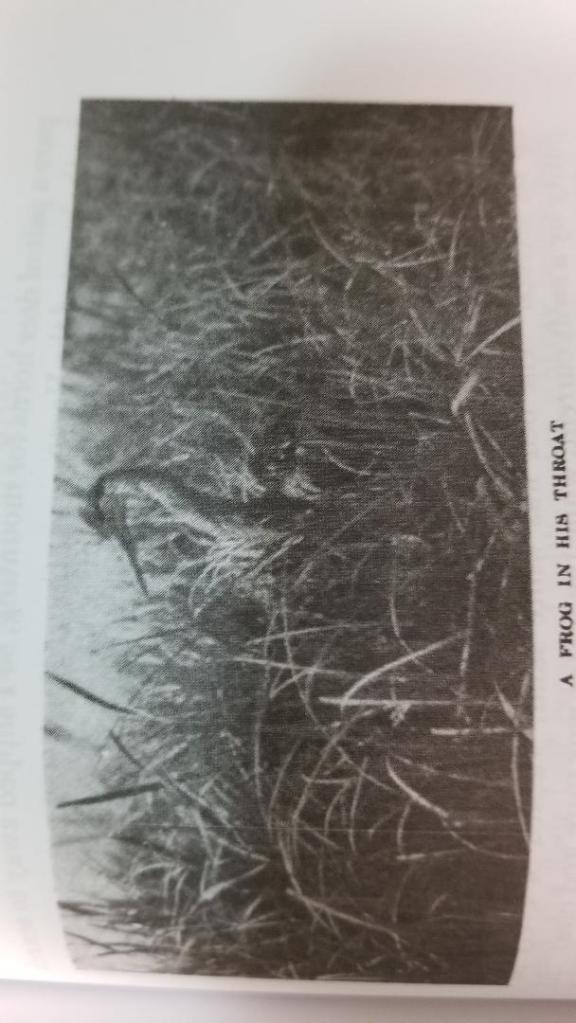
Gene Stratton-Porter loved birds and while living in Indiana sometimes traveled to Michigan for fishing trips with her husband Charles and daughter Jeanette. While on one such trip, she found herself with time alone. With a heart for exploration and adventure, she rowed herself along a river to a lake where she was able to observe and photograph a heron. She was quite pleased with the results, especially catching the heron in the act of grabbing and swallowing a frog! She writes in Friends in Feathers: “There stood the Heron, a big fine fellow, the light striking to brilliancy the white of his throat, wet with dew from the rushes, the deep steel-blue of his back, and bringing out sharply the black on the flattened crest and the narrow line down the front of his throat.” The story continues, “out darted the Heron’s neck, clip went his shear-like beak, then pointed skyward, crest flat, the frog was tossed around and caught head-first-one snap, two, it was half-way down the gullet of the bird, whose beak was dawn in, crest flared and chin raised, before I recovered from my surprise enough to remember that I held the bulb in my hand and must squeeze it to secure the picture.”

In September 2016, I wrote a blog for this website about a space mission to capture a sample of an ancient space rock and return that sample to Earth. The mission, called OSIRIS-REX, launched in September 2016 and successfully arrived at that asteroid, named Bennu, in December 2018. This coming Tuesday, October 20, 1t 6:12 p.m. EDT, the OSIRIS-REX spacecraft will stretch out a long robotic arm and, using a special tool at the end of it, collect a sample of up to 4.5 pounds of dust and rock from its surface. The sample will be put in a special container and returned to the desert of Utah in 2023, transported to the Johnson Space Center in Houston, Texas, and studied to learn more about our solar system!

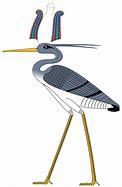
Bennu is the ancient Egyptian name for a heron-like bird associated with Osiris, believed by ancient Egyptians to bring knowledge of agriculture and rule the underworld. The name was given to the asteroid because the robotic arm, combined with the extended solar panels which give the spacecraft power, make it look like a flying bird!

Keeping with the theme of birds for this mission, the collection site is called Nightingale. There were four sites considered: Nightingale, Osprey, Kingfisher, and Sandpiper. The back-up site is Osprey. All were birds that could be found along the Nile River in ancient Egypt. Gene Stratton-Porter often photographed birds along the Wabash and in the Limberlost marshes, among them Kingfishers and various birds of prey.

Tune in to NASA-TV at www.nasa.gov, beginning at 5 p.m. EDT on Tuesday, and you can follow the capture of the sample! At 200 million miles away, it’s much further than Gene’s trip to the Michigan wilderness to study heron behavior, but the curiosity, time, effort, and patience involved are similar. Missions like OSIRIS-REX provide opportunities to develop and test technology, challenge scientists and engineers, and inspire students and educators and space enthusiasts around the world. Often, NASA missions lead to spinoff technologies we use in our everyday lives!

This is Gene Stratton-Porter’s photograph of a great blue heron taken in Michigan. Today the great blue heron is a common sight at Limberlost.

Music of Autumn

By Adrienne Provenzano, Songstress of the Limberlost and Advanced Indiana Master Naturalist

Have you had a chance to just sit and listen to the leaves recently? The songs of the trees changes a bit each day, each type of tree with its own music. Bird songs mix in as well in this outdoor concert as other singers and instrumentalists blend their voices in and out of a tapestry of sound. It is a time of year for such a variety of sounds and sights, tastes, aromas, and textures. The crunch of dried foliage underfoot. The rosy hue of a sweet autumn apple. The scent of harvest in the air. The softness of cozy sweaters.

In the 1890s, Gene Stratton-Porter started the Wednesday Club, a literary society in Geneva, Indiana. She presented a paper at one meeting about the poet Walt Whitman (1819-1892), focused on his life and his work Leaves of Grass. She appreciated Whitman’s independent nature and wrote as follows: “He liked to stretch his body on the greensward in the sun with the winds of heaven to fan him, and to be of the earth, earthy. He simply would not be confined; the world was his stage; he would travel it. His brain should scale mountain and peak; all nature and all nations were his.” Stratton-Porter’s 1910 publication, Music of the Wild opens with this quote from Whitman: “All music is what awakens from you when you are reminded by the instruments.” Music of the Wild is a detailed account of forest, fields, and marsh.

Here’s a poem of Whitman’s from Leaves of Grass that seems especially suited to this time of year.

“The Music Always Round Me”

The music always round me, unceasing, unbeginning,
Yet long untaught I did not hear,
But now the chorus I hear and am elated,
A tenor, strong, ascending with power and health,
With glad notes of daybreak I hear
A soprano at intervals sailing buoyantly over the tops of immense waves,
A transparent base shuddering lusciously under and through the universe,
The triumphant tutti, the funeral wailing with sweet flutes and violins,
All these I fill myself with,
I hear not the volumes of sound merely, I am moved by exquisite meanings;
I listen to the different voices winding in and out, striving,
Contending with fiery vehemence to excel each other in emotion’
I do not think the performers know themselves—
But now I think I begin to know them.

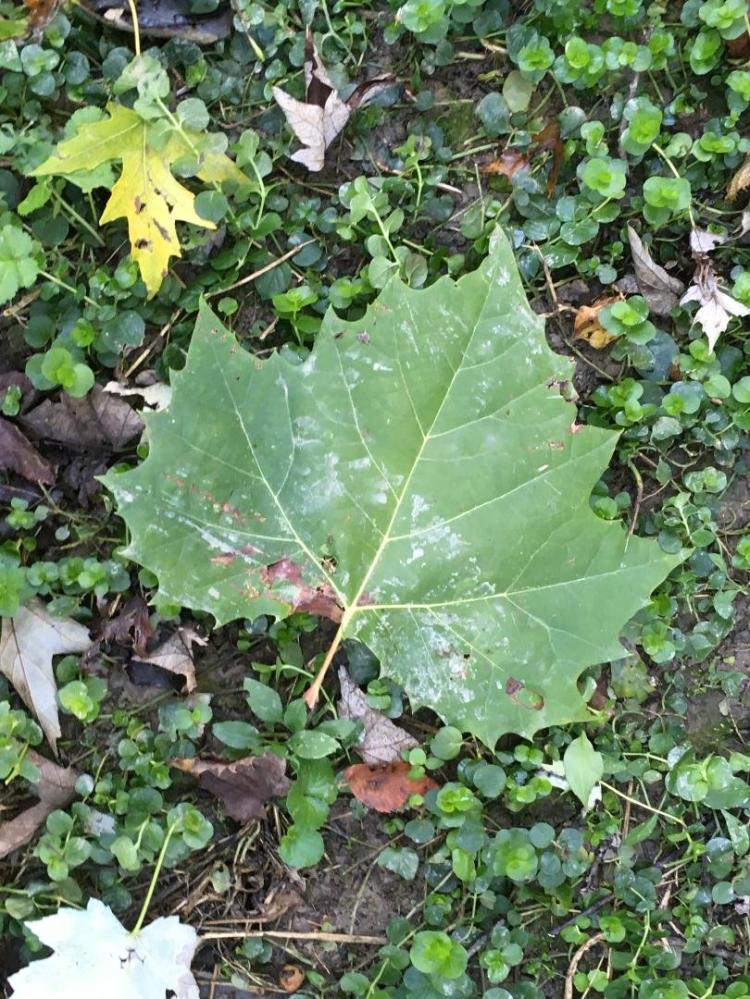
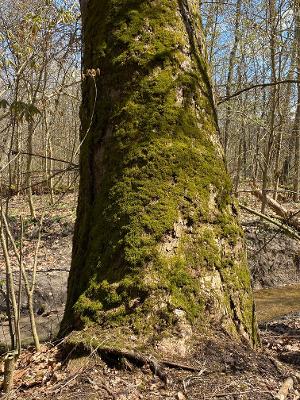
Sycamore leaf and Sycamore with moss.

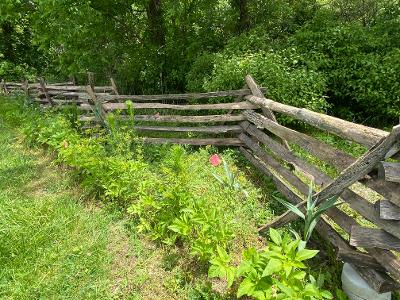
Music of the Wild and the “new” snake fence and wildflowers.

Enjoy the Moonlight!

By Adrienne Provenzano, Songstress of the Limberlost and NASA Solar System Ambassador

“Oh, the moonlight’s fair tonight along the Wabash.
From the field there comes the breath of new mown hay.
Through the sycamores the candle lights are gleaming.
On the banks of the Wabash, far away.”

These lines from the official state song of Indiana, “On the Banks of the Wabash,” seem especially fitting for October 2020, a month which has two full moons! The Harvest Moon occurs October 1st and the Hunter Moon on October 31st. When there is a second moon, in a month it is also called a Blue Moon. Some may know the expression of things that are rare occurring “once in a blue moon.” Enjoy watching the changing shape of the moon all month long!

Check out http://moon.nasa.gov/observe-the-moon-night/ for lots more information and free educational resources about the Moon!

Gene Stratton-Porter’s first poem was about the Moon. Written in”wabbly letters” when she was a child, she recalled these lines from her “Ode to the Moon” in later years:

“Oh, Moon, thou art glorious,
Over the darkness of night
Thy beams shine victorious.
Thou lightest the weary traveller’s way,
Guiding his feet till break of day.”

So, whether you are near or far the banks of the Wabash this month, stop, look up, and enjoy the Moon!

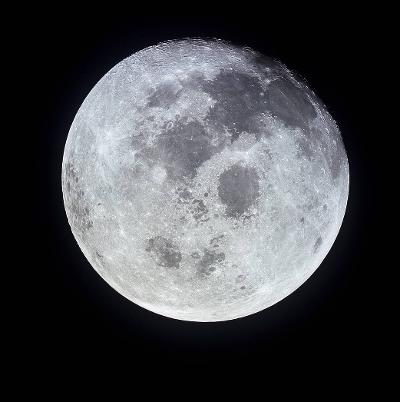
Moon photo the 1969 by Apollo 11.

Wherein is discussed the many foreign language translations of the works of Gene Stratton-Porter

Not only was Gene Stratton-Porter a popular and widely read author in the United States–she was also popular around the world. The late author David MacLean, in 1976, listed thirteen different languages into which the novels of Gene had been translated. The thirteen languages are: French, Spanish, German, Dutch, Czechoslovakian, Swedish, Danish, Finnish, Norwegian, Japanese, Korean, Afrikaans (South Africa), and Arabic.

Of course, all twelve of Gene’s novels were published in English, but the Dutch and Swedish languages were not far behind, with eleven of the twelve translated. Interestingly enough, it was her first novel, The Song of the Cardinal, which was not translated into Dutch, and The Magic Garden, her last novel, that was not translated into Swedish. The Danes and Finns had five works each translated into their native tongues. Four each of Gene’s novels were translated into Czechoslovakian and Arabic. The Germans and Spaniards had three novels translated into their languages. The Japanese could read A Girl of the Limberlost and Freckles in their language. Those who spoke French, Korean, or Afrikaans could only read Freckles, and the Norwegians could only read A Girl of the Limberlost.

Some of the books in these languages came out in several editions and versions. For instance, even though only two of Gene’s novels were translated into Japanese, there were seven different editions/versions of Freckles, and six different editions/versions of A Girl of the Limberlost. And last but not least, four novels have been converted into Braille, so folks with limited or no vision can enjoy Gene.

Gene’s daughter Jeannette’s book, Freckles Comes Home, was translated into Dutch, Swedish and Braille. The only one of Gene’s nature books to be translated into a foreign language, according to Mr. MacLean, was Music of the Wild, which was published in Danish and Swedish.

And speaking of the Swedes, they win the prize for the highest number of times Gene Stratton-Porter’s works were translated into their language. Including all the different editions or versions of eleven novels, the one nature book, and Jeannette’s book (published a number of years after her mother’s death) –there were 28! Even the Dutch, who seemed to be very fond of Gene and were second in number of translations behind the Swedes, only had 15.

So no matter what language the title of the book was in –Das Madchen vom Limberlost (German, A Girl of the Limberlost), De oogster (Dutch, The Harvester), Sproetgesig (Afrikaans, Freckles) are just a few examples–Gene was read and enjoyed across the globe,and people of many nationalities have been able to spend a little time, through her words, in the Limberlost.

Source: This article was published in the Limberlost Notebook column in the Berne Witness in September 2015.

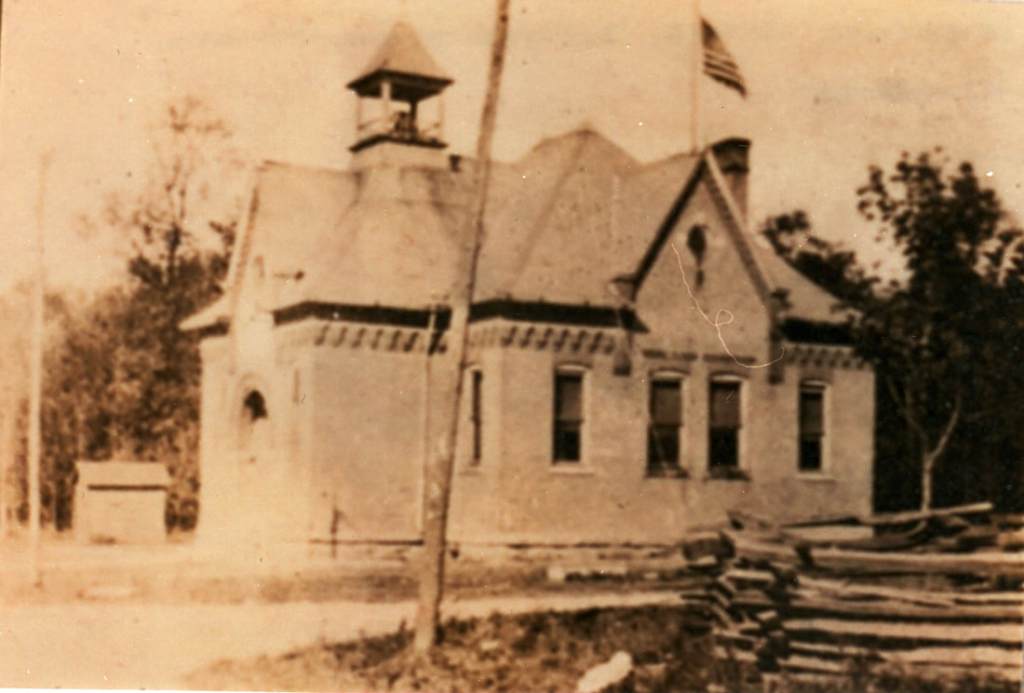
A Girl of the Limberlost schoolhouse. Photo taken shortly after the school was built.

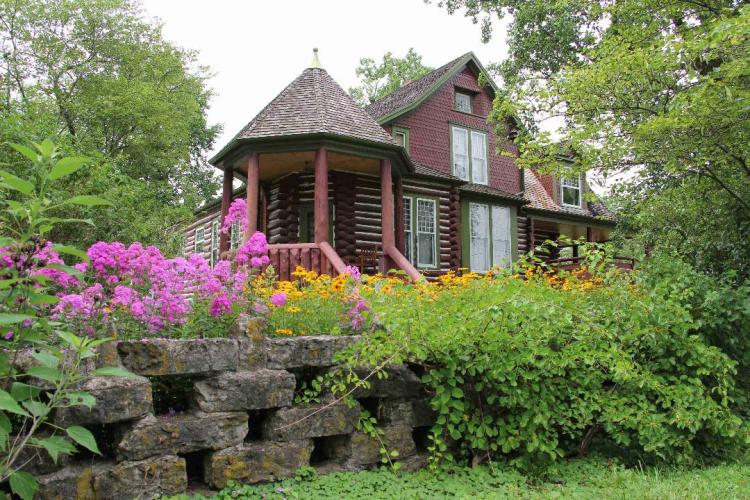
Limberlost Cabin in Geneva. Photo by Bill Hubbard.

Making a Difference with Veronica’s Trail

By Adrienne Provenzano

Last month, Veronica’s Trail at the Loblolly Marsh Nature Preserve was repaved. This site is in Bryant, Indiana, North of Indiana Highway 18 off County Road 250 West. Most Loblolly trails are unpaved, natural landscape, but this unique ADA compliant handicapped-accessible trail at the site enables access to the marsh for people with disabilities. But for the determination and actions by a few Hoosiers about 20 years ago, this special feature of the Loblolly may not exist today!

The year 2020 marks the 30th Anniversary of the American with Disabilities Act, commonly referred to as the ADA,. It was signed into law on July 26, 1990 by President George H. W. Bush. This Federal civil rights legislation prevents discrimination based on disability. It’s a law designed to make things better for people. The law provides the blueprint, but it requires action to get things done as Gene Stratton-Porter herself knew quite well.

Veronica’s Trail named for Veronica Rambo, also one of the Geneva, Indiana torch bearers during the 2016 Bicentennial Relay. Some years ago, when visiting the Loblolly Marsh with her 4th grade class, Veronica was asked if she wanted to stay on the school bus or go into the marsh with her classmates. Ken Brunswick, founder of the Limberlost Swamp Remembered, explains in his book The Limberlost “Born Again”: A Lifetime to Restore Gene Stratton-Porter’s Limberlost. “When I told the teachers that we were not equipped for wheelchairs, Veronica overheard me, pointed at her classmates, and insisted that, “Wherever they go I go!” Ken and several others, including Veronica’s mother, carried her in her wheelchair to the site for the class nature activity and then carried her back to the school bus. Ken’s always been a problem solver, so he was soon emailing the State Historic Site’s main office to see what could be done to improve accessibility. Collaborating with Indiana DNR’s ADA Administrator, Rick Edwards and others, including Larry Wayland and Al Schott, the trail was designed and constructed including paved and gravel segments and a wooden boardwalk. An extension was later added, and Veronica helped dedicate both the original and extension portions of the trail.

Have you ever visited Veronica’s Trial? Journeyed past the waving grasses at the start of the path? Heard and seen the Red Winged Blackbirds perched on stately cattails? Listened tot he chorus of frogs in Spring? Marveled at fast flying dragonflies in the seasonal prairie pothole pond beside the boardwalk? Have you been serenaded by the whirr and buzz and chirps and tweets of pollinators and songbirds? Smelled the scent of Summertime? Admired the shaggy bark of the Shagbark Hickory trees near the summit of the hill? Perhaps you’ve sat on the hilltop bench and just breathed in and out, in and out for a time? Attended a naturalist led wildflower hike and learned why the Dandelion has its name? Wondered at a Monarch butterfly’s effortless flight? Paused to read the new information signs and reflect on the history and beauty of this special place? Consider this your persona invitation! As Veronica Rambo wrote in a blog on this website posted June 19, 2016. “I hope when you go to the Loblolly Marsh that you will feel at peace and enjoy nature.”

It takes about 30 minutes at a leisurely pace to travel round trip on this quarter mile trail you can take more time of course, and I usually do, each time discovering anew why Gene Stratton-Porter found the Limberlost “a spot wherein to revel.” Let’s give our thanks to Veronica, her mom, Ken, Rick, Larry, Al, and all the others who made this project a reality and keep it maintained so more can appreciate the wonders of Gene Stratton-Porter’s Limberlost up-close.

Bill Hubbard, Veronica Rambo, Randy Lehman

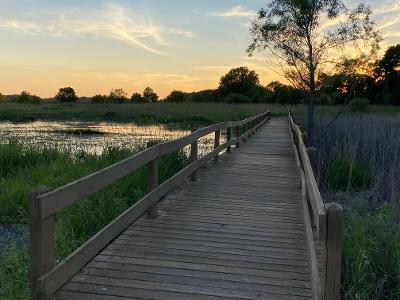
Veronica’s Bridge

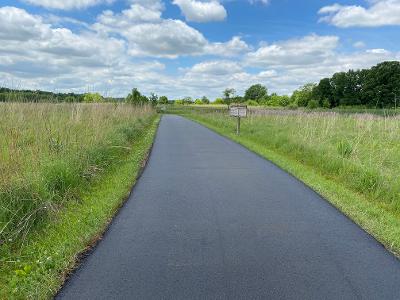
Veronica’s Trail – newly repaved June 2020

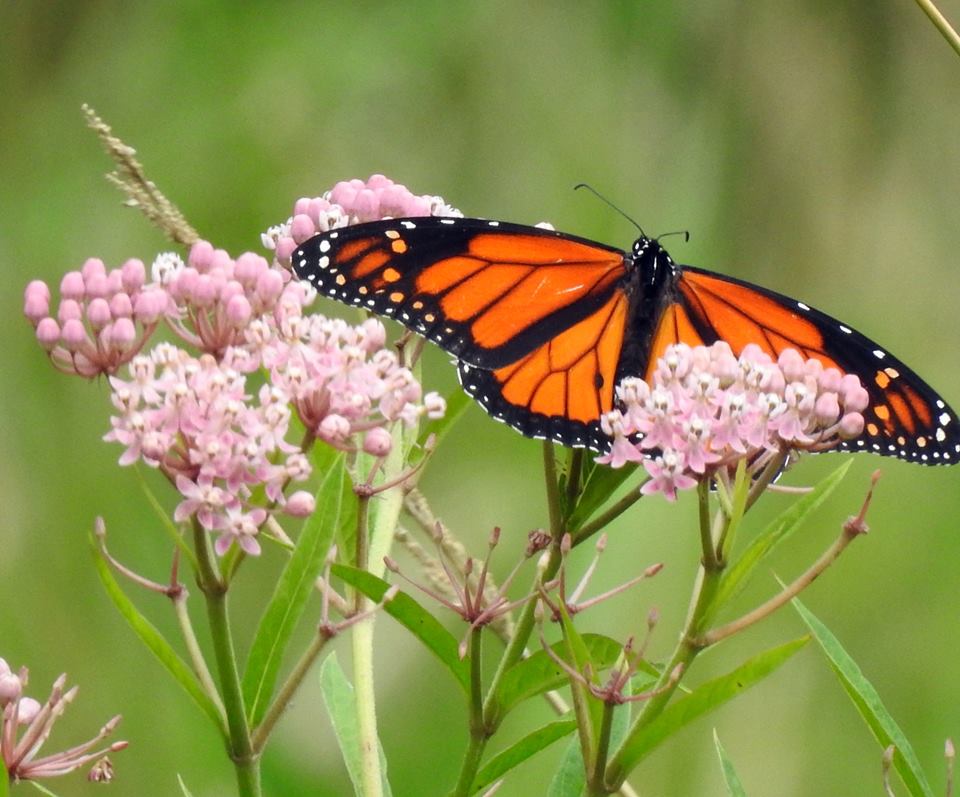
Monarch on milkweed

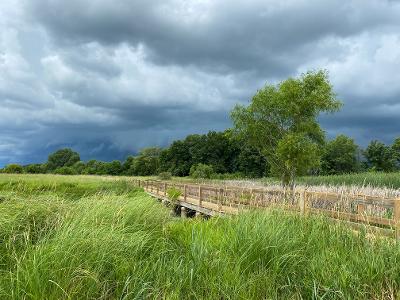
Veronica’s Trail before the rain July 2020

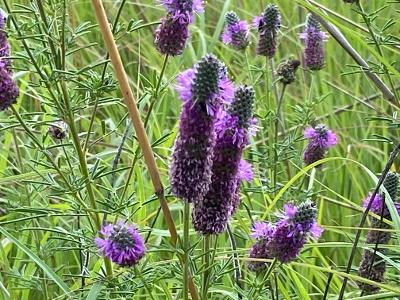
Prairie clover July 2020

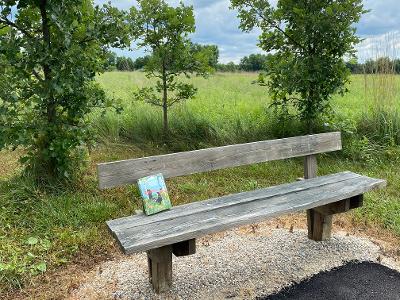
Bench at Veronica’s Pond. A good place to reflect or read.

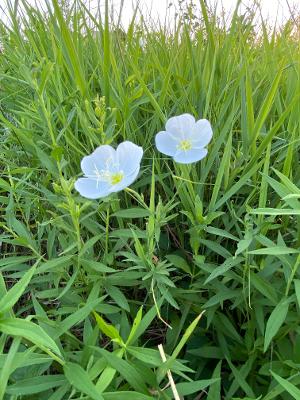
Showy primrose

Veronica’s Pond April 2020

Butterflies and Moths

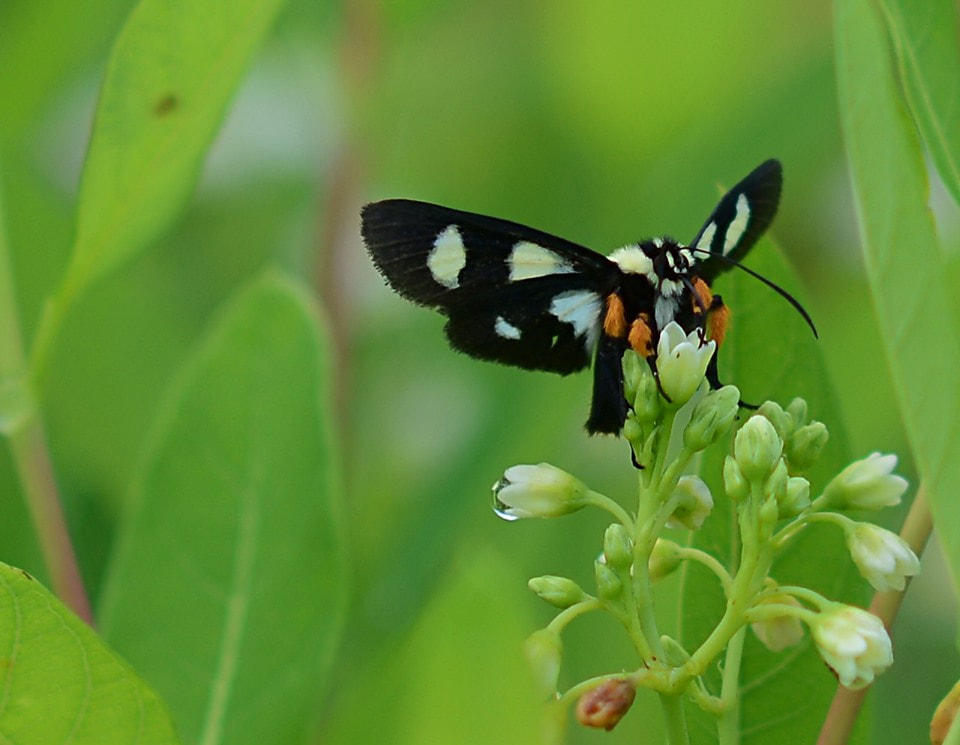
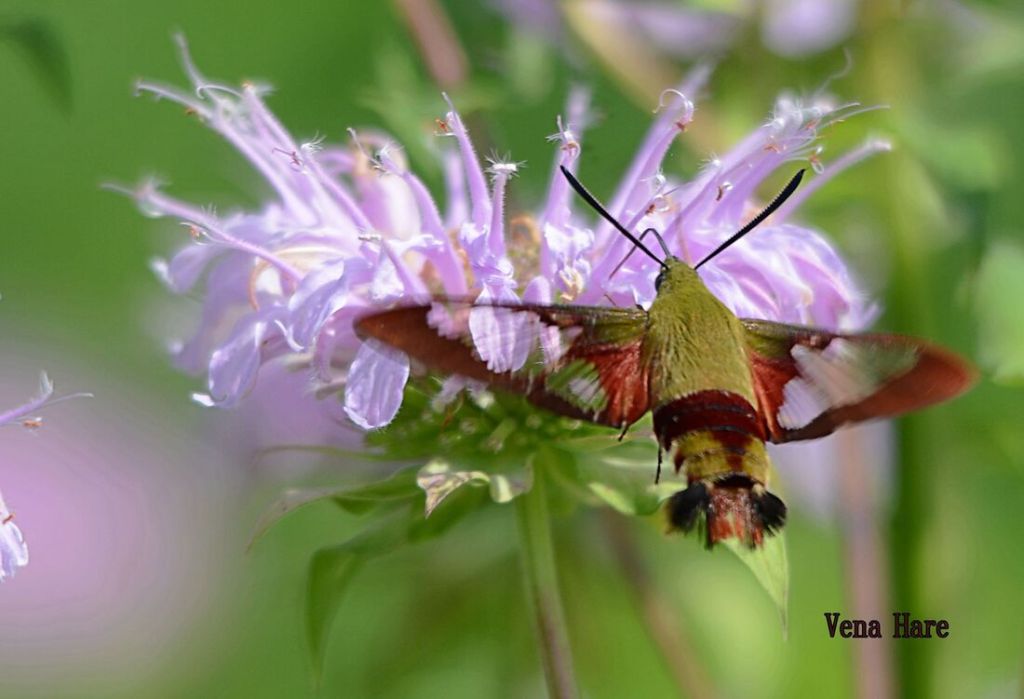
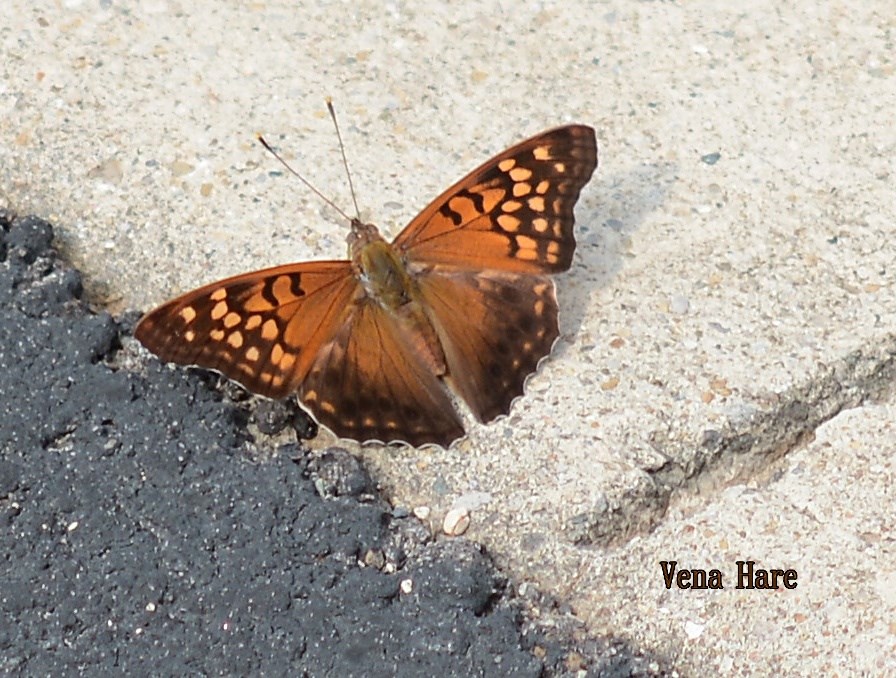
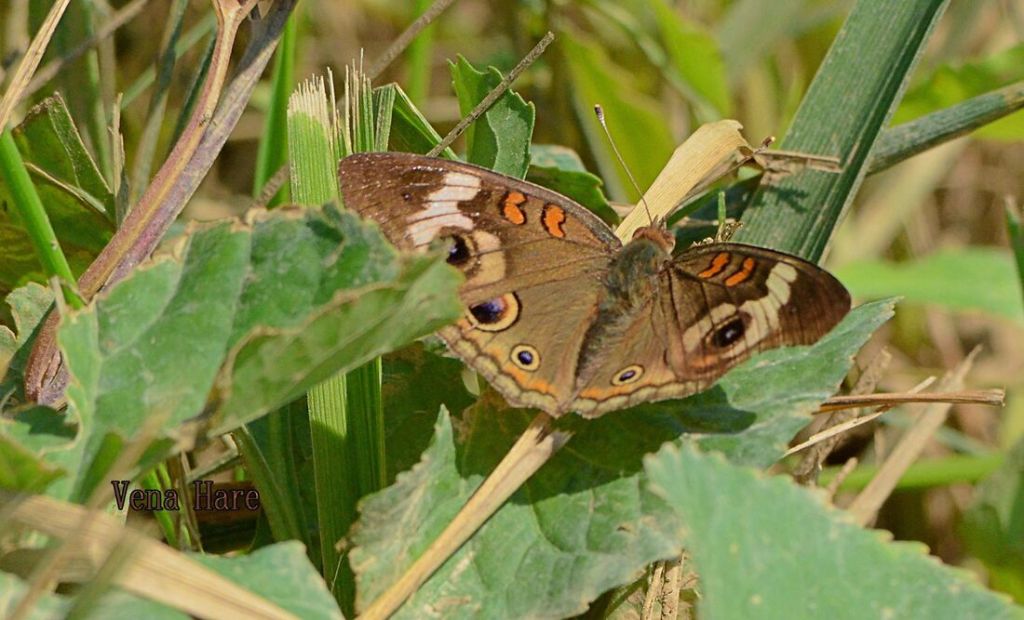
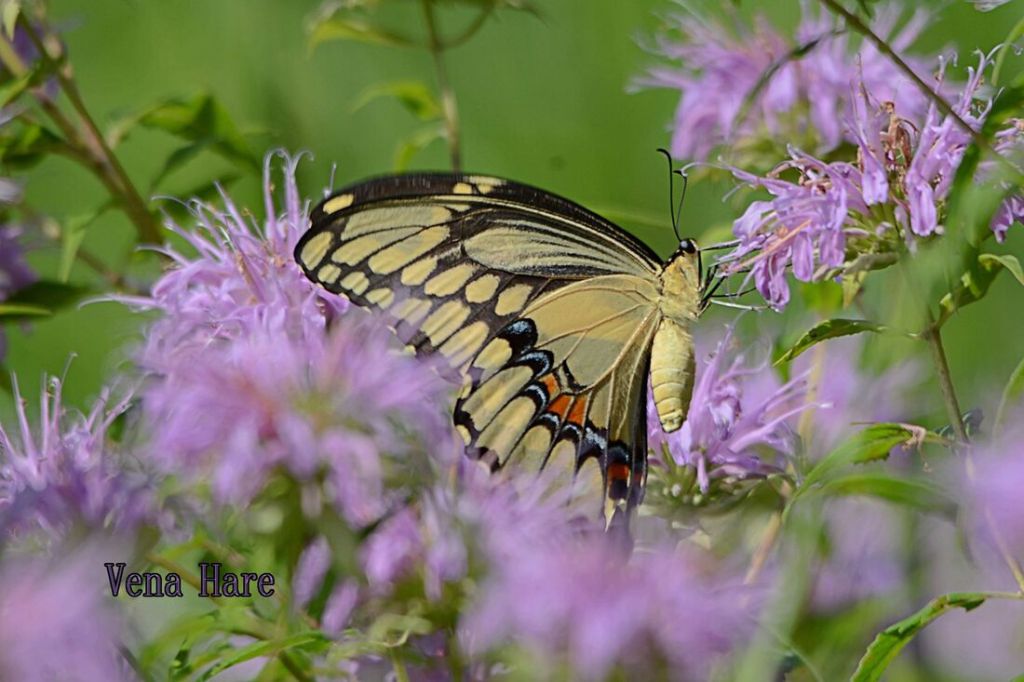
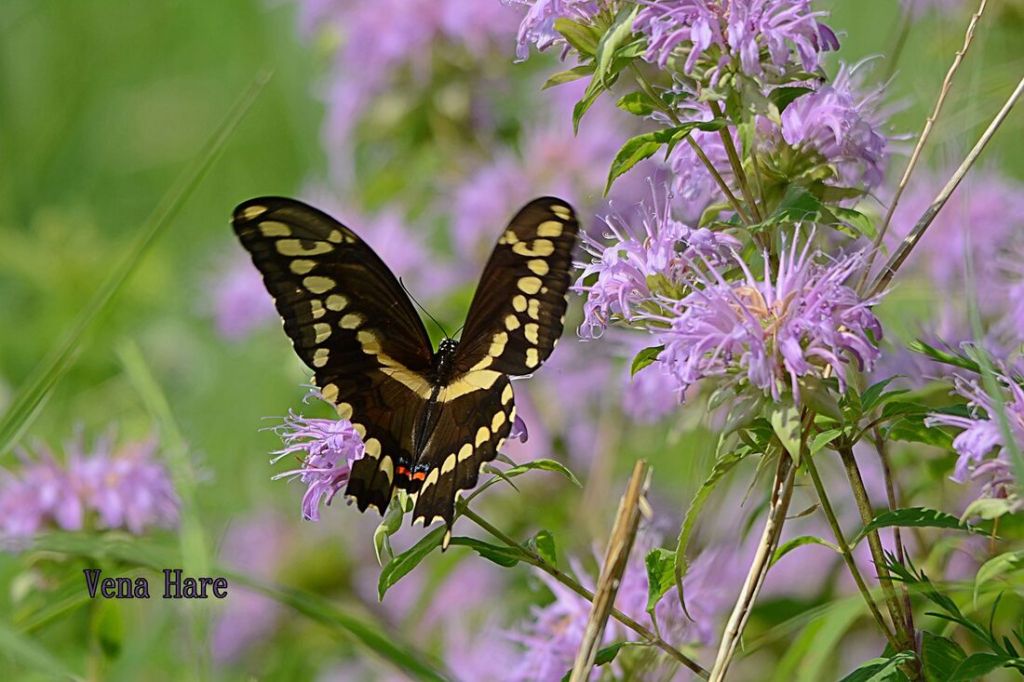
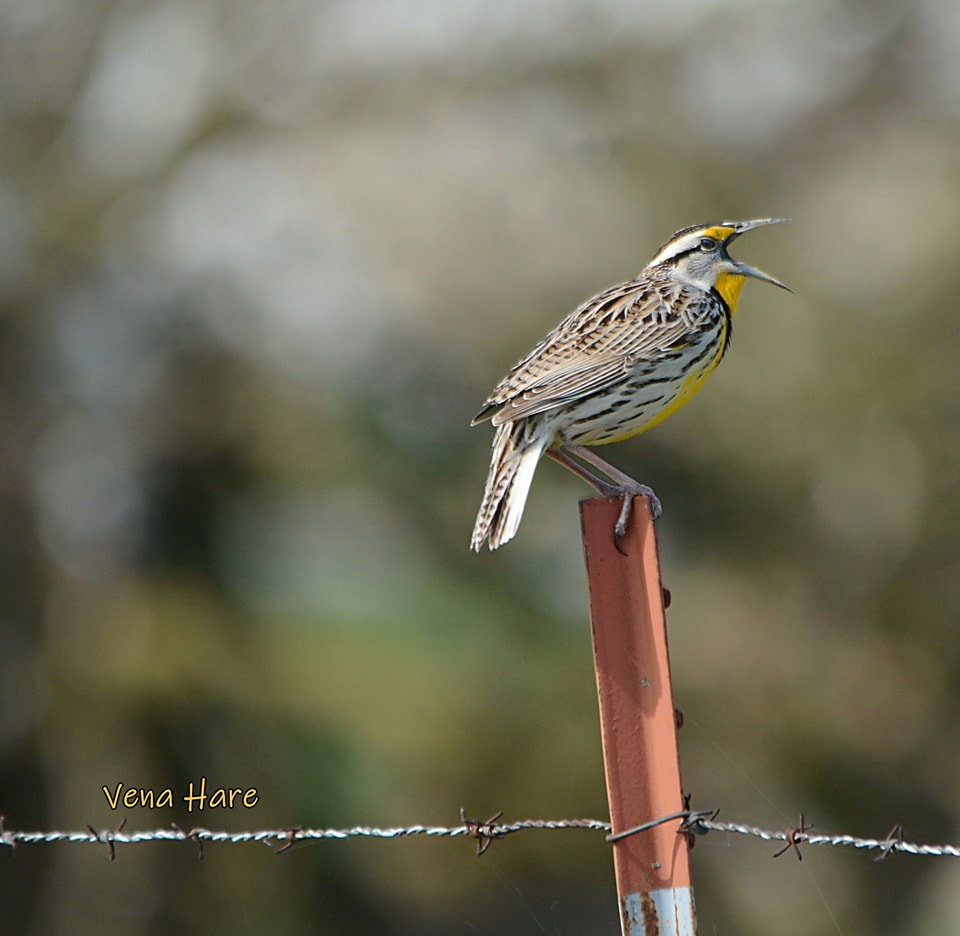
Vena Hare, a longtime member of the Friends of the Limberlost, is this week’s blogger. Vena is a great photographer of the butterflies, moths, birds and plants at Limberlost. She has captured in her photographs the fine details of these small creatures.

Eight-spotted Forester Moth. Dr. Tom Turpin said that Gene Stratton-Porter was the Bird Woman by Day but could have been called the Moth Woman at Night. Gene enjoyed studying and photographing moths.

Hummingbird Clearwing Moth on bergamot.

Tawny Emperor

Common Buckeye

Giant Swallowtail

Giant Swallowtail

Since Gene Stratton-Porter being known as the Bird Woman, we will end with Vena’s photo of the Eastern Meadowlark. It is a common nesting bird at Limberlost in the summer.

Unlikely Summer Residents: Cliff Swallows in Geneva

By Terri Gorney

Adams County is known for being one of the flattest counties in Indiana. So what are cliff swallows doing in Geneva?

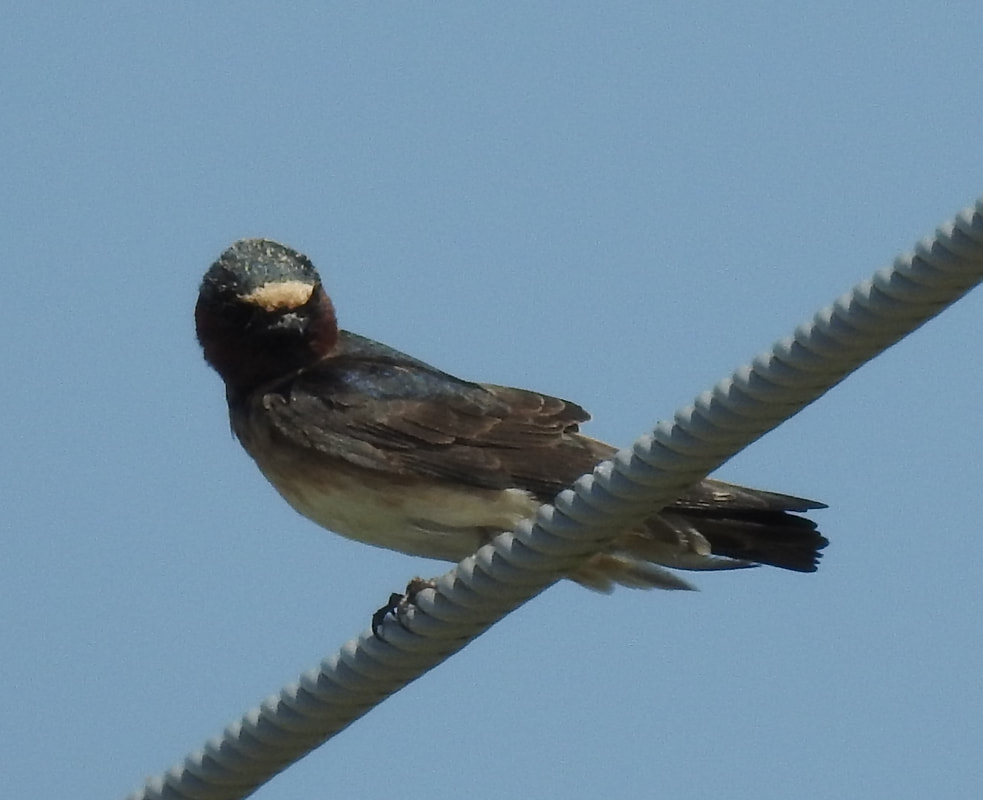
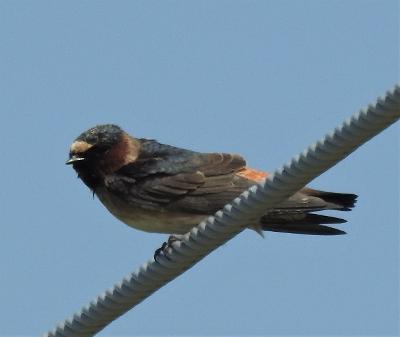
In the spring of 2016, a small flock of cliff swallows were seen by Randy Lehman and myself around the Loblolly Creek close to the Limberlost Swamp Nature Preserve. Some of the birds were perched on electrical wires and others were busy scooping up mud from the creek banks and taking it below the bridge. It appeared that they were building nests. On May 27 Curt Burnette was able to confirm that there was a colony of cliff swallows nesting here.

These insect eating birds have learned to adapt themselves to use man-made structures such as barns, bridges, or culverts for nesting. They build mud nests side by side that cling to vertical walls. Since a colony can eat hundreds of insects, like mosquitoes, a day, they are a welcome summer resident.

Last year, I observed them in this same location as well as in the heart of Fort Wayne on bridges over the St. Joe River and St. Mary’s River.

This year, on May 15, Randy and I observed a flock of over 30 birds busily catching insects on the wing over Limberlost. They appear to be nesting here again this year as we have seen them over the past two weeks.

Gene Stratton-Porter mentioned swallows under the bridge over the Wabash River in Geneva. They were most likely cliff swallows. Maurice McClue, an attorney from Angola, wrote in his “Natural History Memoranda” that they were extirpated from Steuben County around 1920. He was pleased to note that a small colony was using the side of a barn for their nests in Cass County in June of 1955.

Southern Adams County appears to agree with swallows as barn, tree, bank, rough-winged and cliff swallows have been documented here.

Cliff Swallow nests in Fort Wayne as seen on a bridge over the St. Mary’s River.

Wherein is discussed how the Limberlost Swamp, Grand Kankakee Marsh,and Great Black Swamp shared a past history and future prospect

By Curt Burnett

The Limberlost Swamp was a large wetland. It was roughly 2 miles wide and 10 miles long., stretching from northeast of Geneva (Rainbow Bottom) to several miles southwest of town (Loblolly Marsh), and spanning 13,000 acres (20 square miles) before its destruction. The Limberlost contained swamp and marsh interspersed with higher, drier forest and seasonally flooded bottomland hardwood forest. But compared to two other wetlands that existed at the same time in Indiana and Ohio—it was tiny.

In northwest Indiana, not far south of Lake Michigan, was one of the largest freshwater marshes in the United States—the Grand Kankakee Marsh. It covered almost 500,000 acres. The Kankakee River was the heart of this great wetland. The Kankakee was 240 miles long before it was channelized, with around 2000 twists and turns along its length contributing to the wet, marshy nature of the area. Because of its vast size and outstanding quality of habitat, it was sometimes referred to as the “Everglades of the North.” Sportsmen from all over the United States, and even the world, came to hunt the bountiful waterfowl that lived there, and resorts sprang up within it to cater to the citizens of the great city of Chicago, not far to the northwest.

The Great Black Swamp was located mostly in northwest Ohio, but extended into Indiana. It was enormous. The Black Swamp was almost 120 miles long and up to 40 miles wide at spots, covering about 1500 square miles or 980,000 acres. It stretched from just east of Fort Wayne to the southwestern shore of Lake Erie. It was much like the Limberlost in that it was a network of swamp, marsh, forest, and grasslands. The Great Black Swamp was more infamous than it was famous. At certain times of the year—local residents declared—only adult men could withstand the rigors of traveling through it, and water levels would be up to the bellies of horses on the few roads that traversed it.

These three mighty wetlands were a result of the retreat of the last glacier that covered parts of Indiana and the upper Midwest. Another commonality was their destruction at the hands and machines of humanity. The felling of trees for lumber and land clearing, the ditching and tiling of grand to drain it for agriculture and settlement, and the channelization of streams and rivers combined to lead to the demise of these titans of nature. They also have a common future. Grass-roots organizations—such as Limberlost Swamp Remembered, The Nature Conservancy (Kankakee Sands Restoration), and the Black Swamp Conservancy—are helping to restore and preserve relatively small, but valuable, remnants of each. These former natural wonders can never return to their glory days of the time before the Midwest was settled and tamed, but they can continue to be an important part of the Hoosier and Buckeye landscapes fora long time to come.

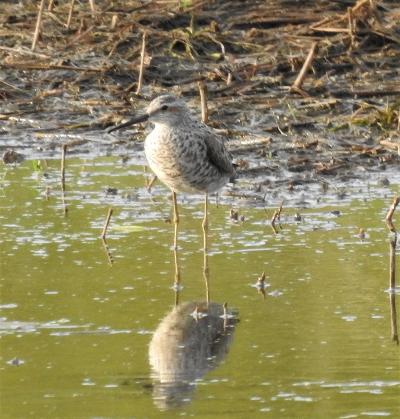
Stilt Sandpiper. Photo taken May 15 2020 by Randy Lehman.

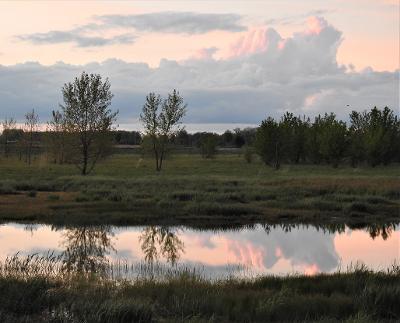
Dusk at Limberlost Swamp Nature Preserve on May 15 2020. Photo by Randy Lehman.

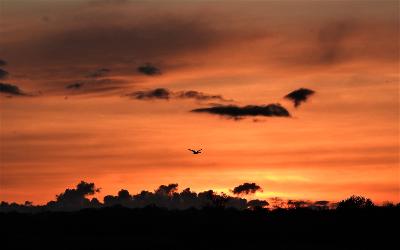
Eagle flying at sunset at the Limberlost Swamp Nature Preserve on May 15 2020. Photo by Randy Lehman.

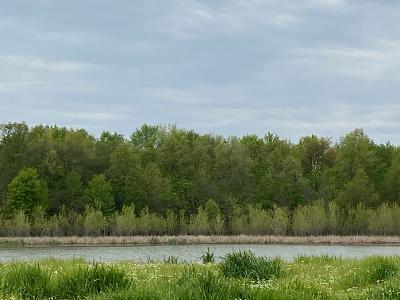
Limberlost Swamp Nature Preserve looking south towards Miller’s Woods. Photo taken on May 17 2020 by Terri Gorney.

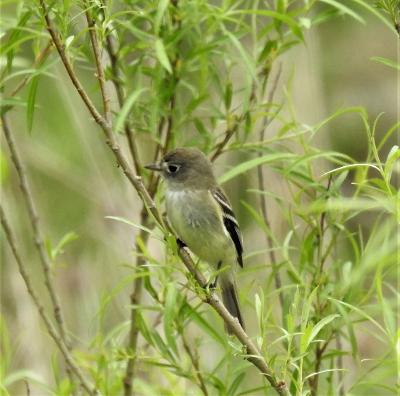
Least flycatcher in a willow tree along the Wabash River. Photo taken May 17 2020 by Randy Lehman.

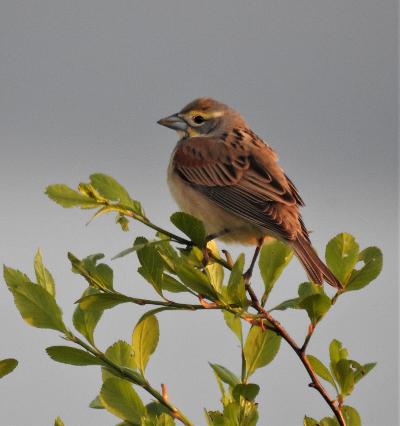
Dickcissel. Photo taken May 15 2020 by Randy Lehman. They are a summer resident who has benefited by wetland and grassland restoration.

Source: The article by Curt Burnette appeared in his column “Limberlost Notebook” in the Berne Witness in September 2013.