Wherein is revealed some of the many places around the United States and the world whose name was influenced by the Limberlost

By Curt Burnette

​ One of the many wonders of the digital age is the Internet search engine. Recently, I utilized one of these search engines by typing in the word “Limberlost” to see what kind of results would be returned to me. Of course, there were many entries regarding the Limberlost Swamp and Gene Stratton-Porter, but what really caught my interest were the many different places and things that had the word “Limberlost” in their names.

There are certainly a number of things in Adams County that incorporate Limberlost in their names, especially in the Geneva area. Limberlost Construction, Limberlost Apartments, the Golf Club of the Limberlost, and the newest, the Limberlost Diner in downtown Geneva, are all examples. On the east side of Decatur, near Stratton Park, can found the street called Limberlost Trail. And there are several places similar to these in the Rome City area where Gene built her second cabin. But there are also Limberlosts in other Indiana cities. There is a Limberlost Drive in Carmel and one in Goshen, and a Limberlost Lane in West Lafayette. A business in Indianapolis has the name of Limberlost Consulting, Inc.

Other places in our region of the country with businesses or places having Limberlost in their names would include The Limberlost, a restaurant in Houghton Lake, Michigan, and Limberlost Farms in Atlanta, Michigan; also in Michigan look for Limberlost Road in Three Rivers and Limberlost Lane in Allegan. That covers examples in Indiana’s neighbor to the north. In our neighbor to the west, Illinois, Camp Limberlost has been located near Bloomington since 1931. And to our south will be found the Limberlost Chalet in Gatlinburg, Tennessee.

Farther afield in the U.S., in Tucson, Arizona, there is a neighborhood called Limberlost, containing Limberlost Drive, Limberlost Circle, and Limberlost Place, and such businesses as Limberlost Pre-school and Limberlost Studio Apartments. In the Shenandoah National Park in Virginia, one can hike along the Limberlost Trail. In 1920, a woman bought 100 large hemlock trees in the land the trail runs through to preserve them from logging, and her husband named it the Limberlost Forest after A Girl of the Limberlost.

Use of the Limberlost name doesn’t end at the borders of our country. In Canada, the province of Ontario seems to be particularly Limberlost crazy. A company from there, Beaver Homes and Cottages, has a model called Limberlost. Limberlost Road can be found in London and Huntsville, Ontario. Near Huntsville is the Limberlost Forest and Wildlife Reserve, and if you wish to stay in the Limberlost Lodge, go to Thessalon. But if a person should really want to travel afar while still lodging in a place called Limberlost, book a room at the Limberlost Hotel in the seaside town of Wilderness, South Africa.

Well, there’s a taste of how Gene Stratton-Porter spread the name of the Limberlost around the country and the world. And, by the way, with the world in mind, I believe I might have to contact the Guinness Book of World Records. I wonder if there is a category called: greatest usage of the word “Limberlost” in a single newspaper column. If the record is under 39, I am the new world champion!
Wherein our columnist indulges in wild speculation by wondering if Tarzan of the Apes was influenced by Freckles of the Limberlost

By Curt Burnette

Not long ago, I bought a used paperback copy of Tarzan of the Apes. I had read a version of the tale when I was a child and, of course, had seen Tarzan movies on TV. Like many a young boy, I imagined myself to be the mighty “Lord of the Jungle” and spent hours swinging wildly on ropes through the tree in our yard while uttering a fierce and savage cry as I flew. Since I was quite young, the mushy, romantic, “Me Tarzan, you Jane” portion of Tarzan’s life held no interest to me whatsoever.

Jane was introduced in the original Tarzan adventure. Interestingly, Jane’s full name is Jane Porter. It struck me that the names Gene Porter and Jane Porter were somewhat alike. This started me thinking, and I realized that there were similarities between Gene’s character Freckles and the famous ape-man. Freckles was published in 1904 and Tarzan in 1912. Had the author of the Tarzan books, Edgar Rice Burroughs, read Freckles and been inspired by it in some small way?

Like Freckles, Tarzan was an orphan who did not know of his true blue-blood identity. Freckles was of Irish ancestry and his real name was Terence Maxwell O’More of the Dunderry House in County Clare. Tarzan was of British ancestry and his real name was John Clayton, Jr., Lord of the house of Greystoke. Freckles was a hungry, weak, and desperate young man when he came to the wild Limberlost swamp and forest where he strengthens in body and mind. Freckles was adopted in a way by the Duncans, McLean, and even the Bird Woman. Tarzan is a weak, hungry infant who will surely perish after his mother dies and his father is killed, when a she-ape that has lost her baby adopts him. He grows up in the jungle and becomes strong of body and mind.

Freckles and Tarzan each have close relationships with animals: Freckles with the wild birds of the Limberlost and Tarzan with many of the jungle creatures. Even their names both relate to the appearance of their skins—Freckles by the obvious freckling on his body, and Tarzan by the color of his skin. “Tarzan”, in the language of the fictional ape species he lives with, means “white skin.” People around them notice that both Freckles and Tarzan have natural, inborn traits that weren’t diminished with the circumstances of their upbringings—they are far more than they should be given the conditions of their lives.

Eventually, both Freckles and Tarzan learn the truth of their lineage and heritage. Lord and Lady O’More journey from Ireland in search of their missing nephew and fate brings them together with him in Chicago. Tarzan learns he is Lord Greystoke after he leaves Africa to go to the civilized world in search of Jane. Neither man wishes to return to his ancestral home. Freckles goes back to the Limberlost to be with his love, the “Swamp Angel,” instead of going to Ireland. Tarzan chooses to go back to the jungle with his love, forsaking the luxuries of civilization for the world he grew up in.

So was Tarzan influenced by Freckles? Probably not, but it is fun to speculate!

Wherein a year-long project is completed and startling numbers are revealed

By Curt Burnette

“Mr. Archibald, who lives near Decatur shot the last deer in Adams County in 1867.”

This news item appeared in the Decatur News of Dec. 7, 1882 and was reproduced in the mammals section of the biology chapter of The 1979 History of Adams County, Indiana, published by the Adams County Historical Society, Inc. in 1980. In the paragraph that followed, the book states that “Adams County has a higher population of white tail deer today in 1979 than they did in 1867. One reads of deer being killed by cars at least two or three times a year.” Two or three times a year? Oh, my goodness how times have changed! Nowadays, cars and deer collide as often as two or three times a day!

The word “extirpated” means a species of animal or plant has been eliminated entirely from a given area, such as a county or a state or any other defined region. The species has not become extinct; it is just gone from that location. So, deer were extirpated from Adams County in 1867. And they were extirpated from all of Indiana in 1893 when the last one was shot in Knox County. White-tailed deer were reintroduced to seven counties in Indiana by the DNR in 1934. The first limited hunting season occurred in 1951. Today, there are far more deer in our state than there have ever been, including before Indiana was first settled.

But how can this be, when the estimate of forest in pre-settlement Indiana (1820) was about 19,840,000 acres, and the forested area in modern Indiana (2005 data) is only 4,700,000 acres—a reduction of 85% coverage to 20%? Most people think of deer as forest animals, so it would seem logical that the more forest there is, the more deer there should be, right? While it is true deer will live in forests, they are much happier at the forest edge. They prefer open areas intermixed with small patches of forest, as Indiana is today, instead of one giant forest as it used to be. Modern Indiana is a more favorable habitat for deer than it ever was. The result is more deer now than there were in 1820 or 1867 or even 1979.

I faithfully checked the Portland Commercial Review newspaper daily for a year, from mid-
March 2014 until mid-March 2015, and recorded the locations in Jay County where the Sheriff’s Department reported deer/vehicle collisions. There were 123 collisions during that time. On 17 of those 123 days, there were 2 collisions on those days. On 4 of those 123 days, there were 3 collisions on those days. And on one of those 123 days, 4 unlucky people collided with deer that day! The total of estimated damages to the vehicles was between $180,500 and $413,000. This averages out to about $300,000 worth of damage in Jay County alone in one year!

I placed a dot on a map of Jay where each collision occurred. Although drivers should be wary basically everywhere, this map does indicate where extra caution might be needed, especially in the fall. A copy of this map is available at the Limberlost Visitor Center. When it comes to driving and deer—let’s be careful out there!

Wherein is revealed the Bird Woman’s love of the “moon-flowers of June’s darkness”

By Curt Burnette

Although Gene Stratton-Porter was known as “the Bird Woman of the Limberlost”, an alternate nickname could well have been “the Moth Woman of the Limberlost” as Purdue entomologist Tom Turpin has suggested. Gene’s love of moths, specifically the group known as the giant silk moths, even surpassed her love of birds. In her book, Moths of the Limberlost, she writes “Primarily, I went to the swamp to study and reproduce the birds. I never thought they could have a rival in my heart. But these fragile night wanderers, these moon-flowers of June’s darkness, literally thrust themselves upon me.” She quickly came to realize that “…the feathered folk found a competitor that often outdistanced them in my affections…”

Gene’s use of moths in her writings went beyond the publication of her nature book Moths of the Limberlost, published in 1912. In fact, that book was the result of her use of moths in her most famous novel, A Girl of the Limberlost, just three years earlier. Hundreds of fans of that book had written Gene, asking her “to write of my experiences with the Lepidoptera of the swamp.” In A Girl of the Limberlost, the yellow emperor moth plays an important role throughout much of the book, helping to propel the plot along. It even brings the story to its conclusion when Edith Carr offers one to Elnora Comstock (the girl of the Limberlost) as a peace offering.

In various other ways, moths permeate the story. Elnora goes to meet the Bird Woman after she reads a sign displayed in a bank window stating that caterpillars, cocoons, chrysalides, pupae cases, butterflies, moths, and Indian relics of all kinds will be purchased. Elnora meets Philip (her future boyfriend) as she is attempting to remove a moth cocoon from underneath a bridge. On a moth-hunting excursion in the Limberlost with Philip and her mother, Elnora finds a pair of luna moths, and the trio marvel at the emergence of a regal moth from its pupa case.

Moths are also featured in Gene’s books Morning Face, Music of the Wild, and Tales You Won’t Believe. Within one story in Tales You Won’t Believe, titled A Wonder Tale, Gene relates an experience she had at the Limberlost Cabin one late May night. She awoke at about 2:00 in the morning to the sounds of innumerable moths beating at the screen of the back porch door, where she had placed a newly emerged female Cecropia moth. As Gene picked up this female to move it, it sprayed its liquid pheromone all over the front of her nightgown. This pheromone is a powerful aphrodisiac, attracting male moths from miles away. Gene stepped out onto the porch and stood there on that beautiful moonlit night, while male Cecropia “came floating like birds down the moonbeams” to alight on her. Before long, she had scores of these giant moths anxiously perched all over her or fluttering about nearby. She wrote that this was “…a thing so exquisite that God Himself must have enjoyed the excellence of His handiwork” and it was “an experience that probably never has fallen to the lot of any other human being.”

Nature Preserve Spotlight – Loblolly Marsh

By Benjamin W. Hess

Large wetlands can be a rare site in Indiana especially in heart of the farmland of East Central Indiana. However, the restoration efforts to bring back a once great wetland are alive again in Jay County. This once great wetland of approximately 13,000 acres was home to an array of flora and fauna which at that time were not considered rare as they are today.

This wetland covered parts of Jay and Adams County. One small rural town, Geneva, was home to a talented writer named Gene Stratton-Porter and sat on the borders of the great Limberlost Swamp, and the Loblolly Marsh being but a portion of this vast wilderness. This great swamp inspired her to write stories, create the characters within, and live a life with a strong sense of conservation to protect the natural wonder of our wetlands and to protect the experience of the natural world.

The Loblolly Marsh Nature Preserve sits in an area which was mainly a wetland surrounded by islands that opened up into small lakes that are now gone and was fed by the Loblolly Creek. As more people came to the area, they wanted to tame this vast wilderness to farm these productive soils, harvest its great stands of timber, and drill for oil.

As Gene’s time was ending here in Geneva and before she moved north, the land was being trenched, drained, and prepared to grow crops. The Great Limberlost Swamp and the Loblolly Marsh were nearly lost except for little pockets of wetlands here and there. Then in the early 1990’s the rebirth of the great Loblolly Marsh began to take form. Land that flooded almost yearly and historically was part of the Limberlost Swamp was chosen for restoration. Now at nearly 440 acres of restored habitat, the Loblolly Marsh is thriving.

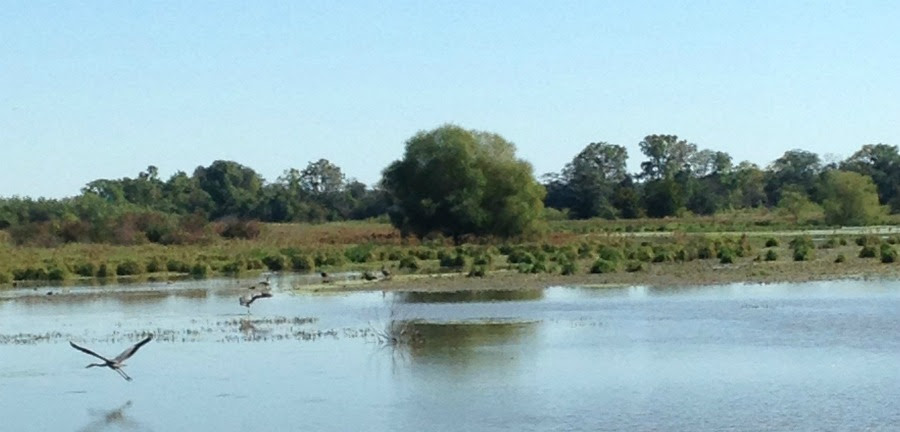
The marsh is still changing as its soils are healing from decades of farming, draining tiles, and farmers keeping the native flora and fauna at bay. Every year with persistent stewardship, the land continues to heal and show us what Gene may have seen in her great swamp. There are bald eagles, sand hill cranes, beavers, mink, and cricket frogs, just to name a few which have come back to the area to reclaim what was once their home.

This nature preserve has plenty of parking and a fully accessible ADA trail to allow for all to enjoy nature in its splendor. It has also been listed as a hot spot for birding by the Cornell Lab of Ornithology. Many schools from near and far take field trips to learn about the benefits of wetlands, their function, and the history of the land. Other visitors may enjoy a hike outdoors to hear, see, and embrace nature. On foot one can take a trail to experience wetlands, prairies, upland forest, and the fauna that call them home. From Loblolly Marsh towards Geneva, nearly 1700 acres have been restored. Additional trails are available as well. The wetlands of The Limberlost have brought back many new and familiar faces. The Loblolly Marsh which began as vision of a local farmer was inspired by the Gene Stratton-Porter books and is supported by many across the United States as The Friends of the Limberlost.

The Limberlost has been reborn to amaze all who walk through this restored wonder of flora and fauna once more.

THE ITSY, BITSY SPIDER…

By Bill Hubbard

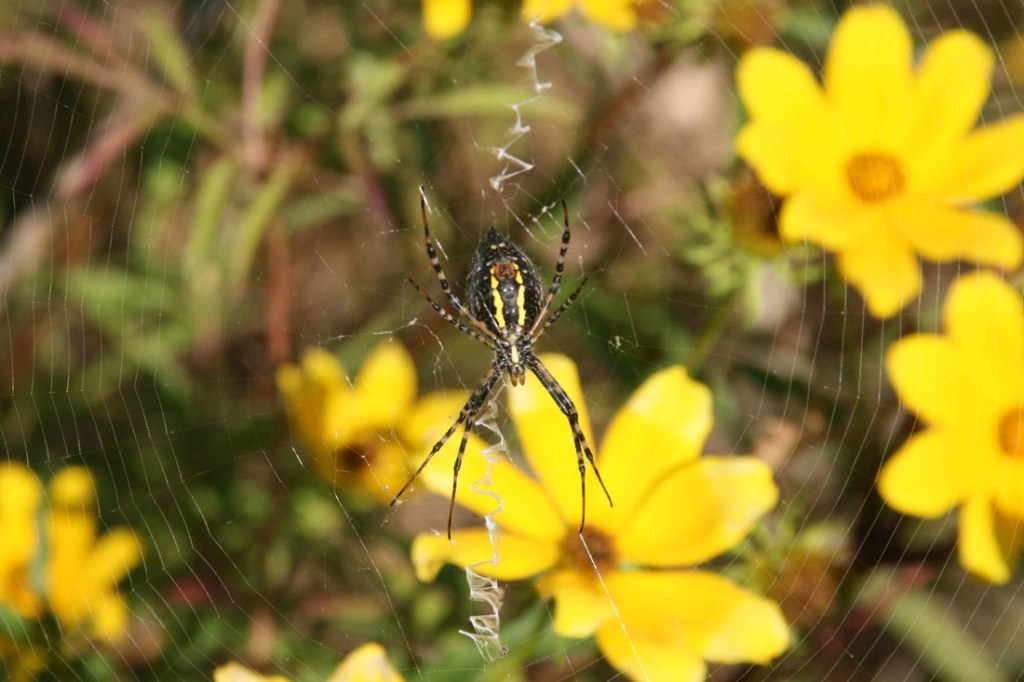
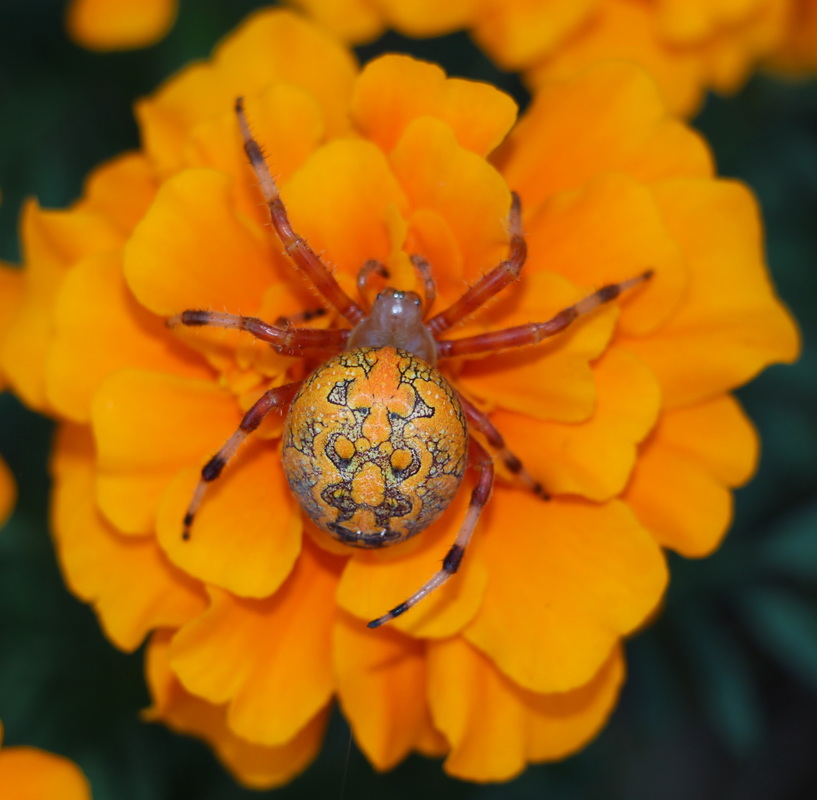
SPIDER!! The mention of the word is enough to evoke a primal fear response in many folks. Few creatures are held in lower esteem than the spiders. Most of us have had otherwise lovely walks in our favorite natural areas rudely interrupted by a spider web becoming attached to our face. Or worse yet, the creature begins crawling in our hair and onto our neck. Perhaps the unwelcome creature made an appearance in your kitchen, shower, or bed. Unfortunately, most of these creatures met with an untimely, and usually quite violent, end. I like to call it the “Garfield response”. WHACK! SQUISH! And another spider’s life span has come to an end.

Far too seldom do we take a moment to appreciate the beauty and complexity of the spider. We too often are consumed by the tales of spiders crawling into our ears to lay eggs or crawling down our throat as we sleep. I have yet to see any documented evidence of that happening. But then, we saw it on the internet so it must be true, OUI?

Let me insert a disclaimer here. I am certainly not an authority on spiders so you may wish to “fact check” this document before sharing it as gospel.

There are over 35,000 species of the class Arachnida (which includes spiders, ticks, mites, scorpions, harvestmen, etc.). In Indiana there are over 400 species of spiders but only two are venomous, the Black Widow and the Brown Recluse. The Brown Recluse is a medium sized spider with a fiddle-shaped design on its dorsal cephalothorax. It is very reclusive (get it?), preferring to live in heavy cover such as lumber piles. It does have a bite that is likely to cause severe tissue damage in the area of the bite. However, a human fatality due to a Brown Recluse bite is extremely rare. Nevertheless, you should take precautions when working in an area that may be used as a home by the Brown Recluse. The Black Widow spider, found mostly in southern Indiana and southern states, is another spider that can cause serious (sometimes fatal)health issues to a person who has been unlucky enough to be the recipient of her venom (yes, it is only the female Black Widow that poses a health threat to humans). Of course, almost all spiders are able to inject venom but the end result for humans is usually only minor irritation.

In perspective, worldwide the Black Widow and Brown Recluse together kill 6 people per year (most young children who do not get medical attention) whereas mosquito borne diseases kill an estimated 3,000,000 people per year!

The next time someone says SPIDER, please don’t have the “Garfield Response” but rather take a few moments to see the beauty of the creature. Study the complexity of the web, be it orb weaver, funnel spider, trapdoor spider, or any of the hundreds of other spiders with which we share our habitat. Marvel at the maternal care needed to produce an egg sac that protects the developing young until they hatch. Wonder at the adaptation that allows the spiderlings to balloon away on the wind to establish a new home.

Let us all try to share our world with the spiders. Are we not all connected in the web of life?

Pretty Bird Romance

By the Chicago Daily Tribune, 14 Aug 1903, p. 7.

“The Song of the Cardinal” has the true Spirit of Nature.

“The Song of the Cardinal,” by Gene Stratton-Porter (Bobbs-Merrill Co.), is as pretty a story as may be found among nature books. Not only is the bird romance full of beauty, the rich beauty of the field and swale, but the imaginative has been so artfully blended with the real that the result is unusually satisfying.

The Cardinal was the son of the king of the swamp and the loveliest of mothers. Pippins the first egg, which was of marvelous size, he emerged into an admiring world, a gladsome place, indeed. Fed to repletion with the fattest slugs, the choicest berries, and the finest tidbits of the forest, he grew to sturdy manhood. His fond father taught him how to find his food, to fly gracefully, to bathe, to sharpen his glossy beak between polished stones, to live the glorious life in the open. Every day new things appeared unto him, and joys innumerable rose in his path. One day he met love, and then the little ones came. Life was full then. And a white haired man, with a cheery mate and blooming child, came to know the Cardinal, who delighted them with his “See here! Wet year! See here!”

The true spirit of nature is in this book. It is written con amore, from a wide knowledge of the bright plumaged song bird it portrays, breathing of the blithe creatures of the air. The illustrations are exceptional, being made from photographs obtained by adroit use of the telescopic lens, reproduced with excellent results.

Note: This is one of the early book reviews that Gene Stratton-Porter received on her first book “The Song of the Cardinal.” Gene received praise across the country for her first work that was inspired at a place called Rainbow Bottom in Geneva Indiana. The 231 acres in Rainbow Bottom along the Wabash River is owned by the Friends of the Limberlost and is open to the public.

Wherein our columnist mulls over the symbolism of a nation rescuing its national symbol

By Curt Burnette

The bald eagle became the unofficial symbol of the U.S. as part of the Great Seal of the United States when it was adopted on June 20, 1782. The official designation as our national bird and symbol did not occur for another seven years, in 1789. During those seven years, there were those who felt the bald eagle was not the best symbol for our new country. Most famously, Benjamin Franklin thought bald eagles were “of bad moral character” and so he suggested the wild turkey would be more suitable. Obviously, Ben’s argument did not succeed.

As amazing and brilliant as Benjamin Franklin was, most Americans would have to say it is a good thing he didn’t have his way on that particular issue. It is hard now, these many years later, to think of our nation and not think also of our majestic national symbol. But what would our founding fathers have thought if they could have looked ahead and seen a future where the symbol of their new nation was vanishing? Would they have wondered about the greatness of their new United States, a nation that selected a national symbol that had become threatened by the growth of this young country? Was this the nation they envisioned? Probably not, but if they were to look a bit farther into the future, into our modern time, they would indeed see a wonderful example of a people who saw their national symbol in trouble—and did something about it. This was surely the kind of nation they thought they were creating.

Bald eagles were common in this country before it was settled, but wetland destruction and human persecution resulted in their disappearance from much of the country, even by Gene Stratton-Porter’s time. It is unlikely she ever saw them as she wandered the Limberlost. The last recorded nest in Indiana was in 1895. Then, in the middle of the 1900s, the widespread use of the insecticide DDT caused the eggshells of the few remaining breeding eagles to thin and crack, so an already damaged population was weakened further. Bald eagles still were plentiful in Alaska, but in the rest of the states our national symbol was in serious trouble.

Our nation then did what great nations do—study the problem, understand what steps need to be taken, and do what is necessary. DDT was banned. Many wetlands were restored. Protective laws were passed. Eagles were reintroduced back into many areas they had vanished from, including Indiana. Between 1985 and 1989, 73 young eagles were released in Indiana, and by 1991 the first chicks were hatched. By the mid-1990s, there were a dozen nesting sites in our state. In 2013, the DNR quit counting nests because there were too many to keep track of—over 300!

We take great pride in our national flag and have rules on the proper ways to display it and dispose of worn ones. Why should we show less care and concern for our national symbol? The United States of America is not a country that would allow its national symbol to vanish without a fight. The battle was won. Bald eagles are back and doing better than ever. We have yet another reason for our citizens to proclaim they are “proud to be an American.”

“My Favorite Story and Why”

By Alberta Wright, age 12

Gene Stratton-Porter, one of our most noted writers of nature stories, writes many interesting stories. One very nice one is “Friends in Feathers.”

In the book, she tells of many interesting incidents with birds. She says about the first thing to do is to win a bird’s confidence. By moving about, quietly among the birds and wearing forest colors such as greens, grays and browns, the birds will soon see that you aren’t going to harm them.

When she takes their pictures, she covers her camera with leaves and branches such as the birds are accustomed to. She gets pictures of the birds when mating, angered, love, fear, hilarity, wisdom when guarding the nest and brooding.

She tells of one incident where she found a baby robin which had been fed something poisonous. Its throat was filled with clear, white blisters until it was panting for breath. She punctured the blisters with a needle and gave it some oil, but it died.

In other places she proves things such as the quail cuts her eggs in halves so that all her baby birds may be released at the same time.

Another incident she tells of a baby oriole she found, that had hung itself when making its nest. Release was all it needed.

After reading this book, I think that everyone would love birds more than before and try to spare them as much as possible.

This was one of the winning essays written for “Children’s Book Week.” The contest was conducted by the Concordia (KS) Library. It was published in the Concordia Blade-Empire (Concordia, Kansas), 3 Dec 1921, p. 3. Alberta Wright, 12, Seventh Grade.

This book was written from Gene Stratton-Porter’s bird studies in Geneva. We are happy that a young person chose to read one of Gene’s non-fiction books for the essay contest and that she enjoyed it.

The Ten Greatest Indianans

By Terri Gorney

​Gene Stratton-Porter was named one of the “Ten Greatest Living Indianans” in 1922 by a survey done by the “Indianapolis News.” The newspaper received 802 lists submitted by its readers. Of the top ten, Gene was the only woman. Five of ten were authors. Indiana was second only to the state of New York in the number of best selling authors. The early 20th century was known as the “Golden age of Literature” in Indiana.

The list contains some of the greatest Hoosiers of the 20th Century not just 1922. The other authors were Booth Tarkington, George Ade, Kin Hubbard and Meredith Nicholson.

Booth Tarkington made the number one spot. Booth was a native of Indianapolis and was a prolific writer. Gene made the comment to Nelson Doubleday that she knew how hard Booth worked on his books. He was a Pulitzer Prize for “The Magnificent Ambersons” and “Alice Adams.”

The other distinguished writers included George Ade who wrote the column for the “Chicago Morning News” called “Stories of the Streets and of the Town.” He was known and loved as a humorist. Consistently wrote about the “little man” or the common average man. Meredith Nicholson wrote poetry and prose and was a loved Hoosier writer. In his long career, he served as a diplomat, governor and attorney. Kin Hubbard was the pen name of Frank McKinney Hubbard. He created the cartoon “Abe Martin of Brown County.” He was a playwright and screen writer.

Rounding out the list were: Thomas Marshall, governor of Indiana and vice president of the United States under President Woodrow Wilson: Elwood Haynes, a Kokomo inventor who created one of the earliest cars in the United States; Albert J Beveridge, historian and senator; Judge A.B. Anderson who was appointed the district judge in Southern Indiana and the Circuit Court of Appeals in Chicago; and Dr. John Hurty who set up one of the first laboratories in Indiana and later worked for Col. Eli Lily.

In Nelson Price’s book “Indiana Legends,” six of the above are named: Gene Stratton-Porter, Booth Tarkington, Thomas Marshall, George Ade, Meredith Nicholson and Kin Hubbard. All ofthe five authors were considered “Legends” which gives a nod to the status of our literary figures.

By 1922, Gene’s primary home was in California. She had just published her first novel, “Her Father’s Daughter,” set in that state. She was a national voice for conservation and active in the newly formed Izaak Walton League. She had formed her own company to produce her own motion picture from her books. If her life had not been cut short in 1924, one wonders what else she would have accomplished.