Birds of January at Limberlost

By Terri Gorney

January is normally not a good time to bird in northeast Indiana where Limberlost is located, but Limberlost is no ordinary place.

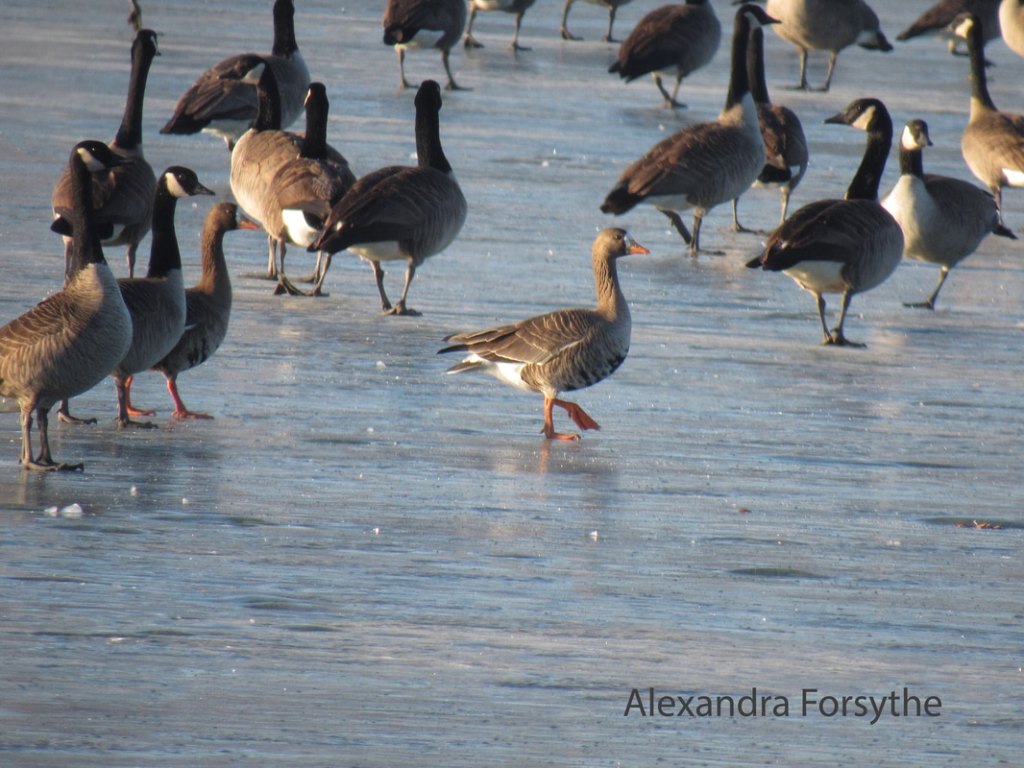
The morning of January 1, greater white-fronted geese and cackling geese were seen at Rainbow Lake. Great way to start the New Year! There was also a record 23 northern harriers seen on that day.

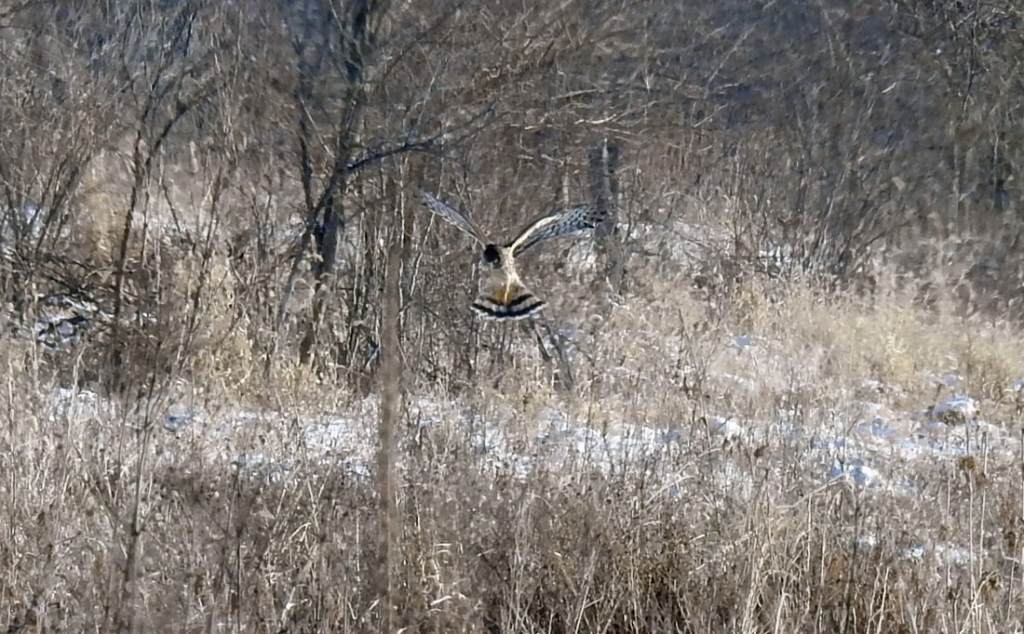
Sunday, January 14, Naturalist Curt Burnette, took a great photograph of a northern harrier in his yard from his kitchen window.

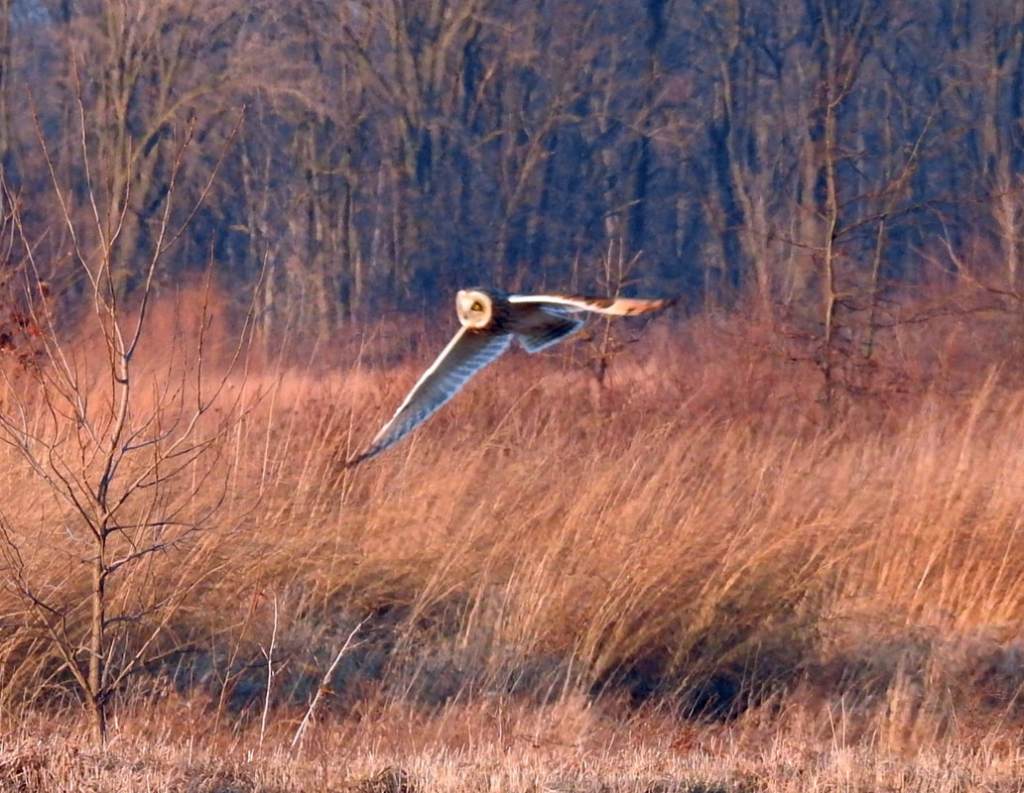
On January 16, Kimberley Roll of Marion, confirmed a short-eared owl at the Limberlost Swamp Wetland Preserve. It appeared to be chasing a northern harrier. This is the sixth winter in a row that these owls have been spotted at this location. About ten years ago, Ken Brunswick saw the first one in the area.

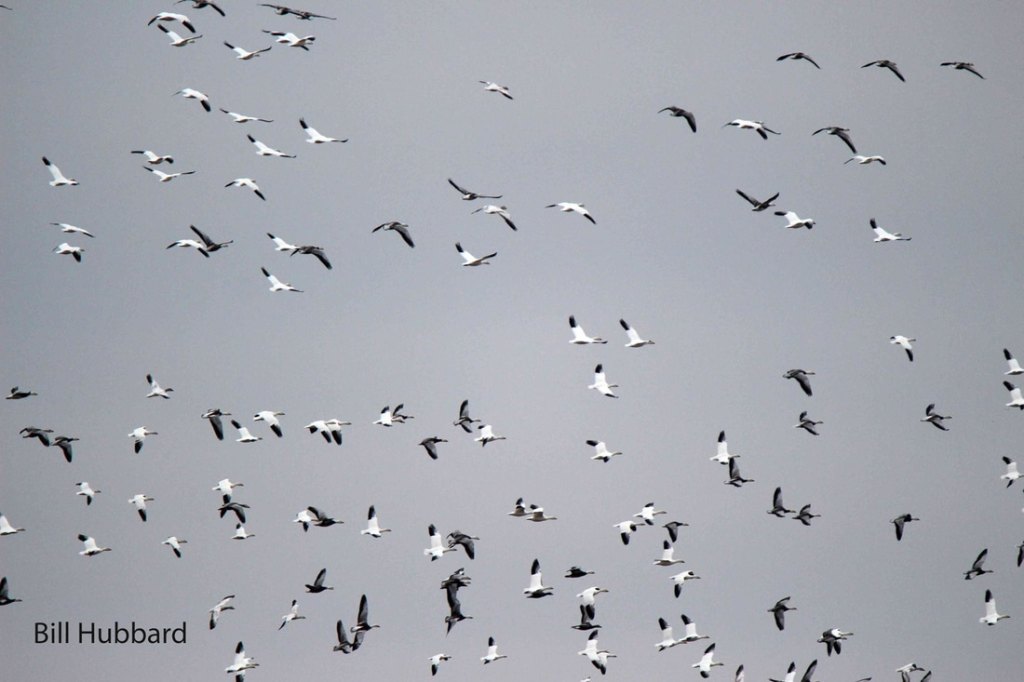
The very next day, Bill and Sherry Hubbard were out at the Limberlost Swamp Wetland Preserve, when they heard and saw a flock of about 200 snow geese fly to the field just north of the Loblolly Creek off of 300W. At this same location on January 24, Bill reported 1500+ snow geese and greater white-fronted geese.

January 17, Ecologist Ben Hess, was driving home and saw a flock of about 2000 snow geese flying over. About this time, Kimberley Roll saw about that many geese flying over at the Limberlost Swamp Wetland Preserve and got some photos of them. Others reported seeing this flock of birds.

Curt Burnette was photographing three snow geese on January 20, when he realized that they were surrounded by greater white-fronted geese.

January 21, John, Catalina, Luis and Juan Velasquez were at the Limberlost Swamp Wetland Preserve when they had a nice flock of snow geese with Ross’s geese mixed in flying around them. John called the place “magical.” We are happy that his three Indiana Young Birders got to experience the joy of that number of birds in flight.

Bill Hubbard, Kimberley Roll, April Raver and Brian Daugherty all took some great pictures of the snow geese. April even got a nice video. Thank you all for sharing your pictures with Limberlost.

According to Dave Reichlinger, Sandy Shacht, and Marissa Windell, all longtime birders, there have not been that many snow geese in northern Indiana. All three came to Geneva to see them.

On the afternoon of January 22, Randy Lehman and I found a mixed flock of 500+ snow geese, cackling geese, greater white-fronted geese, and Canada geese just east of the Wabash River in a flooded field. This was an area that Gene Stratton-Porter called “Paradise on the Wabash.” On January 27 and 28, Randy and I followed a flock of about 1000 snow geese as they were feeding around Geneva. We think Gene would be amazed at the number of birds choosing to spend part of the winter at Geneva.

Bill Hubbard had a hooded merganser around his backyard on Lake of the Woods in late January and 34 robins in the tree in his backyard on January 27. Randy and I had about a dozen northern pintails on the north side of the Limberlost Swamp Wetland Preserve on that same day.

We had at least 7 eastern meadowlarks and 3 northern mockingbirds here this month. Normally they are summer residents.

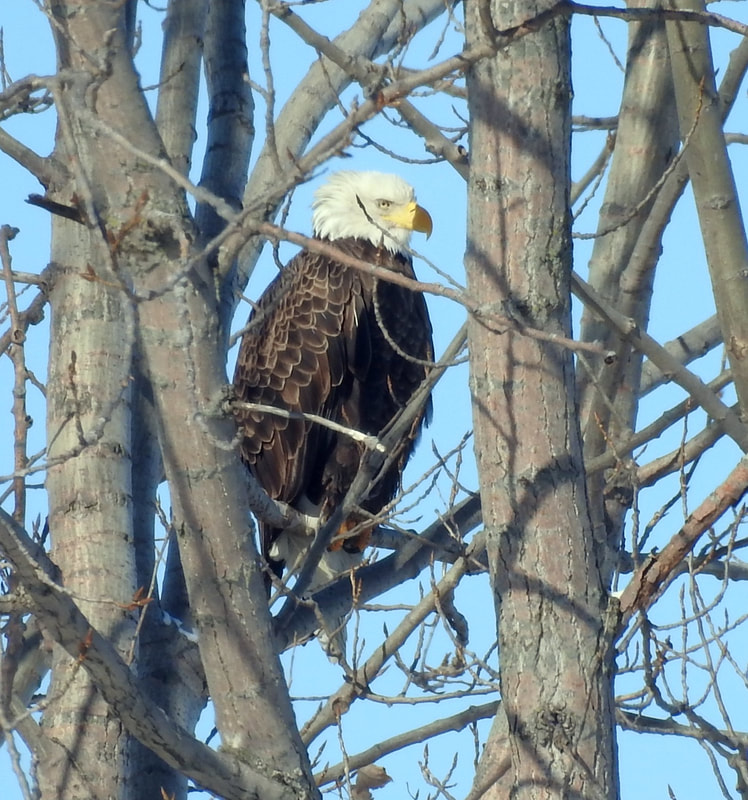
I cannot end without a comment about our resident bald eagles. There is activity at all three nests in our area. A very positive sign for another successful nesting year.

The year has only begun and we can only imagine what spring migration might bring to the area.

The birds are coming back to this area due to habitat restoration. By becoming a member of the Friends of the Limberlost, you are helping us to create more and better habitat for not only our native birds, but plants, animals and a host of insects such as Monarch butterfly.
Jim Haw Tribute

By Don Gorney

It’s with a heavy heart I share the news that Jim Haw passed away on January 9, 2017. Jim began birding in high school and was already an accomplished birder when he moved to Fort Wayne in the early 1970s. He birded the state with the likes of Ken Brock and other skilled birders – a relatively small group in the 1970s – and he birded extensively in northeast Indiana. Ever since I met him in 1994, I’ve considered him the Dean of Northeast Indiana Birding/Birders. He knew his birds and where to find them. Importantly, he kept records. If you wanted to know about northeast Indiana bird records from the early 1970s onward Jim Haw was the source of the information.

The best thing about Jim was that he graciously shared his time and knowledge. He was field trip leader for Stockbridge Audubon for many years, gave many bird programs, served on the Indiana Bird Records Committee, compiled the Ft. Wayne Christmas Count for decades, and patiently and willingly tutored new birders. Two of those new birders he mentored were Jeff McCoy and myself. Of course, there were scores more besides the two of us who learned a lot from Jim. In the days before email and the internet, it was always exciting for a new birder like me to call Jim to tell him about an uncommon/rare bird that I had found and for Jim to activate the rare bird alert phone tree. I vividly recall the printed phones tree diagram that was in two parts: one section for people who wanted to know about all “good” birds and another for those who just wanted to know about the real rarities only. Of course, Jim was the top of the tree and all good finds were reported to him first.

Although I have participated in numerous Christmas Bird Counts over the years none have been like the Fort Wayne count. During the day I got to bird with Ted Heemstra, my other birding mentor who passed in May 2016, and Jeff McCoy. At the end of the day we assembled at Franke Park for a chili supper and to learn what species had been seen by the various teams. Jim made the compiling of the list suspenseful and fun. When I moved from Fort Wayne to Indy in 1998, I still participated in the Ft. Wayne Christmas Count a few more years because it was fun and I greatly enjoyed Jim’s performance at the end of the day.

Jim was a quiet, soft-spoken man with a funny G-rated sense of humor. He was an excellent birder who unfortunately slowed down after his retirement due to health problems. In recent years his outings were shorter duration and more by car but he was still finding King Rails and other good birds. I speak for many others when I say that Jim will be greatly missed as a birder and as a friend.

Limberlost and Jim Haw

By Terri Gorney

My brother, Don Gorney, did a wonderful tribute to Jim Haw that expresses the way many feel about him. I would just like to add what he meant to Limberlost where he was a frequent visitor.

You knew it was going to be a good day when Jim came into the Limberlost Visitor Center and was excited to share what birds he had seen around Geneva. Jim would bring his lunch and talk with (now retired) Limberlost Site Manager Randy Lehman and Naturalist Curt Burnette. He was always eager to share his information on the birds that he had seen and the location that he saw them. With the wetland restoration, Jim was anxious to explore “new territory” close to home.

Because of his excellent record keeping, he had information on all the rare birds that had been seen with the date and the place. He was always ready to share information and was humble about his own accomplishments.

Jim was the first to discover King Rails at the Limberlost Swamp Wetland Preserve in 2014 and again on June 9, 2015.

When Barb Gorney and I saw Black-necked Stilts on May 3, 2013, both Jim and Don told me that was an Adams County record. When Randy Lehman and I saw them on April 25, 2015, Jim told me that was the first northeast Indiana record for April.

When Ben Hess found a Glossy Ibis on June 10, 2015, Jim told me that was only the second record of that species for northeast Indiana. Thankfully, the Ibis stayed for a few days and many birders got to see him.

As Dave Reichlinger stated, one of Jim’s best finds was the Black Vulture that Jim saw in Geneva. How many would look at vultures close enough to notice one was different. That Black Vulture was out of its range. Southern Indiana is usually as far north as they venture.

You will indeed be missed, Jim, by all your friends. With your wit and wisdom, you were one of a kind.

STEAM Festival

By April Raver

“If a child is to keep alive his inborn sense of wonder . . . he needs the companionship of at least one adult who can share it, rediscovering with him the joy, excitement, and mystery of the world we live in.” – Rachel Carson, “The Sense of Wonder”

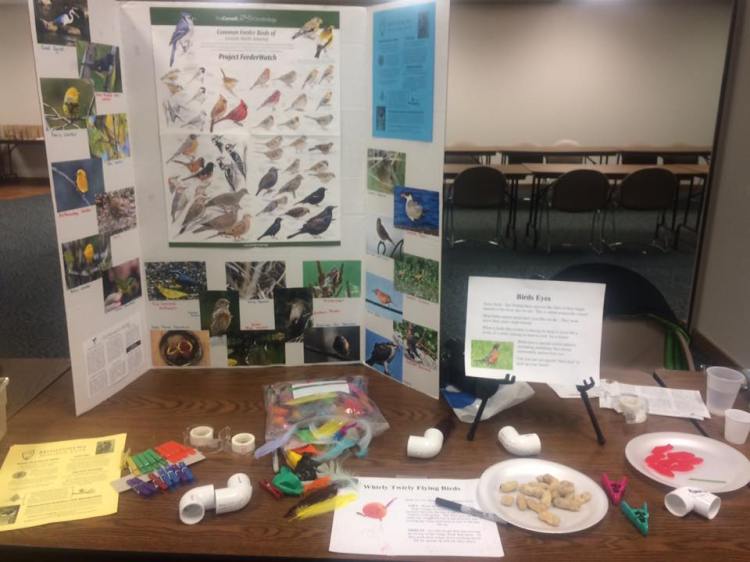
I belong to two amazing groups whose missions echo this sentiment exactly. The first group is the Mississinewa Audubon Club (MAC) out of Grant County. MAC’s mission statement reads: “The objectives of this organization shall be to promote the study of wildlife and to undertake appropriate conservation activities. This includes bird and wildlife watching, conservation activities, and educational opportunities for all ages.” In fulfilling this mission, MAC has been busy leading monthly nature walks at Matter Park in Marion. These walks are held the second Saturday of every month at 9 AM and are free to the public. We’ve had many families join us on our walks and we love discovering all sorts of nature through the eyes of the children on our walk – bee hives, katydids, birds, bugs, butterflies – you name it, they find it! We’ve also been working with several schools and are getting ready to start an after school nature club with one of our local schools! This past Saturday we took part in the STEAM Festival that was held at the Marion Public Library. During this festival, different groups from the community came together to offer hands-on science activities for kids. More about this in a bit!

The second group I am involved with is the Friends of the Limberlost. Not only are the Limberlost Swamp and surrounding areas great for birding and exploring, but the Friends of the Limberlost offer many great events throughout the year for children and families. The ring in the New Year (at noon) with a balloon drop in the visitors center. At Christmas, Santa visits the cabin and they play reindeer games. They bring in many speakers, many with live animals and birds, throughout the year. Many school groups take field trips to Limberlost. Alexandra Forsythe has put together some amazing outreach programs. These programs offer presentations, hands-on activities, take home projects, and more. You can visit the Limberlost website (limberlost.weebly.com) for a variety of activities. One of the newest parts of the Alex’s Outreach Program is the “Bird Box.” This trunk is filled with books, worksheets, and hands-on activities that teachers or families can use to explore the wonder of birds. Coming soon Limberlost will also offer a “Wetlands Box.”

When the library asked if MAC would like to be involved in the STEAM Festival, I knew right where to turn. I immediately asked my friends at Limberlost if we could use part of the Bird Box for the festival. They were quick to say YES and I stopped by the visitor center to pick out a few items. What a great way for two great organizations to work together to share the love of nature with the next generation!

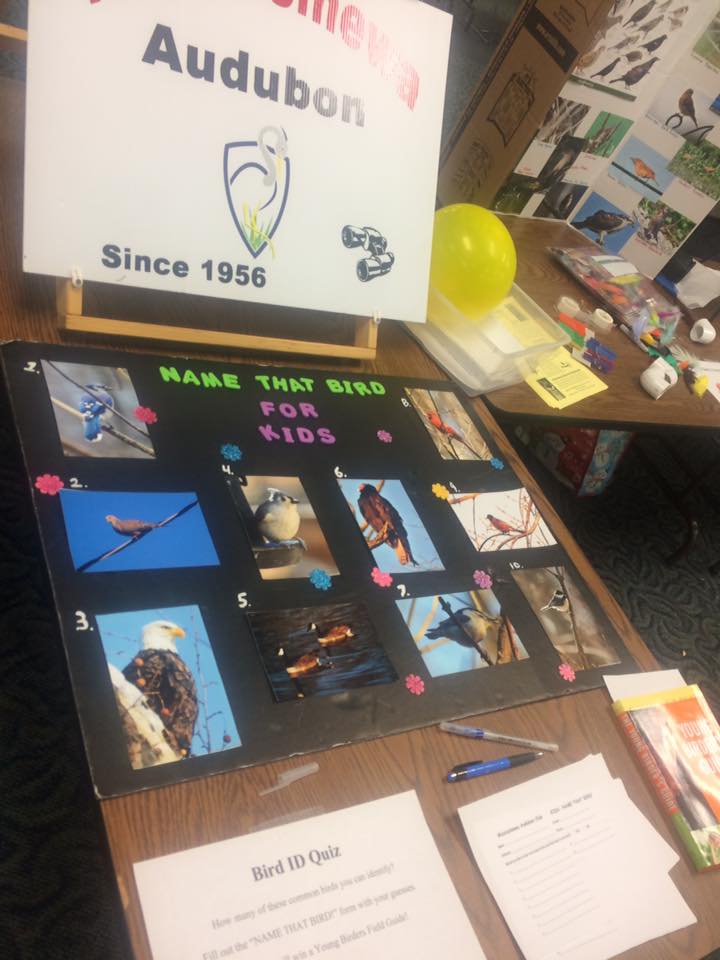
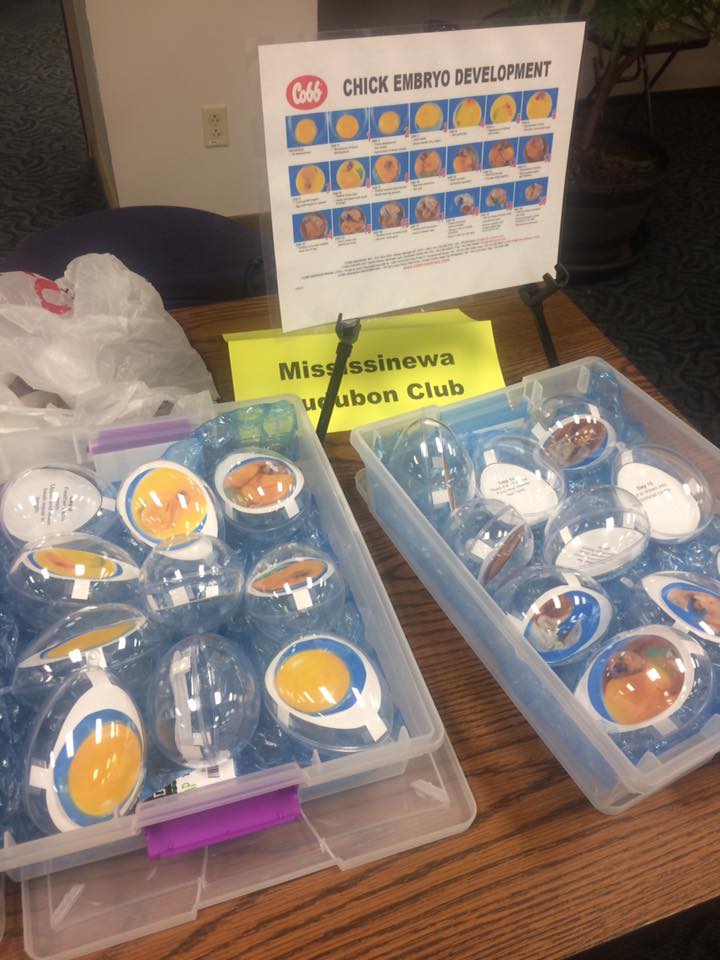
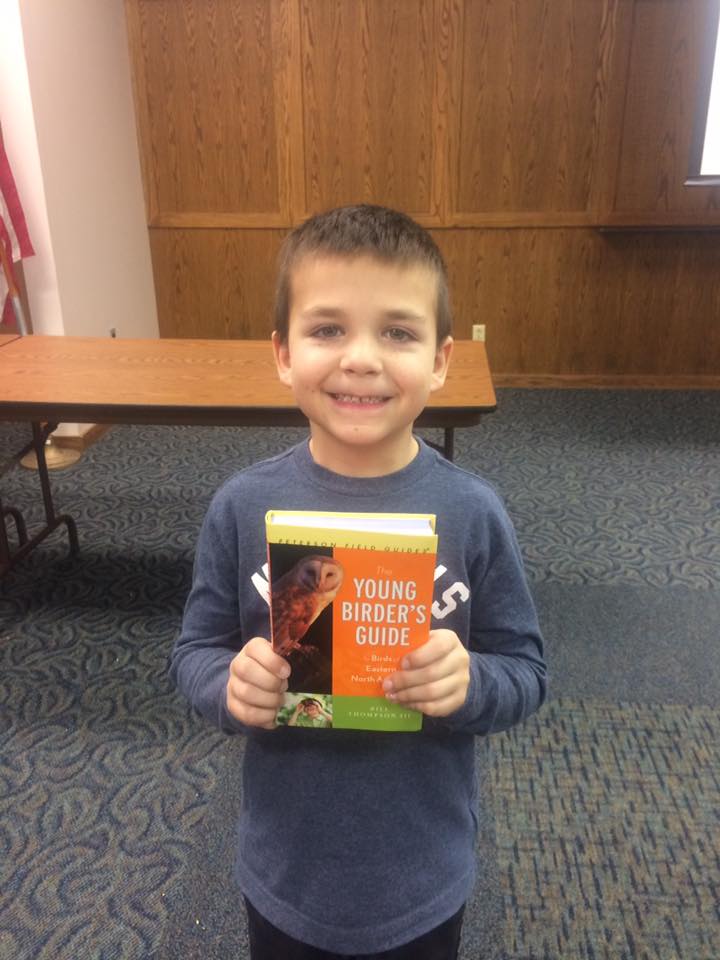
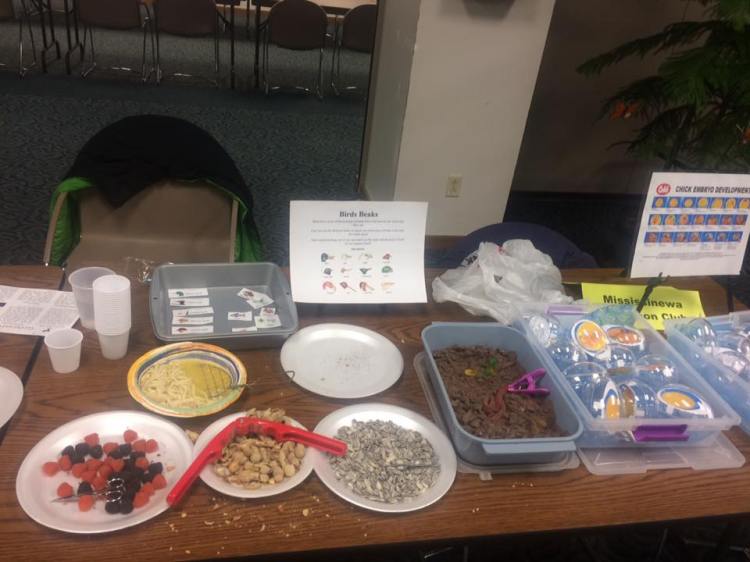
MAC set up three tables at the festival. One of the activities we borrowed from the Limberlost Bird Box was a set of 20 plastic eggs. Each egg represents a day of growth of a chick inside the egg. Kids loved looking at all the eggs and seeing how much the egg changes in just 20 days from a yolk – to a chick! One tiny girl who couldn’t have been more than two, kept coming back to the eggs to see the “birdies!” Kids are never too young to start loving nature! Another activity we borrowed from the Bird Box was a set of bird eyes made out of PVC pipes. Many birds, like robins, have eyes that are located on the side of their heads instead of the front so they have monocular vision unlike our binocular vision. These PVC eyes allow children (and adults!) to experience what its like to only see from the side. These were a huge hit with all ages! There were lots of laughs as each individual tried to pick up a peanut while looking through the PVC eye. MAC also set up a station with several different types of bird “beaks” (tweezers, nutcrackers, straws, spoons, etc) and different types of foods (peanuts, nectar, gummy worms in cookie dirt, sunflower seeds, etc). Children had the opportunity to test out different beaks with different foods to see which type of beaks worked best for which kinds of foods. Children also learned how birds use thrust and lift to fly and were able to make their own take-home whirly bird to explore thrust and lift further. A bird ID quiz was also offered and many families enjoyed working together to identify many common birds that can be found in their own back yards.

It was an amazing day of learning and fun. MAC is so thankful to Limberlost for letting us use some of their Bird Box activities for the day! If you are ready to share the wonder of nature with your family or your class or even a friend, stop by the Limberlost State Historic Site and ask about their Bird Box and outreach activities. Until then – take a walk through the neighborhood, stop by the park, explore a nearby woods, drive by the river – what can you see? Share the wonder of nature with the next generation!

Winter Birds of Limberlost

Kimberley Roll is a member of Friends of the Limberlost and an excellent nature photographer who spends time hiking the trails of the Limberlost Territories. She shares her pictures and her finds with us. We thought you would enjoy her photographs of the birds that winter at Limberlost. Gene Stratton-Porter would be pleased that so many still enjoy the birds around Geneva Indiana, a place that she lived for twenty-five years.

Short-eared owl flying over the Limberlost Swamp Wetland Preserve. In November 2017 they returned to spend their seventh winter here.

Bald eagles have become year round residents in Geneva. They have nested here the past several years. They are commonly seen at Limberlost Swamp Wetland Preserve, Loblolly Marsh, Red Gold Wetlands, Rainbow Bottom and the old gravel pit.

Northern harrier hovering and looking for prey. They have been a winter resident since several were first seen in November 2011.

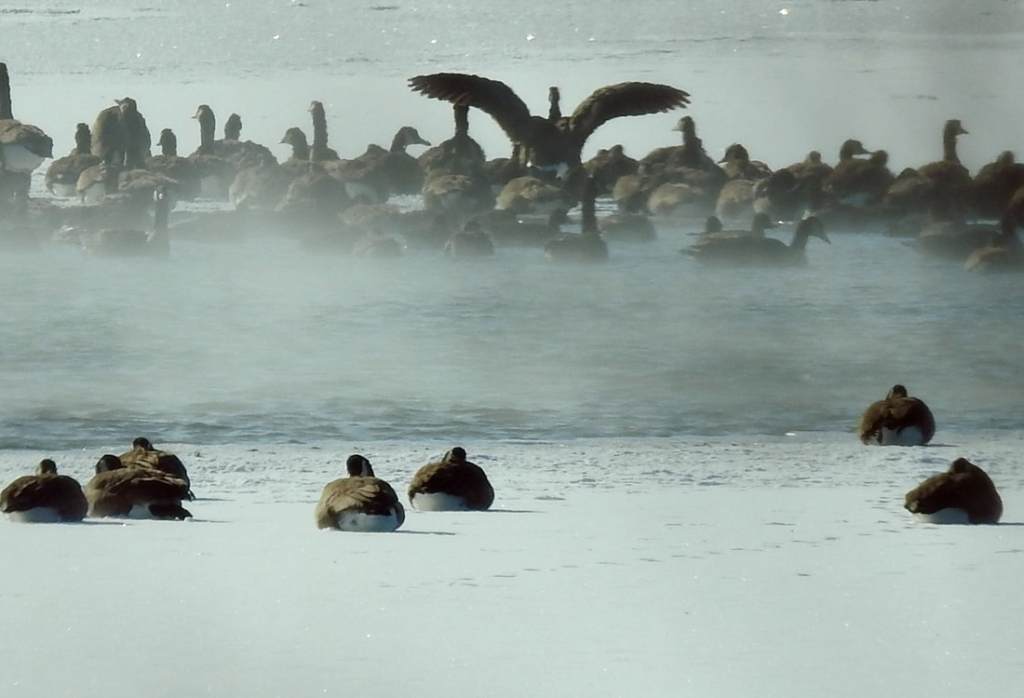
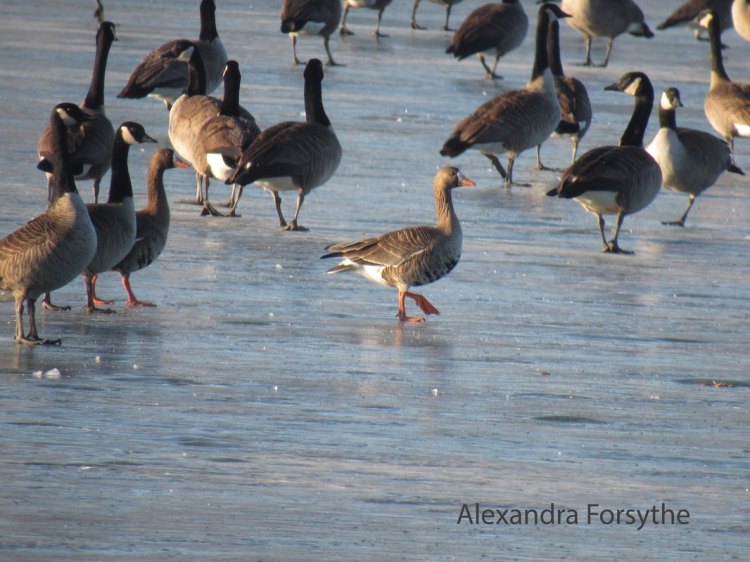
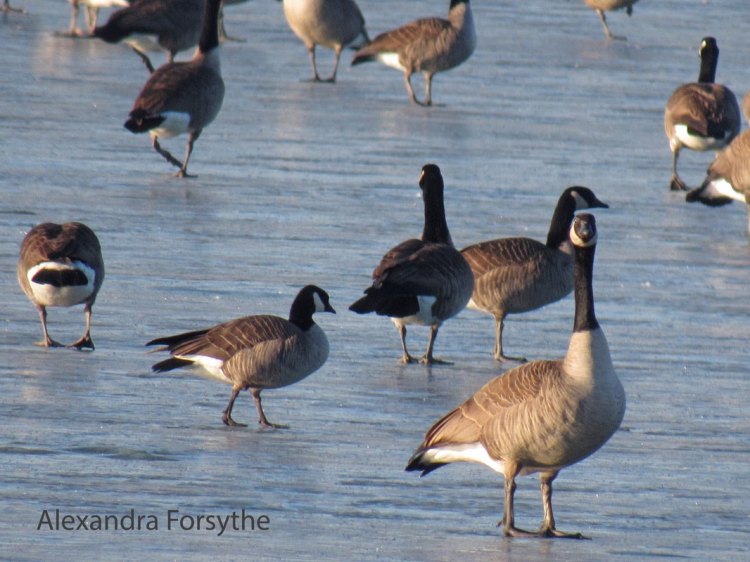
The old gravel pit in early January where there were Greater white-fronted geese, Canada geese, and mallards.

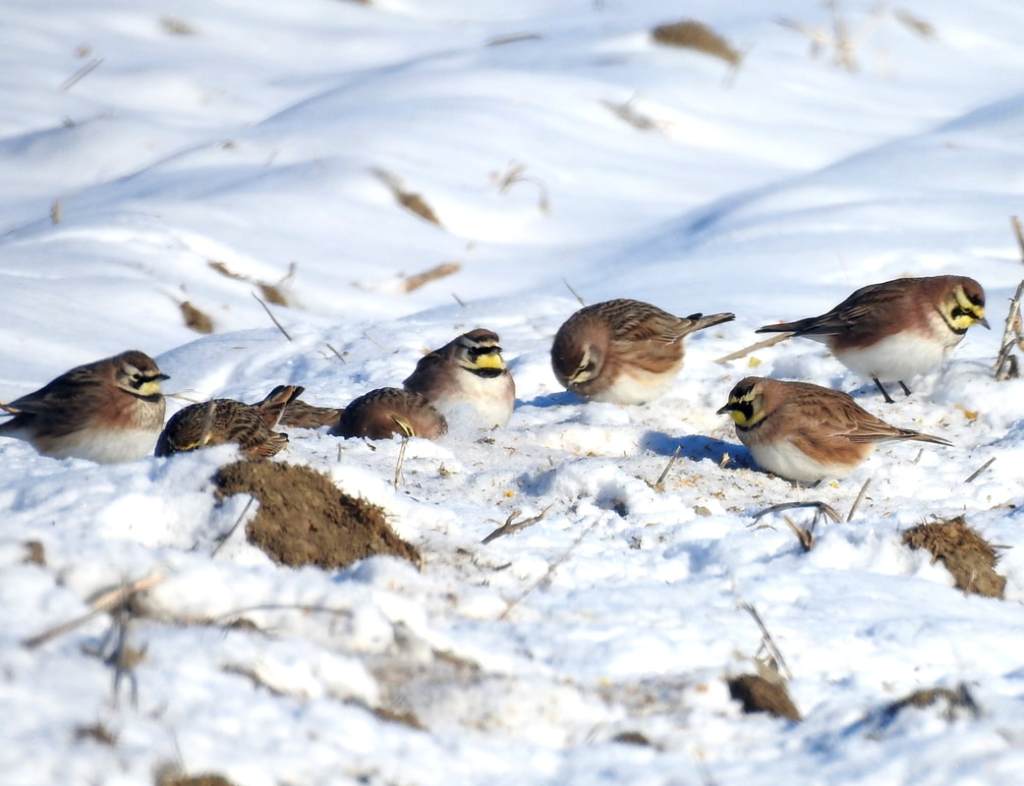
A number of horned larks are wintering at Limberlost. Flocks of horned larks can be seen in fields and along roads in the area.

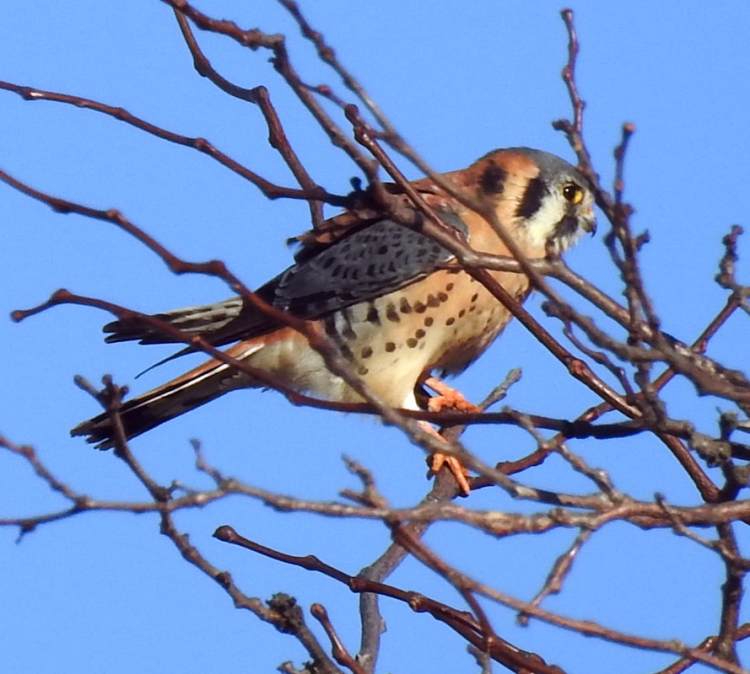
The Kestrel is another year round resident. Their numbers around Limberlost appear to be on the rise.

Christmas Bird Count at Limberlost

By Alexandra Forsythe

Gene Stratton-Porter would have been proud of the hardcore birders who went out on New Year’s Day to conduct a Christmas Bird Count at Limberlost. The Christmas Bird Count is a nationwide bird survey run by Audubon which takes place from December 14 to January 5 and has been running for 117 years. The count helps find trends in population patterns to enable birds to be protected before they go extinct.

Through the Christmas Bird Count, Limberlost is preserving not only Gene’s legacy, but the birds themselves. Our CBC covers Limberlost and the surrounding area, giving the birders who participate the most high-quality territory that anyone could ask for, and it has paid off.

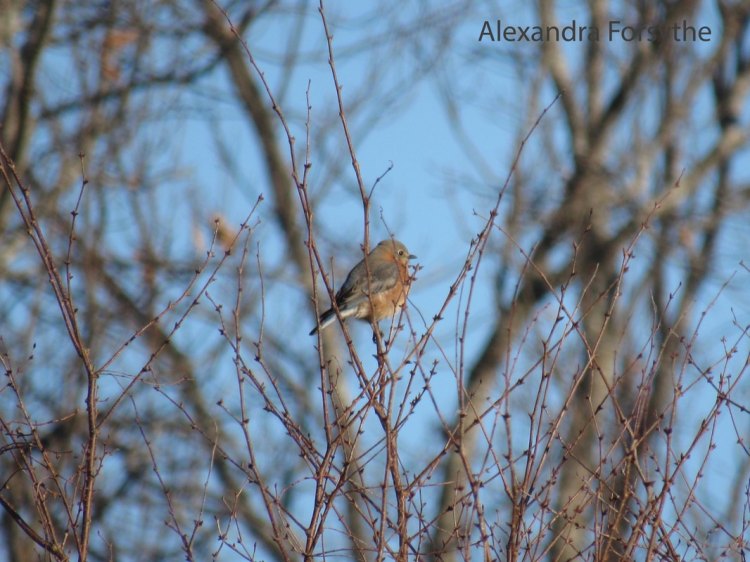
On the Christmas Bird Count at Limberlost, we discovered a few unusual species: White-Fronted Goose, Northern Mockingbird, Cackling Goose, and Eastern Meadowlark. Birders also found Northern Shovelers, four Pileated Woodpeckers, and several Carolina Wrens. There were Northern Harriers across the count area, and almost 1000 Canada Geese were seen by a single group of birders and some late Eastern Bluebirds.

Gene most certainly would be pleased.

A Happy New Year from the Limberlost!

New Year’s Celebration at Limberlost

By Terri Gorney

Limberlost hosted a family friendly New Year’s Eve celebration on December 31. The highlight was the Countdown to Noon with a balloon drop and pop. We had some midnight merrymaking at noon!

Program developer Curt Burnette created a tambourine noise maker that each child got to decorate. Carnival style games were played and light refreshments were served.

When the time came, Curt led everyone in singing Auld Lang Syne. This year, he put a little twist on it by doing a Cajun version and dance. Then came the big Countdown to Noon and balloons filled the room that were released from the ceiling.

Happy New Year from Limberlost!

Wherein the Canoper’s role in Gene Stratton-Porter’s books is examined, and an explanation of what it was is given

By Curt Burnette

The Limberlost Swamp is the wetland most associated with Gene Stratton-Porter, but other local wetlands played a role in her life and career. She mentions Rainbow Bottom, the Wabash River floodplain in the Ceylon Covered Bridge area, in some of her nature books and two of her novels. Another local wetland, the Canoper, is mentioned in the nature book Moths of the Limberlost, and is featured prominently at the beginning of her novel At the Foot of the Rainbow.

The Canoper was a swampy area across the Wabash River and to the north of Rainbow Bottom. In At the Foot of the Rainbow‘s chapter three, titled “The Fifty Coons of the Canoper”, some of the local men take a thread salesman from Boston, who is passing through the area, on a winter bogus coon hunt in the Canoper. He is told there is a tree there with fifty raccoons living in it. The men follow the railroad tracks north of town and cross the icy river bridge. Their dogs pick up scent and Gene writes “Deeper and deeper into the wild, swampy Canoper led the chase.” After running the poor salesman ragged through the cold and dark, it is eventually revealed that the only coon in the tree is a tame little pet raccoon chained to a branch!

In Moths of the Limberlost, Gene describes the effect of a carnival’s visit to Geneva on the area moths. She writes “There was a carnival in the village, and for three nights the streets were illuminated brightly from end to end, to the height of Ferris wheels and diving towers. The lights must have shone against the sky for miles around, for they drew from the Limberlost, from the Canoper, from Rainbow Bottom, and the Valley of the Wood Robin, their winged creatures of the night.” The Valley of the Wood Robin was Gene’s name for the area between Limberlost Creek and the Wabash River.

According to local tradition, the Canoper got its name from the word “canopy”, and this referred to the dense forest cover of this swampy area. The Canoper Creek (now the Amstutz Ditch) ran through this swamp. Across one of its tributaries at one time was a beaver dam said to be as much as five or six feet high and one hundred yards long. The Canoper Trail ran along the high ground between the Canoper and Thompson’s Prairie, and the Canoper Post Office, the first in Adams County, was established on the Canoper Trail about one and three quarter miles east of where Berne sits today.

The Canoper never obtained the fame of its nearby neighbor, the Limberlost Swamp, or even its next-door neighbor, Rainbow Bottom. It still, though, played a role in Gene Stratton-Porter’s life and career—and was immortalized in its own little way as the “wild, swampy” place where Jimmy Malone and the raucous men at Casey’s saloon take the “Thread Man” on a cold, wet, merry chase in search of the fifty coons.

A Girl of the Limberlost Book Review

By C. O. Rayn

A Girl of the Limberlost, written by Gene Stratton-Porter, was received by us as a gift from the authoress of which we are proud to speak, and more so to have it in our collection of books. We have nearly read it through so far it has completely captured our interest. It is a book that we shall always greatly prize. It is a well laid out plot, well carried out, instructive in the character study and has much natural history. It consists of 23 chapters, and 485 pages printed on good size type and easy to read. It also takes you back to Freckles the second book of Gene Stratton-Porter editions. It consists of thirteen characters and old “saying,” thirteen is unlucky is proven quite otherwise for so good a book as this one proves it.

We would that all girls of the Limberlost had the same qualities that Elnora, the Girl of the Limberlost, was in possession of and that mothers would prove themselves of such pure and enabling principles as Mrs. Comstock proved herself to be. “Billy” a boy from reality will bring the tears and also make you smile. The good “Mr. Sinton” and his much loved wife that adopts “Billy.” “Phillip Ammon,” the invalid from Chicago is an interesting character to the reader as to Elnora and her mother, also. It is illustrated by four full page drawings, and published by Doubleday, Page and Company. We have read the book almost through and can give it our highest praise. We believe it the best book of the books from the pen of the authoress.

Editor’s Note: This is one of the earliest book reviews on A Girl of the Limberlost. Gene received copies early but it was released on 17 Aug 1909 on her birthday. The nature written about in the book is from the Limberlost Swamp around Geneva. It is believed this article was written by C. O. Rayn who ran the newspaper.

Source: Geneva Herald, 19 Aug 1909, p. 1

Unlikely Summer Residents: Cliff Swallows in Geneva

By Terri Gorney

Adams County is known for being one of the flattest counties in Indiana. So what were cliff swallows doing in Geneva the summer of 2016?

These swallows are uncommon in our area. Gene Stratton-Porter did not mention them being in Geneva during her time. Maurice McClue, an attorney from Angola, wrote in his “Natural History Memoranda” that they were extirpated from Steuben County around 1920. He was pleased to note that a small colony was using the side of a barn for their nests in Cass County in June of 1955.

These insect eating birds have learned to adapt themselves to use man-made structures such as barns, bridges or culverts for nesting. They build mud nests side-by- side that cling to vertical walls.

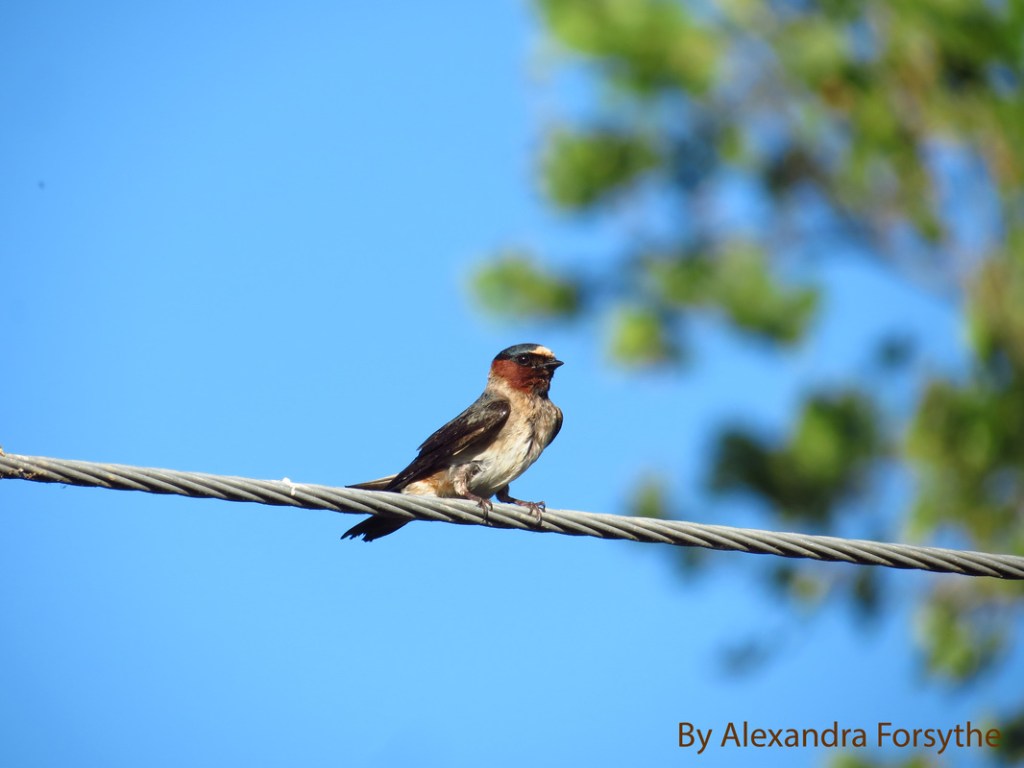
On May 21, Randy Lehman and I observed a small flock of them around the Loblolly Creek close to the Limberlost Swamp Wetland Preserve. Some of the birds were perched on electrical wires and others were busy scooping up mud from the creek banks and taking it below the bridge. It appeared that they were building nests.

On May 27, Curt Burnette was able to confirm that there was a colony of cliff swallows nesting here. He took a couple photographs of the nests.

Since a colony can eat hundreds of insects, like mosquitoes, a day, they are a welcome summer resident.

Southern Adams County appears to agree with the swallows as barn, tree, bank, rough-winged and cliff swallows have been documented here.

We wish the cliff swallows safe journey back to their winter feeding grounds in western South America. We hope to welcome them back to Geneva next May.