John Brenner

By Terri Gorney

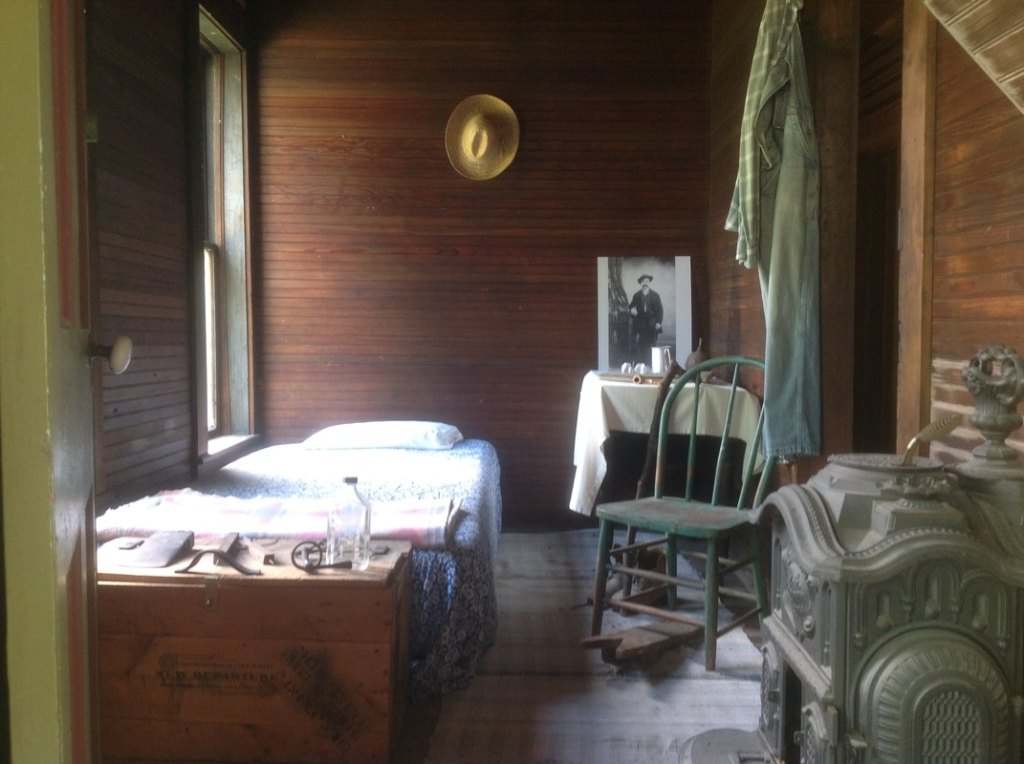
You may only have heard of the name John Brenner if you have taken the Limberlost State Historic Site’s tour. John Brenner became the caretaker of the Limberlost Cabin and Carriage House around 1900. It was a position he would hold the rest of his life. John’s room in the carriage house is meant to look as if he just stepped out.

John had moved to Geneva in 1887 and had become well-respected member of the community. The Ohio native was a Civil War veteran. He served with the OVI 115 Co D for almost three years. He was a member of the Dr. John Porter GAR Post 83 in Geneva. This post was named in honor of Charles Porter’s father. John was an active member and even served as the post’s commandant. John would apply for a pension over twenty years after his service and he would receive it.

Charles and Gene Stratton-Porter though of John as a friend and one who they entrusted to care for their home, carriage house and their horses. Gene mentions John in “Moths of the Limberlost.” After Raymond Miller brought her a female Modesta moth, she sent husband, Charles, and Brenner “drive with him to the Hirschy farm, and help secure a limb from one of the very few Lombardy poplars of this region.”

After Charles and Gene sold the cabin to Dr. Corwin and Chloe Price in 1920, John stayed and worked for the Prices. He would pass away at the cabin on November 7 1921. He was attended by Dr. Corwin and Chloe, who was a nurse. John’s obituary would be on page one of the “Geneva Herald” on November 10.

We are pleased that members of the Brenner family have visited the site and are happy with the interpretation of John.

Western Grebe Visits Limberlost

By Bill Hubbard

The saga begins on Tuesday, June 27, 2017. After a day of caring for various chores around the house and yard, I decided to take a relaxing pontoon boat ride on our Lake of the Woods in Geneva, Indiana where I live.

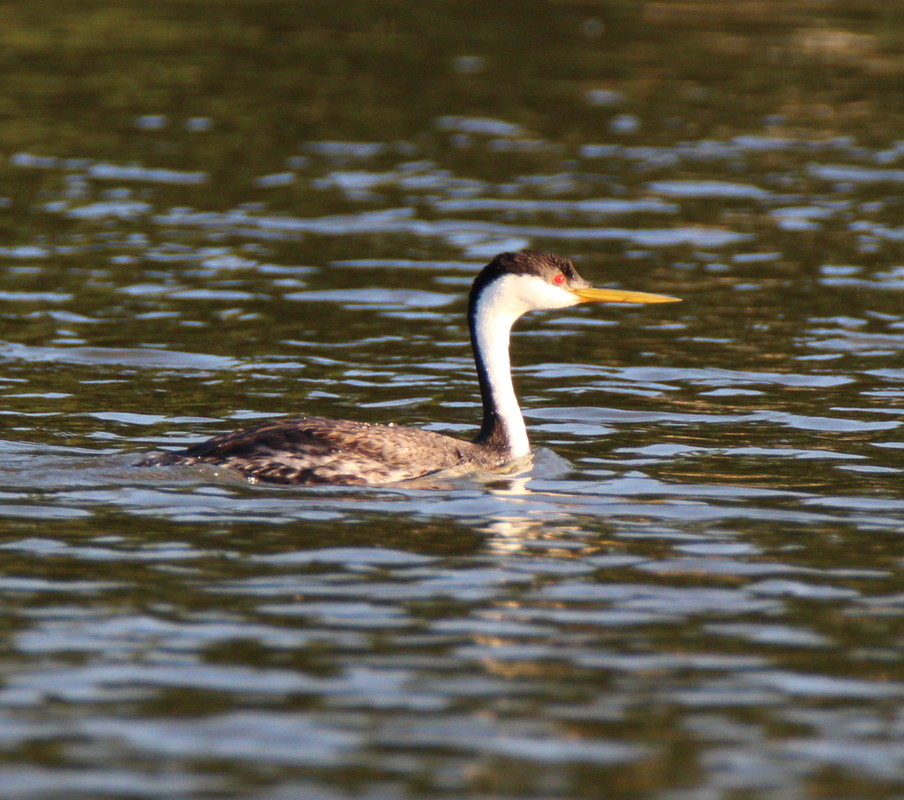
It was around 7:30 pm and the sun was beginning to get that wonderful golden glow as the day was drawing to a close. I was about 75 yards offshore when I noticed a diving bird I first thought was a cormorant. However, I quickly realized it was not a cormorant because of blazing red eyes, and distinctive white lower face and neck. I hurried back to the house and picked up my camera (which is equipped with 150-600 zoom lens) hoping the bird would stay a while.

As I left the dock I saw the bird was indeed still in the middle of the Lake. I spent the next hour or so cruising the Lake trying to get my back to the sun so I could get some photos of the bird. The bird was very cooperative. It would die and then surface as much as 100 yards away. It was quite an adventure trying to find the bird when it surfaced and then get in position for more photos. It would spend some time on the surface preening and just swimming around. It never acted as though it would fly away.

Finally, at around 8:30, after taking 66 photos, I decided to go back home and leave the bird in peace. As I docked the boat and bid farewell the bird was still swimming and diving near the middle of the Lake.

I downloaded the photos to my computer and was thrilled to see there were many photos of good quality. I cropped a few for a better close-up view. I then enlisted the help of my wife Sherry to help in the identification process. Sherry soon tentatively identified the bird as a Western Grebe. We were a little puzzled since Eastern Indiana is well outside their normal range.

The next step was to send some photos to Terri Gorney, who is afine birder, hoping to confirm the identification. Terri is also in charge of posting photos to Friends of the Limberlost Facebook page (I was hoping one or two photos would be accepted for the Facebook page). Terri confirmed the identification as a Western Grebe and posted two photos to Facebook. The photos have drawn much interest and currently have over 32oo views.

This Western Grebe is only one of many “rare birds” sighted in the Limberlost in the last five years. Check out our Facebook page for more information. Friends of the Limberlost-Home of Gene Stratton-Porter.

I am hoping you may be able to visit the Limberlost and perhaps have your own Rare Bird sighting.

Note: Bill Hubbard is a Wetlands Educator at Limberlost State Historic Site in Geneva, Indiana.

A Song in the Wilderness

The Limberlost staff and the Friends of the Limberlost board were pleased to be able to sponsor the play A Song in the Wilderness written by Larry Gard. Larry produced this play in 1993 with an Indiana Humanities Council grant. He and his wife, Marcia Quick Gard, performed it around Indiana for five years. Marcia starred in the play as Gene Stratton-Porter.

It is a one woman show that explores the life of Gene Stratton-Porter. Larry did a great job researching Gene as he captured her in a one act play and brought Gene to life. The play is set in June of 1924. Gene is moving into her workshop on Catalina Island. She is looking back at her life. The play is mainly centered on growing up at Hopewell in Wabash County and her time spent at Limberlost in Geneva.

When Larry’s wife Marcia died December 16 2016, the play did not fold. Kerrigan Sullivan stepped right into the role of Gene. Kerrigan gave an enjoyable performance.

We have a number of people to thank for the success of the play at the Fort Wayne-Allen County Public Library Theater on May 26. First Larry Gard the playwright and his late wife, Marcia, for whom the play was originally written. Actress Kerrigan Sullivan who brought Gene to life in her performance. Director Jaqueline Jones and Stage and Sound Manager Alleigh Scantling could not have done a better job. Thank you to the library staff, especially security, for making sure everything ran smoothly. Thank you to Barbara Gorney for assisting Limberlost at the library. Thank you to Kevin Kilbane of the News-Sentinel for a nice article promoting the play.

The next day, Larry Kerrigan and Alleigh visited Limberlost for a cabin tour. We thank you for your visit and dedication to this production.

The script is for sale in the Friends of the Limberlost Gift Shop in Geneva.

Gene Remembers Geneva Friends

By Terri Gorney

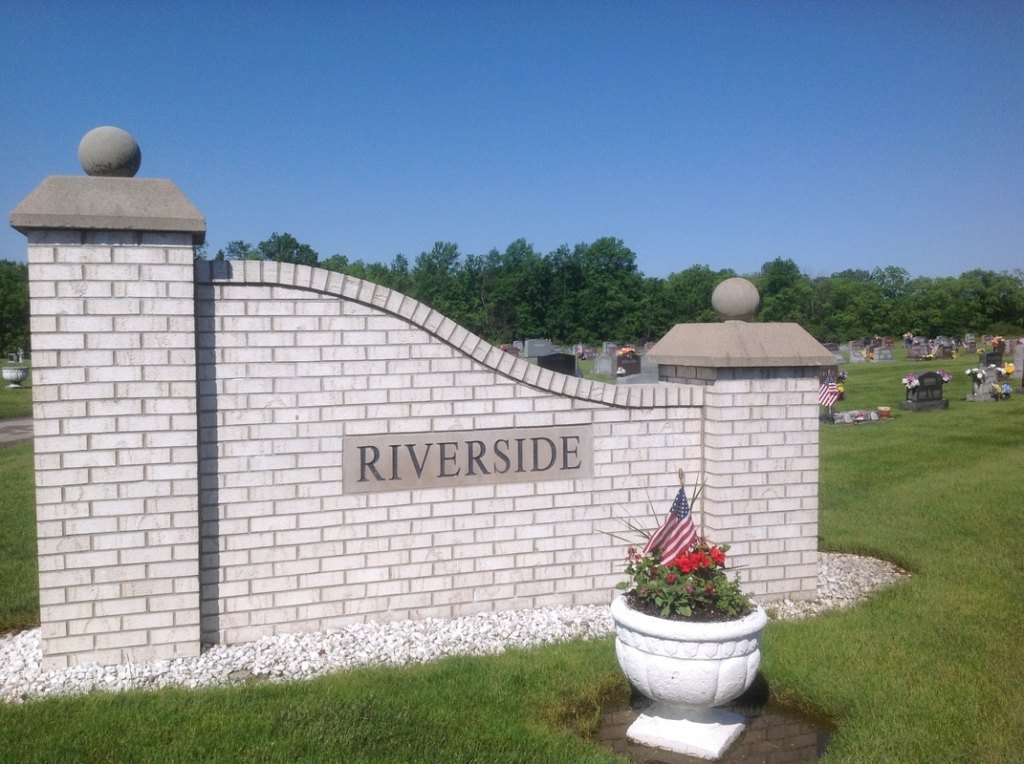
Gene Stratton-Porter made many good friends in Geneva. She wrote about several of them in her non-fiction books and magazine articles and had composite characters based on others in her fiction books. Gene was especially fond of the area around the Riverside Cemetery and those that helped her in her bird studies. Several allowed Gene access to their yards and farms and even told her about nests they thought she would want to photograph. Others would bring her a cool drink and food when she spent the day doing her field work. Some of her best bird photography was conducted here.

Gene wrote about her friends at the Riverside Cemetery in “Tales You Won’t Believe” which was published after her death. “The field lay in Limberlost territory, east of the village [Geneva] where I lived and worked for 15 years. It was bordered on one side by a flowing road running east and west and fairly well encircled east, south and west in the arms of a loving curve of the Wabash River…..Proof that I do not overrate the sheer beauty, the charm of this city of long sleep. Among those who lie beside the winding roadway, cradled by the arms of the river, daily visited by the birds descended from those worked among, rest many who were my best friends.”

Bird Architecture

By Gene Stratton-Porter

Editor’s Note: Gene Stratton-Porter was a prolific writer and wrote a number of magazine articles. This is a small portion of an article that Gene wrote in 1901 on her bird studies in Geneva for Outing magazine. Several of her photographs on bird nests accompanied her words.

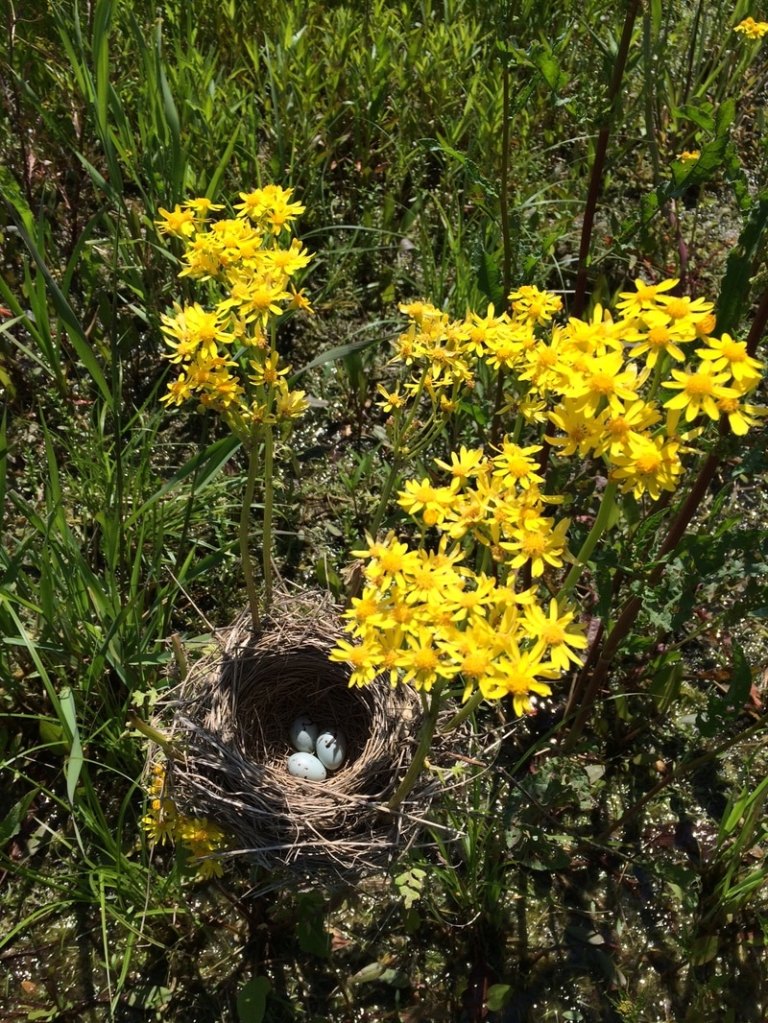
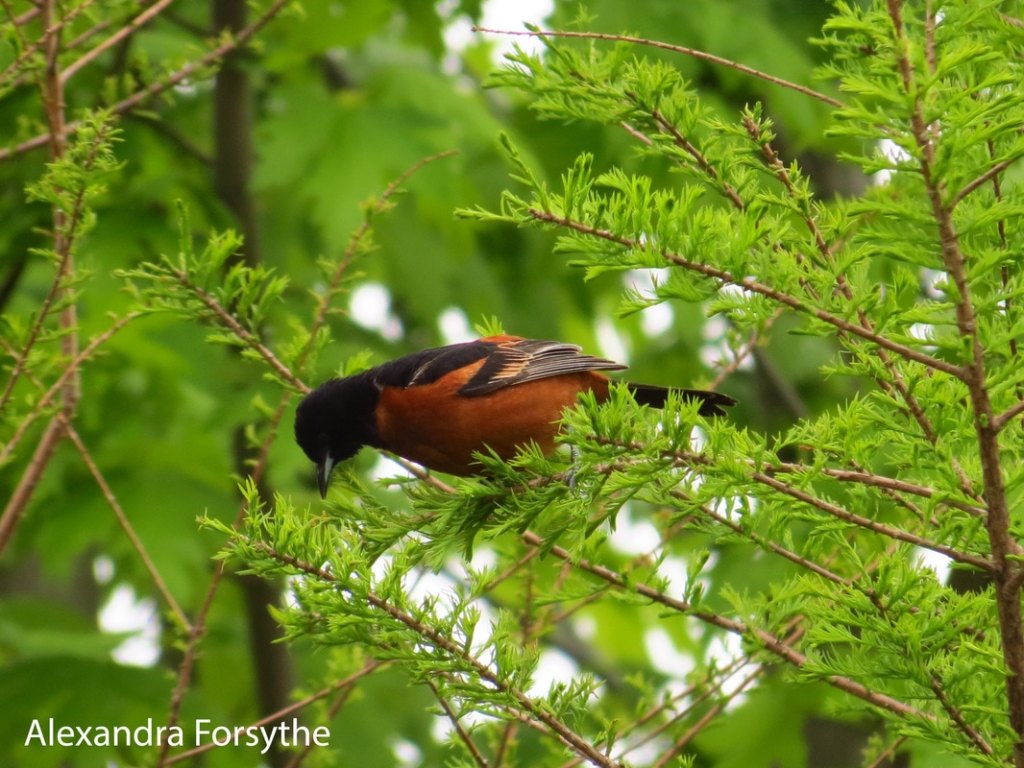
Bird architecture utilizes every conceivable material from the few chips on the ground of the killdeer, to the elaborate swinging nest of lint, lichens and hair of the oriole; every shape from the hummingbird’s cup to the mud scoop of the swallow or the pensile purse of the vireo; and every location ranging from six feet under, and on the ground, over bushes, fences, shrubs, buildings, trees up to the highest towers, monuments and mountain crags.

……..Bird architecture is one of the most interesting branches of natural history study and its surprises in the way of location, material and construction are never ending. The delight of discovering these things for yourself is enhanced by every treat for the eye and ear that nature has in store for her children; lapping water, waving grain fields, delicately colored and perfumed flowers and pungent forest odors. For every day spent exploring the secrets of Mother Nature she pays you compound interest. Not only is your mind filled with her signs, wonders and mysteries but your lungs expand with pure air, your blood washes free with delightful exercise and your heart beats in closer touch with the Creator.

Orioles

By Jane Brooks Hine

I went to the door one spring morning and there on the flowering currant bush was an Orchard Oriole taking his breakfast from the blossoms. Then, one day in summer, the Golden Robin flew past me like a streak of gold. Those were our first Orioles. It was the year of 1888.

I saw a dance performed by two male Orchard Orioles. Within an angle of our house are two large flowering currant bushes that stand close together like a hedge, and just beyond is the grape arbor. As nearly as they could the birds kept about a foot apart and hopped from twig to twig as if keeping time to music. They danced side by side through and through the bushes, then went dancing down the vines of the arbor.

I was invited to see a bird’s nest. It proved to be an Orchard Oriole’s and was as unique as the dance. A cup rested on a limb of a small young apple tree and was held in place by three woven chains made fast to a limb about ten inches above it.

For several years all the nests of the Baltimore Oriole that I found, and many that my friends brought and sent to me, were made of a wild flax. At first they looked like flax when wound on the distaff. After while, now and then, there were no more flaxen nests.

I have a beautiful nest that is woven entirely of black horse hair except one thread of coarse black twine that embroiders it.

Every spring I scatter threads of twine and hang out skeins in trees. It is surprising how much twine the birds will take if it is provided for them.

Editor’s Note: Jane Brooks Hine (1831-1916) was a Bird Woman a generation before Gene Stratton-Porter. Her writing on the Orioles was in one of her birding journals. It was also part of her writings in the 1911 Indiana Biennial Report.

Observations on the Ruby-throated Hummingbird

Editor’s Note: Jane Brooks Hine (1831-1916) was a woman who was a generation older than Gene Stratton-Porter. She noted the birds on her farm in DeKalb County and kept birding journals for birds she saw in DeKalb, Noble and Steuben Counties. We hope you enjoy Jane’s article on the Ruby-throated hummingbird. Her experience is timeless. This is from Terri Gorney’s research on Jane.

By Jane Brooks Hine

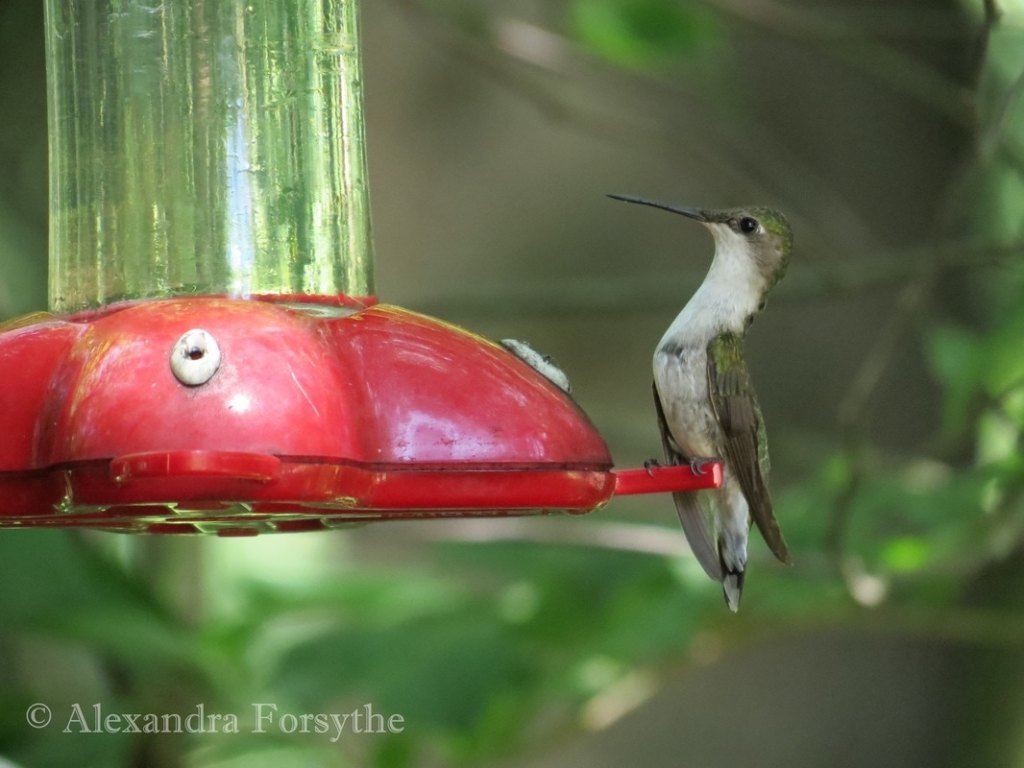
One 27th of May my son discovered a Hummingbird at work upon her nest, and drew for me a map of the locality by which I had no difficulty in finding the spot. It was well in the depths of an eighty acre forest. I watched my opportunity and while the bird was away for material succeeded in obtaining a desirable seat for observation. The saddle was already formed and the nest evened up to a platform level with the upper surface of the limb. It was placed beyond the middle of the long, slender maple branch about fifteen feet above the ground. The bird always followed the same direction whenever she went for material. Oftener than otherwise she returned laden to her nest in thirty-nine seconds after she left it –now and then more; once ninety seconds. I also spent much time there the 28th and 29th, and find the history of those days very similar to that of the 27th. Occasionally she took a vacation for food and rest; but those vacations were short. On May 30, at two P.M., the cup was complete and the bird was carrying silk and lining it. For this material she would be gone about as long again as for that of the outside. The next day, May 31, she was sitting. During incubation she sat lightly on her nest a few minutes, then off as many, and looked brightly about her while on her eggs.

On June 8 I found my bird in trouble; another female Hummingbird was trespassing. The aggressor would hover over the nest, swoop back and forth above it like a pendulum, alight with a tantalizing gesture on a twig close beside it, or with a squeal, dart under it, and each time she came near would get driven away by the sitting bird. Twice I saw her rob the nest, once of lichens from the outside and once a good bill-full of silk from the lining. The poor mother came back to her eggs as often as she was disturbed. After watching the constant conflict for more than two hours, I left them still battling. The next day the nest was unoccupied. During all these thirteen days –I had spent much time in close observation—I did not once see a male Hummingbird in the vicinity of the nest. It was the female who did all the labor of nest-making and of incubation and who as long as she could, valiantly defended her eggs and property. In my chosen seat I was not more than twenty feet from the nest and entirely unhidden; yet the bird paid no more attention to me than she might had I been a part of the tree I very quietly leaned against.

I once saw a female Hummingbird gather lichens from the body of a beech tree. She held herself poised before it, darting upon it again and again, until she was in her bill all she wished to carry.

About nine o’clock one spring morning, when lilacs were in bloom, we discovered that the old lilac bush by the well was ‘swarming’ with Hummingbirds –just come; we knew they were not there a few minutes before. There are five large lilacs on our premises and those of a near neighbor. On investigation I found four of these bushes alive, as it were, with Hummers—all females. The fifth bush, a Persian, they did not favor. The Persian lilac, with its slender, lithe branches and great, drooping cluster, is very beautiful when in bloom, but its flowers lack the sweetness of the common species. Then, all the time, there were birds in the air constantly coming and going from bush to bush. They remained the greater part of the day. I spent much time standing within on of those bushes. The birds seemed not in the least disturbed by my presence. There were seldom less than ten and often fifteen of them about the particular bush I was occupying. Every now and then one would alight and sometimes would pass her long tongue back and forth through her bill to free it from pollen. In the afternoon a male Hummingbird occasionally came to the flowers but was invariable driven away by the females. Towards evening the flock, apparently undiminished in numbers, disappeared as abruptly as it had appeared in the morning. On the following day the Persian lilac was still in its native purple, but the beauty was gone from the other four bushes; the flowers were a dull copperas color.

Once again I fell in with a wave of migrating Hummingbirds. These were in the eighty-acre forest and this time all males. These were not in a close flock as before, but were very plentifully spiced throughout the forest.

In a neighbor’s orchard a Hummingbird sucked juice from an apple while a young girl was in the act of paring it.

Once, on one of my rambles, I stopped to talk with a friend in her garden. A stalk of double velvet marigold, broken over the day before, drooped upon the ground. I suppose decay had set in, yet, as the flowers were still tolerably bright, I carried them with me when I resumed by walk. While pausing at a cornfield a Hummingbird, leaving the corn blossoms, came and leisurely fed from the marigolds in my hand, inserting its bill between the outer petals of the flowers.

I (and others also, no doubt) have found it a very common thing for Hummingbirds to be hovering and apparently feeding in the vicinity of dead branches—branches checking in the summer sun. Are they not feeding upon something attracted by decaying limbs,–insects invisible to our eyes? —Jane L. Hine, Sedan, Ind.

Source: Auk, v. 11, no. 3, July-September 1894, p. 253-254

Notes and News

Mrs. Jane Louisa Hine, an Associate of the American Ornithologists’ Union, died in Sedan, Indiana, February 11, 1916, in her eighty-fifth year. She was the daughter of Lonson Brooks, and was born in Erie County, Ohio, April 2, 1831. After attending public schools in her native county she finished her education at Oberlin College. Early in life she became interested in birds and continued to study them as long as she lived. She wrote much on birds for ‘The Farmer’s Guide,’ Huntington, Ind., and many of her notes are published in Butler’s ‘The Birds of Indiana.’ Her ‘Observations on the Ruby-throated Hummingbird’ is printed in ‘The Auk’ (1894, pp. 253-254). – J.H.S.

Source: Auk, v. 34, 1917, p. 117
Celebrating Hoosier Women at Work

By Nicky Ball

In its second year, the Hoosier Women at Work conference was held at the Indiana State Library on April 1. This event celebrates Indiana women’s history, with this year’s theme being women in science, technology, and medicine.

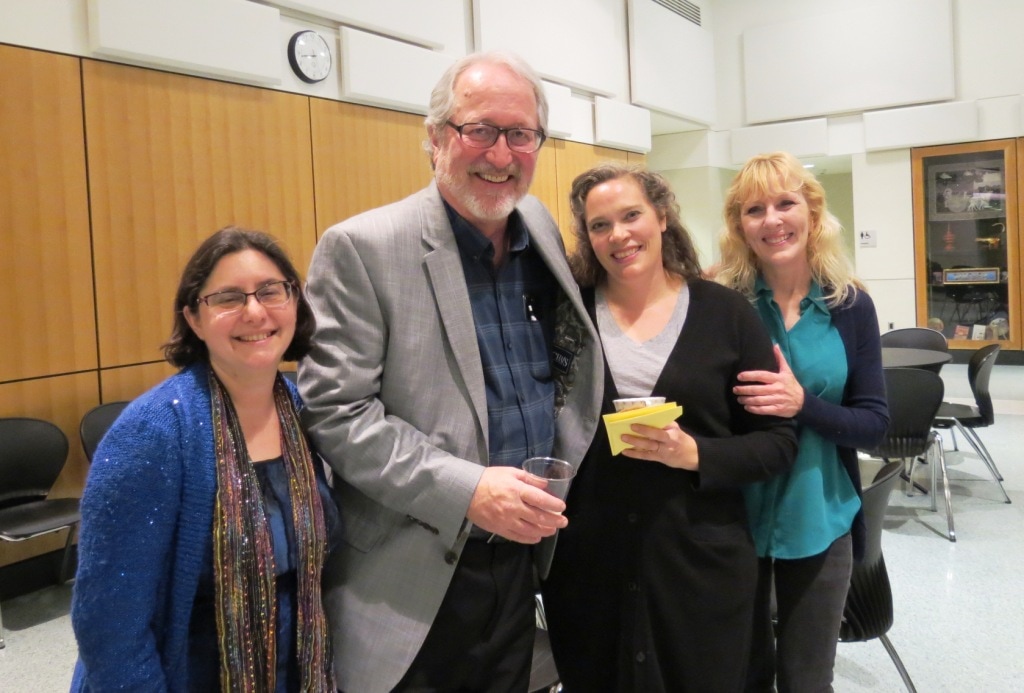
Upon arrival, attendees gathered to hear from event organizer, Jeannie Regan-Dinius who works for the DNR’s Division of Historic Preservation. Among those in attendance was our own “Songstress of the Limberlost” Adrienne Provenzano. (Adrienne and I were both excited to learn that the theme for next year’s conference would be women in the arts!) After a warm welcome and overview of the day, it was time for the first round of break-out sessions.

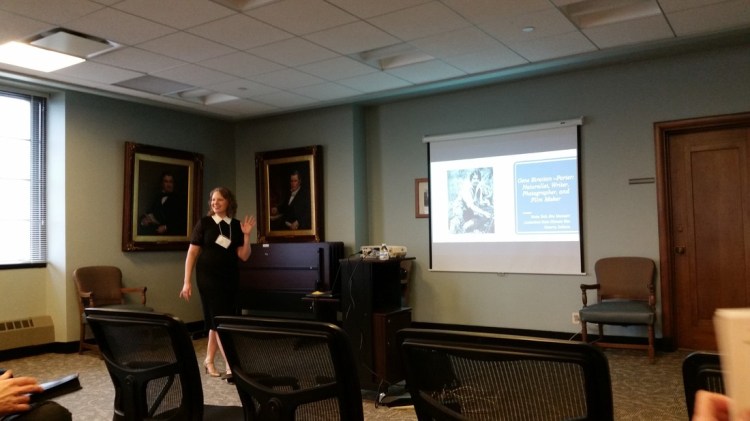
My presentation on Gene Stratton-Porter was one of three from which participants could choose for the first session. Speaking to a group of around 25 people, I had the opportunity to share Gene’s story, addressing her work in nature studies, conservation, photography and film-making— aspects of Gene’s career that embraced the science-focused theme of the conference. After my presentation, the audience had time to ask questions—which to led to a great discussion about Gene’s work, the Limberlost Swamp restoration efforts, and both historic sites dedicated to her.

In the second round of break-out sessions, I chose to attend one that featured Kristina Kimmick, program developer at the Culbertson Mansion State Historic Site. Kristina’s presentation brought to light the work of Dr. Emma Culbertson, one of the top surgeons of the Victorian era. Emma’s story was fascinating and—because of Kristina’s curiosity and extensive research—is now a part of the interpretation of the Culbertson Mansion. As I learned about Dr. Culbertson, I couldn’t help but see parallels to Gene Stratton-Porter, as both Hoosier women broke free from gender stereotypes as they fearlessly pursued their passions.

After lunch, we gathered in the auditorium of the Indiana Historical Society to hear the keynote speaker Sharra Vostrel of Purdue University. Professor Vostrel’s presentation on Toxic Shock Syndrome was eye-opening—and she brought humor and a personal side to a very scientific and important topic. (You can listen to the keynote address here.)

It was a beautiful spring day in Indianapolis, and I was proud and honored to bring the story of Gene Stratton-Porter to a new audience. Mrs. Porter certainly embodied a Hoosier working woman and was an advocate for science and the technology of her time. I think she would be pleased to see the number of women working in science, technology, and medicine today and the positive impacts their work has had on our everyday life.

The Golden Easter Egg Hunt

By Terri Gorney

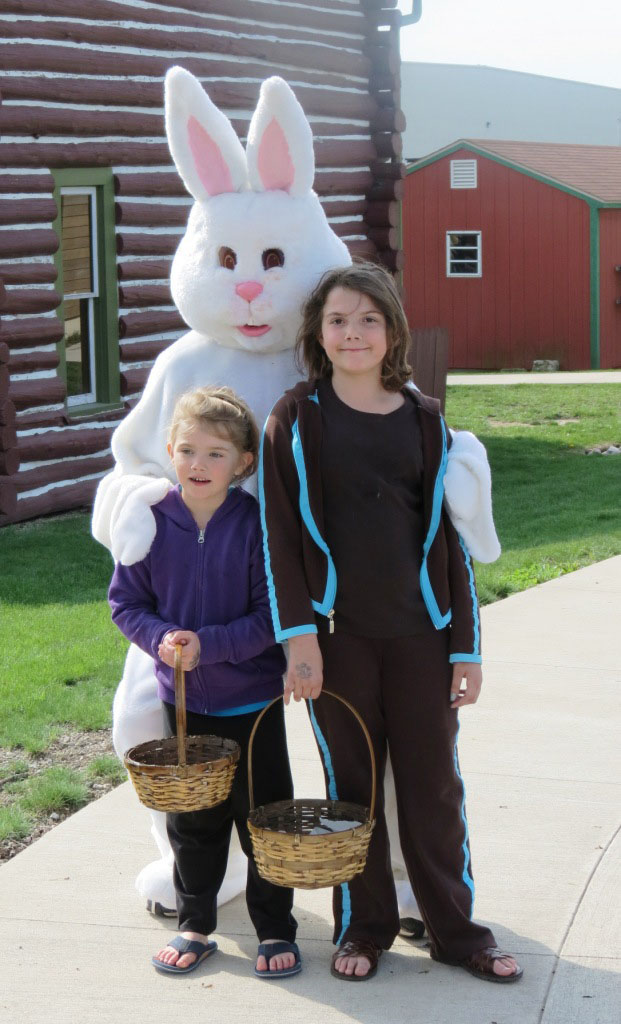
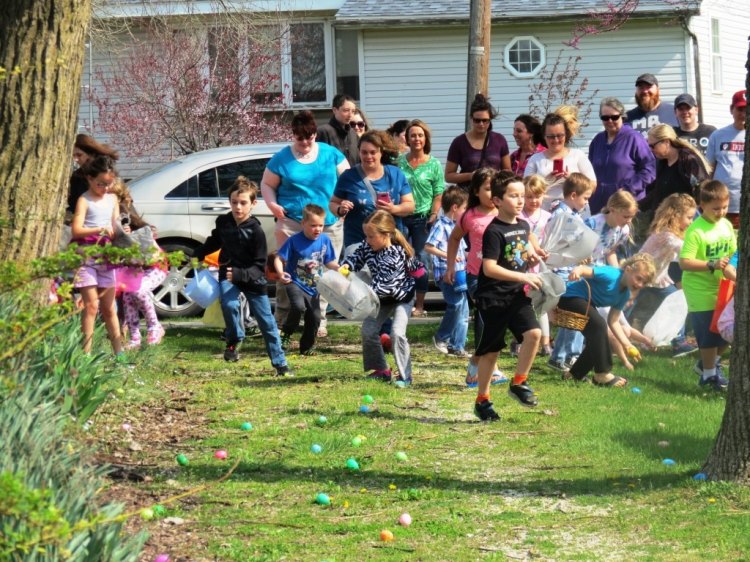
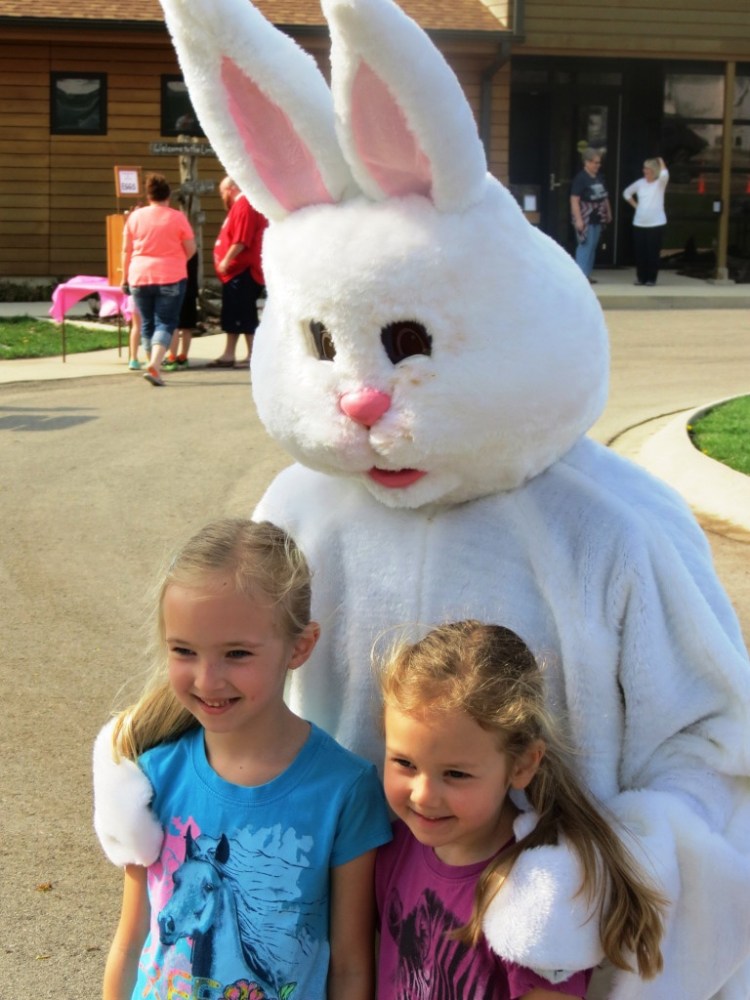
The Golden Easter Egg Hunt has become a tradition with some families. The Limberlost Cabin yard is beautiful with spring flowers blooming and colorful eggs spread throughout. It is one of Limberlost State Historic Site’s largest events during the year. It is more than an egg hunt. There is a petting zoo, bunny class, and games in the yard. With more than 2000 eggs hidden with small treats inside each, there is plenty for every child.

This year it was a perfect day for hunting eggs in the yard. The yard is divided into three age groups. Why is it called the Golden Easter Egg Hunt? In addition to the 2000 eggs hidden in the yard are two Golden eggs in each age category. Those eggs are turned in for an Easter basket filled with goodies. There were six lucky youngsters who took home the big baskets.

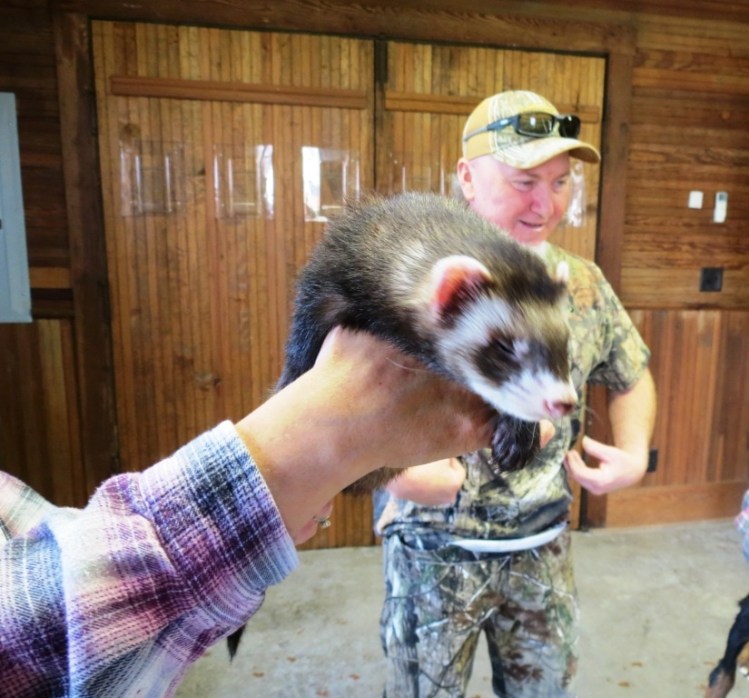
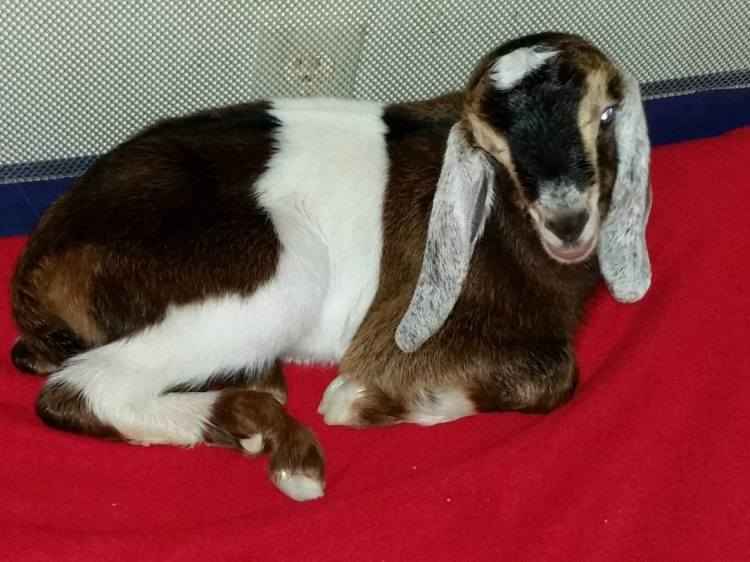
The Roll Family Petting Zoo is set up in the Limberlost Carriage House and is a great addition to this event. Who does not love to pet cute, furry critters. This year there were bunnies, a ferret, and a baby goat named Willow. Thank you to Kimberley Roll and her family and friends who help every year by volunteering their time and animals.

The Limberlost Harebrain class that Naturalist Curt Burnette teaches in the large classroom at the Limberlost Visitor Center is always a big hit. Curt makes learning fun.

This would not be possible without all our sponsors. They are: Berne Ready Mix, Crossroads Pantry, CVS of Berne, Dreams on Wings, M & M Market, Walgreens of Portland and Friends of the Limberlost.

The Limberlost Staff and thirteen volunteers helped with this year’s Golden Easter Egg Hunt.

Thank you to all and we hope to see you at next year’s hunt!

Mrs. Porter and the Purple Martins

By Terri Gorney

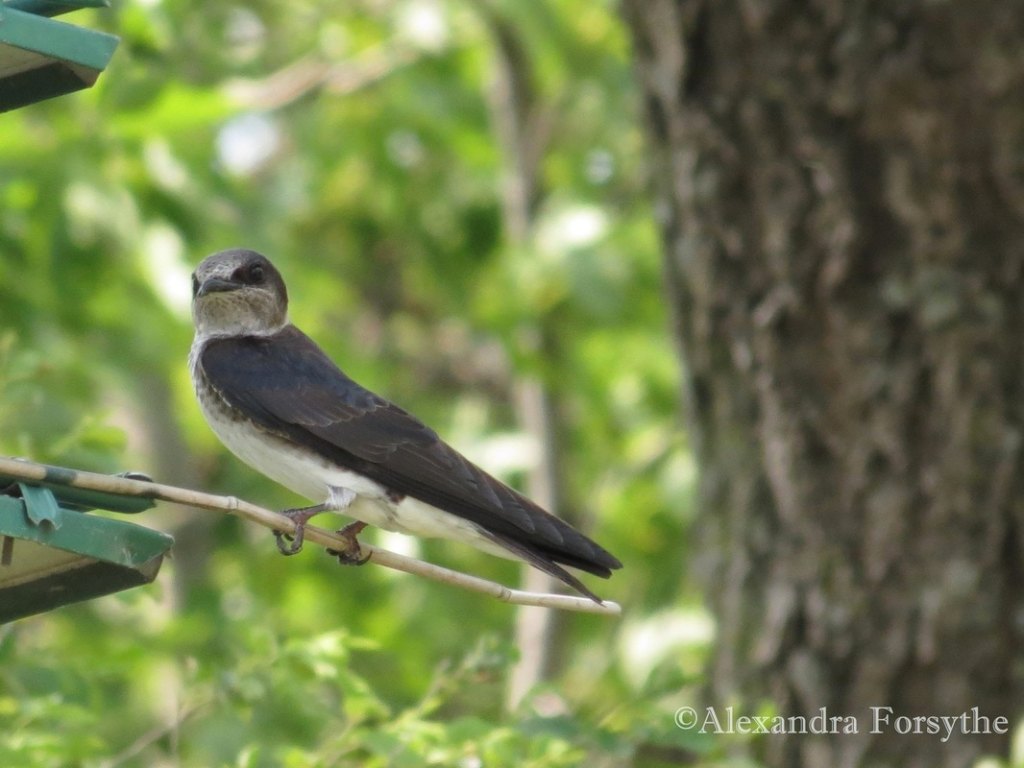
Gene Stratton-Porter wrote that there were three birds that she could depend on every spring to return to the Limberlost cabin and nest in the yard. They were: robins, bluebirds and purple martins.

Gene said that the purple martins liked to perch on the windmill in their backyard. She had placed a martin complex for eight families on the windmill and enjoyed watching the martins all summer long. She had “the most wonderful grouping of martins, circling the mill or perching.” If you are a big fan, as I am, of purple martins, you can imagine the happy chattering sounds of the birds while they were in flight or perched around the Limberlost Cabin. Reading Gene’s comments about this amazing bird, you know without a doubt that she enjoyed her “pets of the windmill.” Gene wrote that she enjoyed illustrating and painting the birds from the back porch of the Limberlost Cabin.

Unfortunately, Gene could not photograph the birds on the windmill due to the harsh lighting. However, while on a 20 foot ladder, she was able to photograph the birds sitting on the telephone wires or perched on top of a dead wild cherry tree near their nesting boxes. She would also get on the ladder and use a wire to clean out the nesting boxes of any materials that house sparrows would put in there until they gave up nest building. House sparrows, a bird for which Gene had very little sympathy, is known to harass native birds, like martins and bluebirds, taking over their nesting sites.

In late February 1905, she wrote it was the earliest that a purple martin “scout” had arrived from its wintering grounds. He looked exhausted after his long journey. When she spoke with a tenant on the farm that the Porters owned a couple miles west of Geneva, he noted that a purple martin arrived on the same day there. Writing that purple martin flocks return between May 1st and 15th every year, this is an indication of just how much Gene liked to study bird life. I certainly share Gene’s excitement with spring migration, and I can relate to her record-keeping. Gene would be pleased to know that purple martins have a robust population around Geneva in the summer.

For the first time this past summer of 2016, I was able to watch and photograph young martins. A local Amish farmer, John Hilty, whose tidy farm is located just east of Geneva, invited Randy Lehman and myself to see his 40 + pairs of nesting martins. Our friend, Sherrida Woodley, was here from Cheney Washington and able to accompany us. There was happy chatter in the air all over his yard and flying in and out of the bird house complex. It is an experience that I will not forget. John is what Gene would have called one of her “faithful.” John said after sharing spring and summer with the martins, their departure in the fall for their wintering grounds, always results in a very quiet September which takes some getting used to—a sentiment I can imagine Gene would feel just as keenly.

If you would like to read more about Gene and her experiences with birds, you could read What I Have Done with Birds and Friends in Feathers. The story of the purple martins was in both. Friends in Feathers is available at the Friends of the Limberlost Gift Shop.