Gene Stratton-Porter wrote about the Limberlost Swamp in her non-fiction book Music of the Wild. In the third section, she writes about the Music of the Marsh. She describes scenes that we see today at the Limberlost Swamp Nature Preserve, Loblolly Marsh Nature Preserve, Rainbow Bottom and Music of the Wild, the preserve named for this book. These preserves were all once part of the Limberlost Swamp, now called the Limberlost Territories.
Enjoy Gene’s words with photographs of today.
“I have seen coots running throughout a season in this swampy corner of a marsh, and it is as nearly typical of their location as any I know. The muck of such places is alive with worms, the grasses with insects, and the surrounding vines and bushes bear seed. It seems that birds of any habit might flourish there, and indeed I often have seen a little red-eyed vireo so busy in these bushes that I mam sure there was a nest and family, and when I landed and worked my way into the marsh I scared up a female Indigo finch [now known as an Indigo bunting] and soon found her nest in a thicket of blackberry and wild grape.”
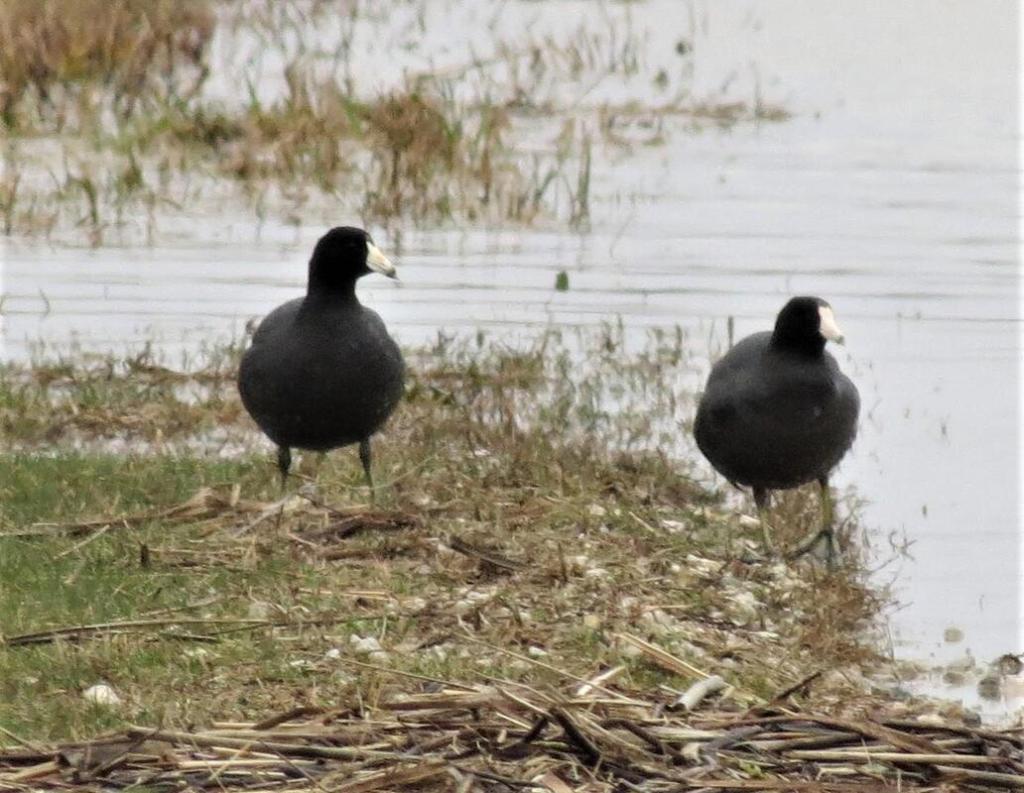
Coots at the Limberlost Swamp Nature Preserve. Photo by Randy Lehman.
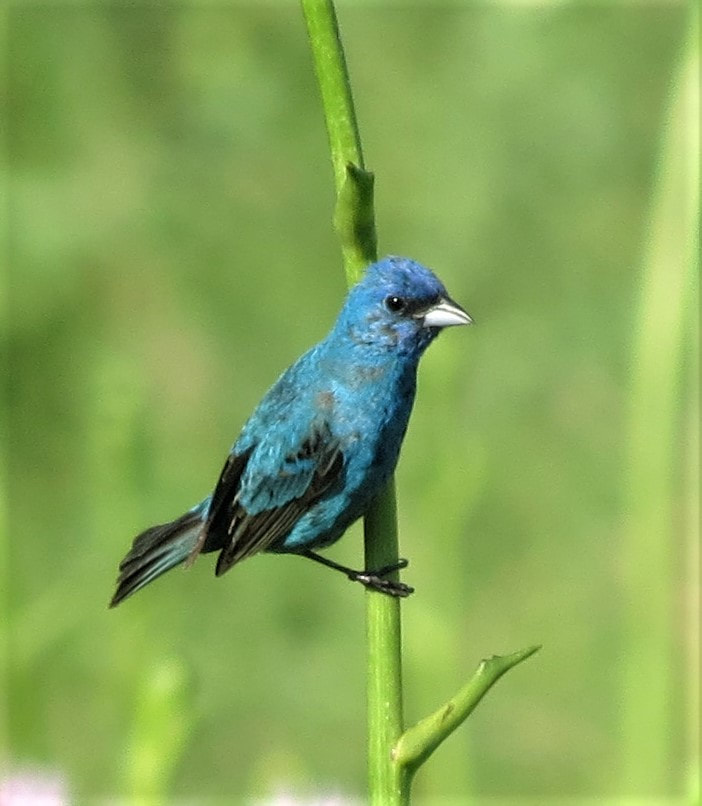
Male Indigo bunting.
“The five typical flowers growing in the water of the outer edge of all other vegetation are the arrowhead lily, blue flag, yellow lily, water hyacinth, white water lily, and differing members of their family. They are all beautiful plants of fine leaf and exquisite bloom; and there are some who will prefer one, and some another. My choice is the arrowhead, not only of marsh flowers, but among any, it ranks well toward first with me.”
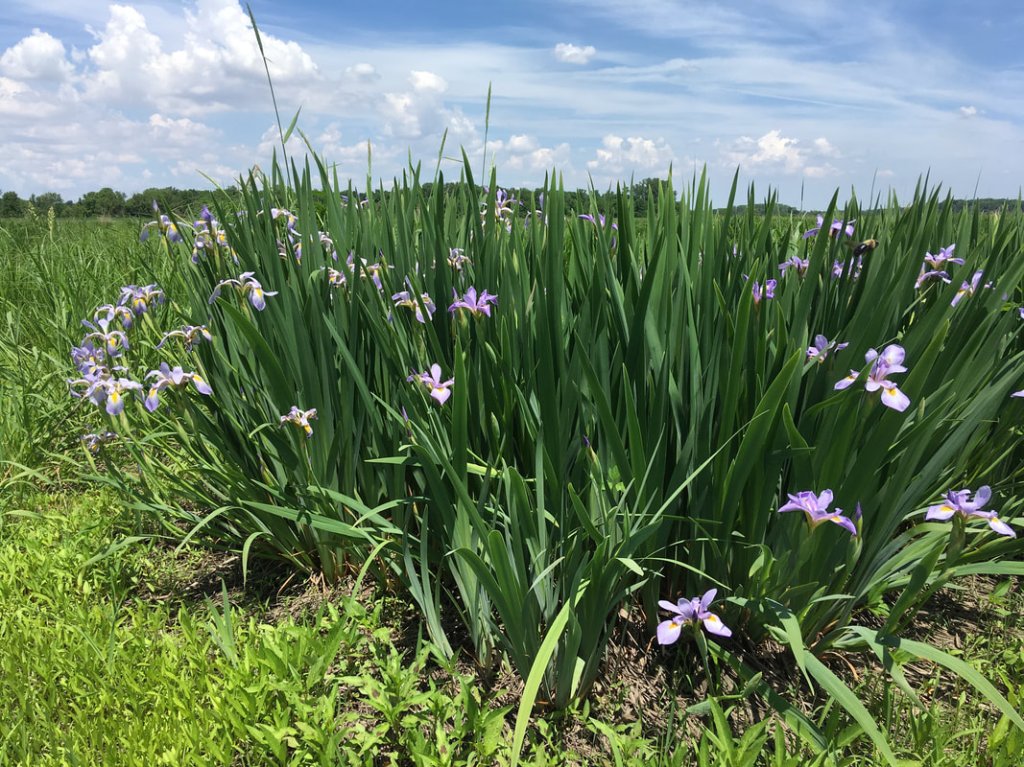
Blue flag at the Limberlost Swamp Nature Preserve. Photo by Terri Gorney.
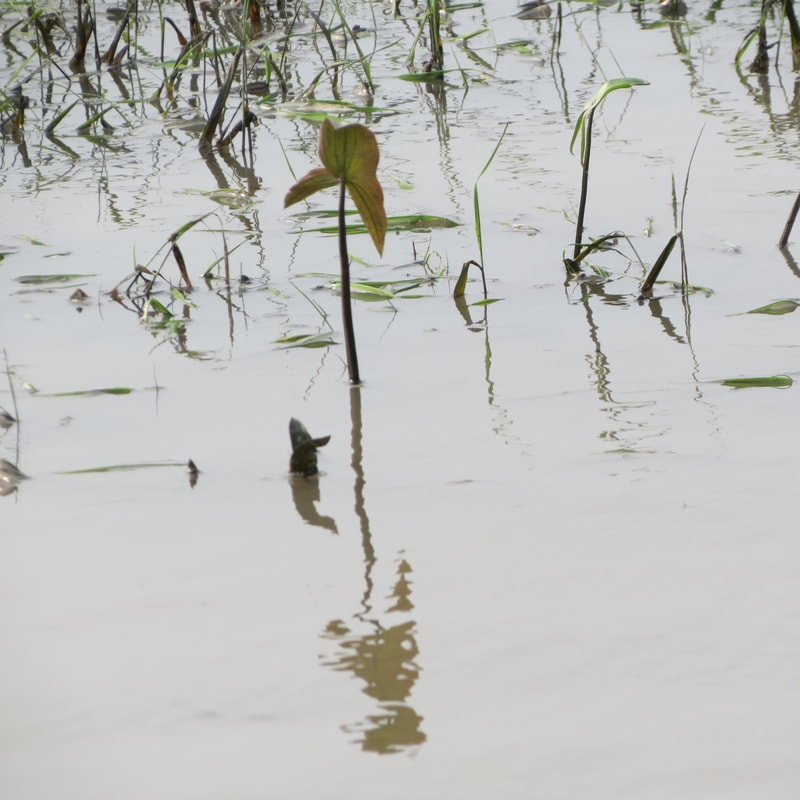
Arrowroot at the Limberlost Swamp Wetland Preserve.
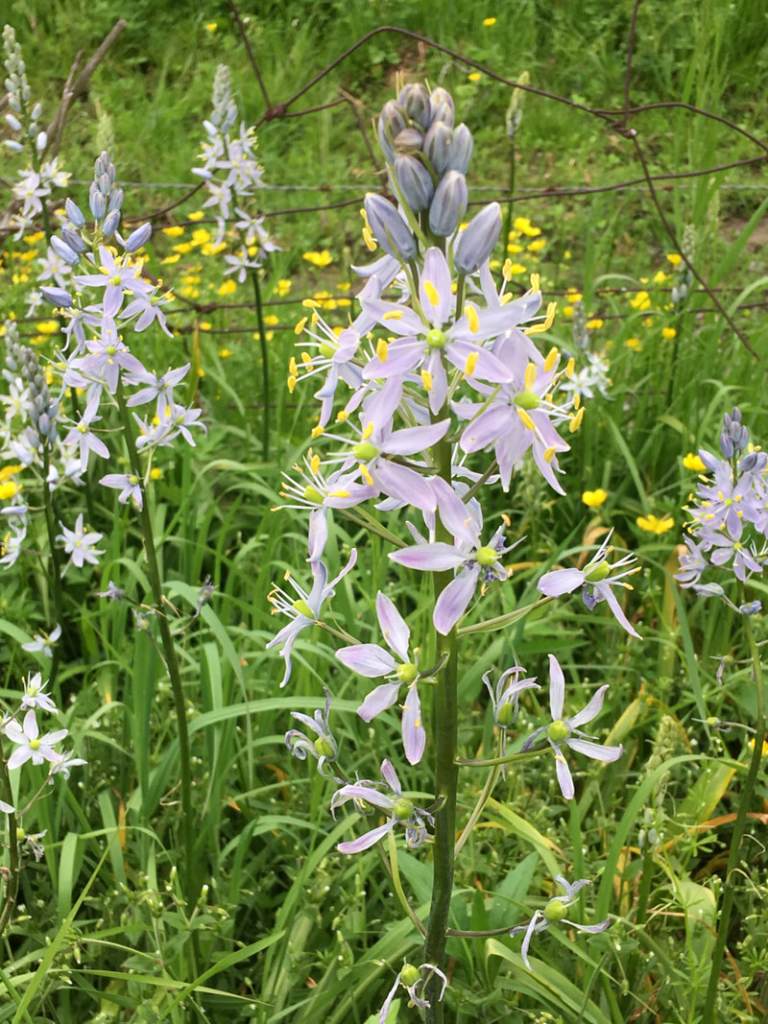
Wild hyacinth growing in a ditch on an Amish farm. Photo by Terri Gorney.
 Friends of the Limberlost